Our last day in Japan started early with an 8am train to Nagoya to catch the Tokyo bullet train.
This had the welcome benefit of us being able to cancel breakfast – Hurrah!
Fresh Dave put up a fight and offered to make it early for us but we politely told her we didn’t want to bother her so early. She seemed insistent but we stood firm and our avoidance tactics worked.
We had to buy another holdall yesterday to transport our excess shopping. The idea was to travel light as we sent our cases ahead to Tokyo, but we have ended up with same number of pieces of luggage and we still have to collect our original set in Tokyo. 😩
It was pouring down last week when we left Tokyo, it was pouring down when we arrived. Rainy, grey, miserable. A bit like Manchester only with smaller cars.
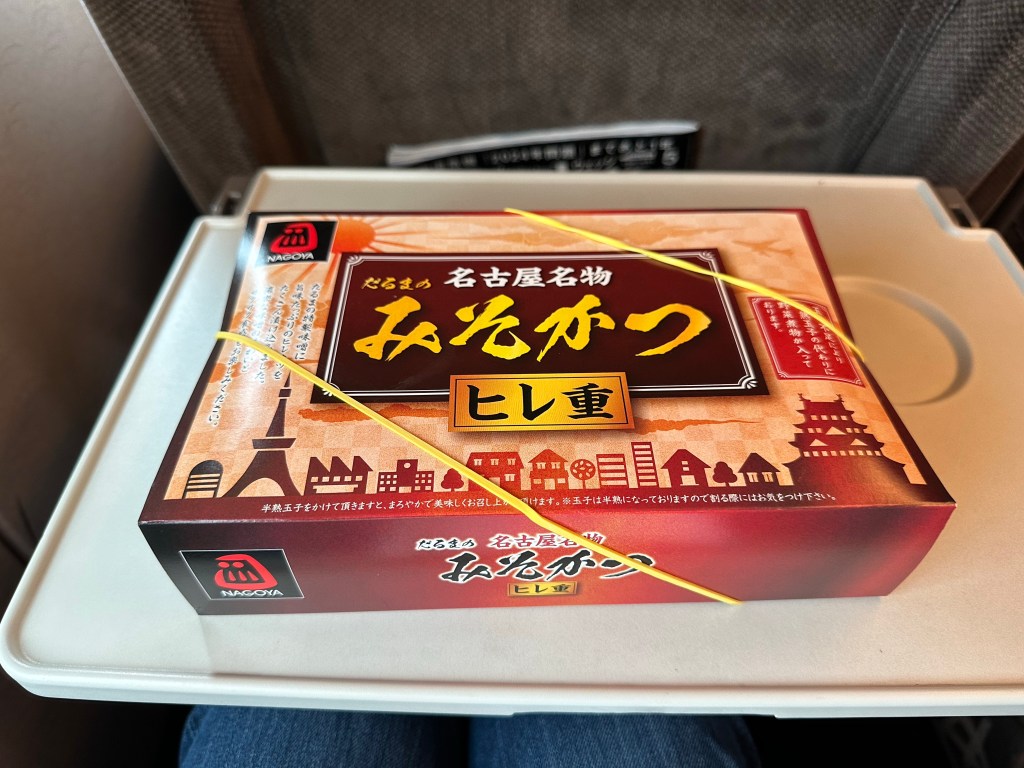
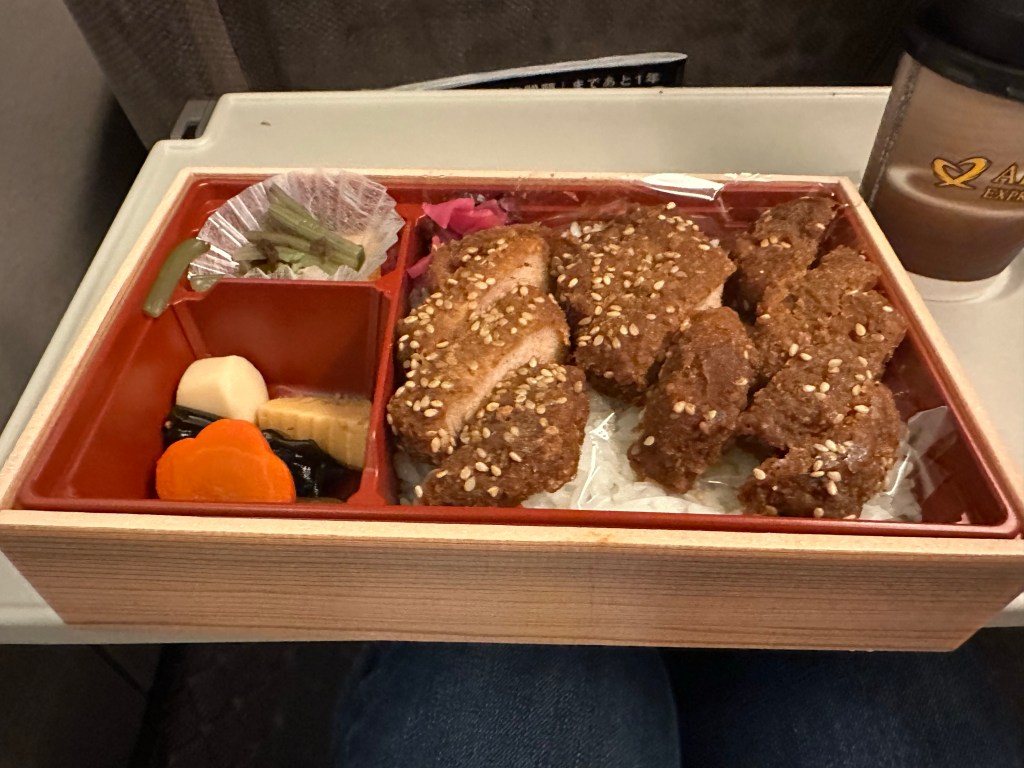
Today we had our first Bento box! Bento boxes are what keeps Japan running smoothly. They are really nice boxes of good quality food, freshly made in factories across Japan and distributed every day. People buy them for their lunch at work or when they’re commuting.
This is ours….
…crispy chicken with rice and vegetables in a nice wooden box – about a fiver)
We actually thought that prices here were very reasonable in general. There are so many places selling food that it has to be good quality and competitive so it’s really good value. We ate out at some nice restaurants that were expensive but, to be honest, we couldn’t justify the cost and you can eat very well here quite reasonably – as long as you know what your eating.
We decided to leave our new luggage at Tokyo train station (we now have luggage all over Tokyo!) but, due to the flippin’ G7 junket they had locked down all the lockers so no one can bomb Biden as he totters past on his zimmer frame. I really can’t believe the G7 leaders will be using the Tokyo subway.
Instead we had to entrust all our worldly goods to a stranger in a blue hat who charged us three times more than the locker to look after our stuff.
Therés lots of trust needed in Japan but we’ve experienced no problems yet.
We arrived at the Ryogoku Kokugikan arena, home of Sumo wrestling in Tokyo.
It’s quite an impressive building for a bit of wrestling.
Sumo wrestling, like so many things in Japan is an odd sport and is 90% tradition and ceremony and 10% actual sport.
Here is the initial parade ceremony. It lasts around 10 minutes in total, this is the end.
The individual contestants then enter the ring after having their names sung by the ringmaster.
Here’s an individual wrestler’s ceremony. As you can hear, the crowd loved it.
They strut about, throw salt into the ring (which is sacred ground) to purify it. Then there’s much bowing, some flag bearers walk around the ring, then they bow again.
Then they receive power water and power paper to wash their mouths and lips, then more salt throwing. Then they bow some more, stomp with their legs to ward off evil spirits. After this, a bit more bowing, leg extensions and arm raising to show they have no weapons. Then, just as you think they are going to fight, they stand up and do it all again.
They can repeat this many times for no apparent reason, although the more high ranking they are, the more times they do it.
Finally they launch themselves at each other and the wrestler who touches the floor with any part of his body other than his feet, or steps out of the circle, it’s the loser.
This part – the actual fight- takes, on average, fifteen seconds.! You might notice that, at the end the referee presents an envelope to the winner on his fan. That’s the prize money.
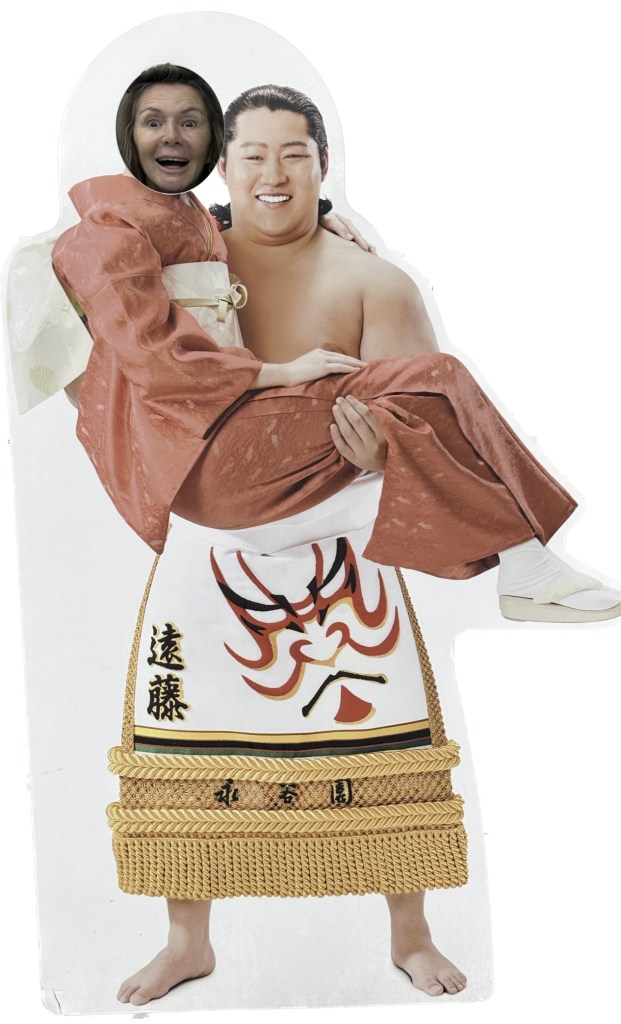
Then more bowing.
Then one of them picks up Brigitte and I haven’t seen her since!
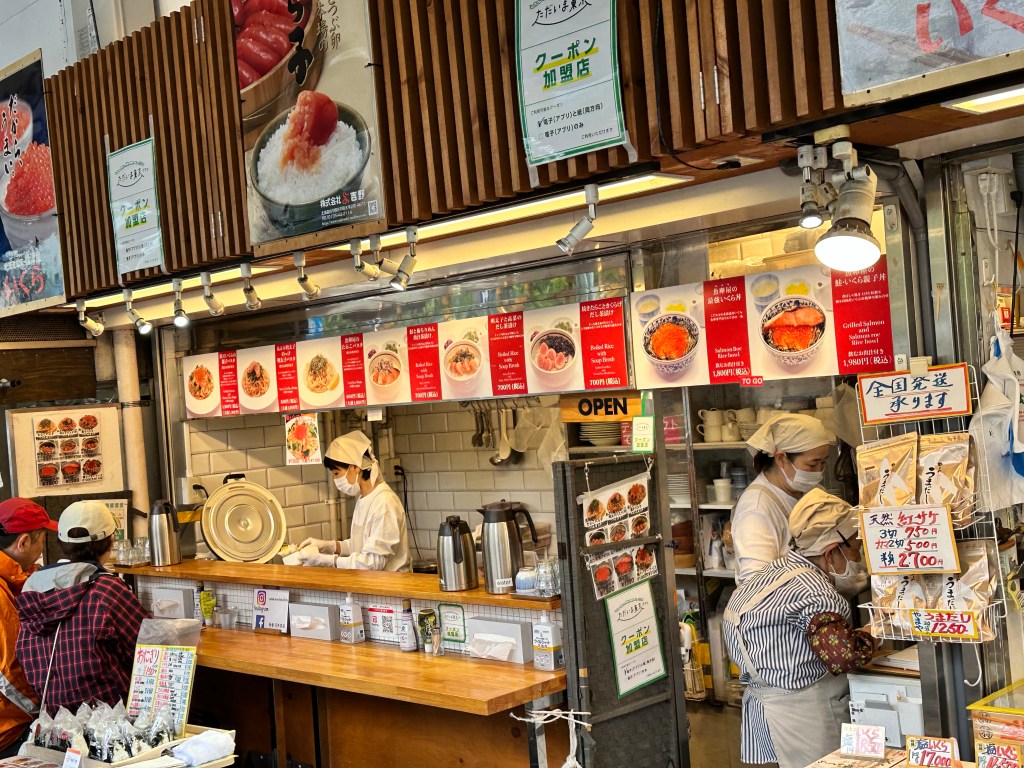
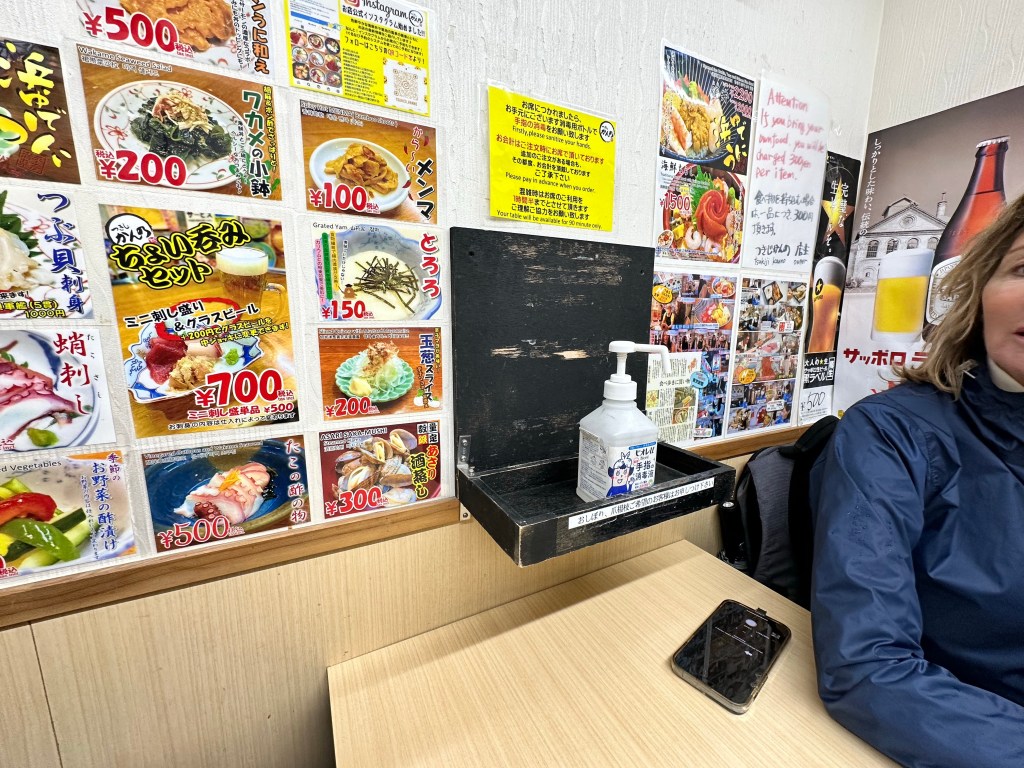
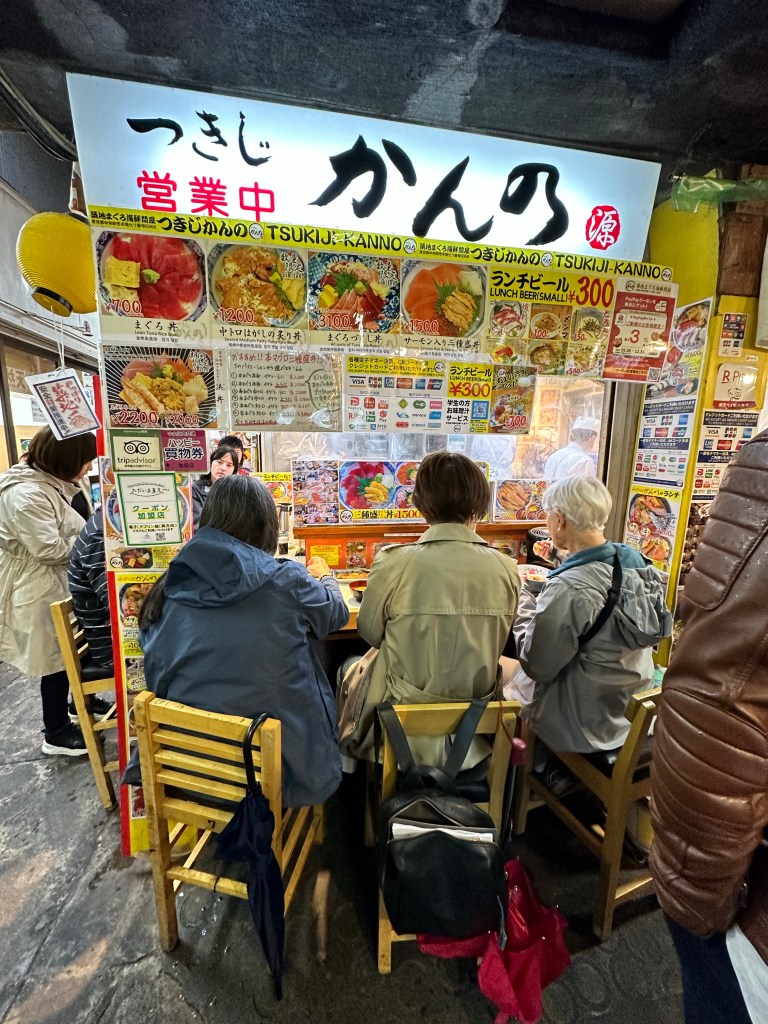
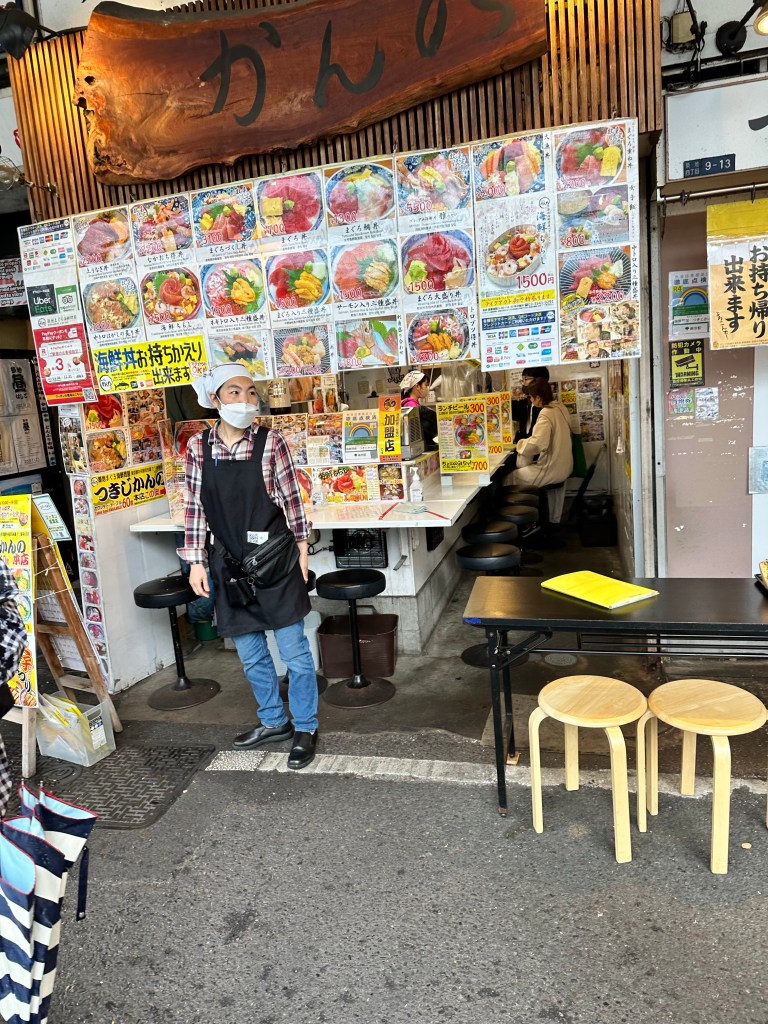
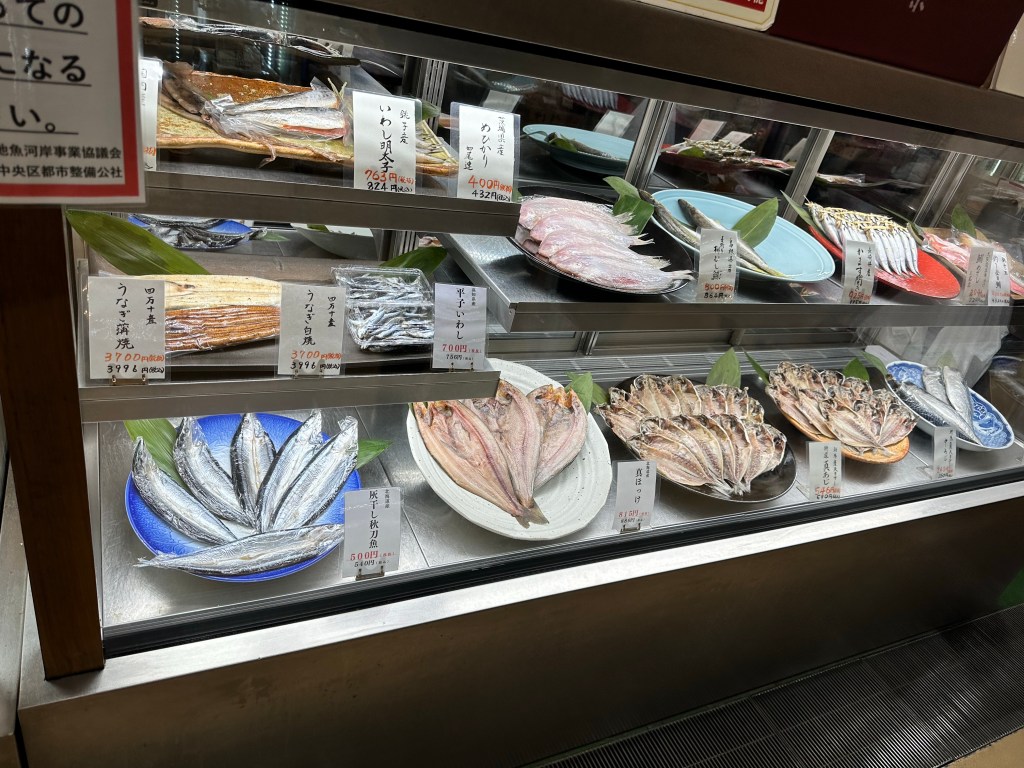
I don’t have many life rules, but one that I do usually strictly enforce is ‘never eat at any restaurant that displays pictures of the food outside’. The only thing even worse than this, is where the actual food is displayed in glass cases outside to entice in the customer. It doesn’t.
However, if I were to apply my rule in Japan we would probably starve to death. I don’t think it’s possible to find anywhere that doesn’t display its wares outside and thank goodness they do, otherwise you would have no idea what to order.
Even better are the meal ‘vending machines’ that enable you to order quickly. It’s Japan’s fast food system. You walk up to what looks like a giant cabinet displaying numbered dishes of what appears to be actual food. I have no idea if the food it real and, if it is, how the soup stays in the bowls at that angle, or if they are just elaborate sculptures but they look appetising, unlike the plates of congealed egg and chips displayed in some cheap Spanish seaside resorts.
You choose the dish you fancy, move to the keypad and select the number of your dish, then pass your rail card over the card reader to pay and go inside to the counter to collect it and take it to your table. I feel it would be more impressive if your freshly cooked Udon noodles popped out of a slot ready to eat but, alas, they haven’t the technology to develop small enough chefs yet. I feel it’s only a matter of time.
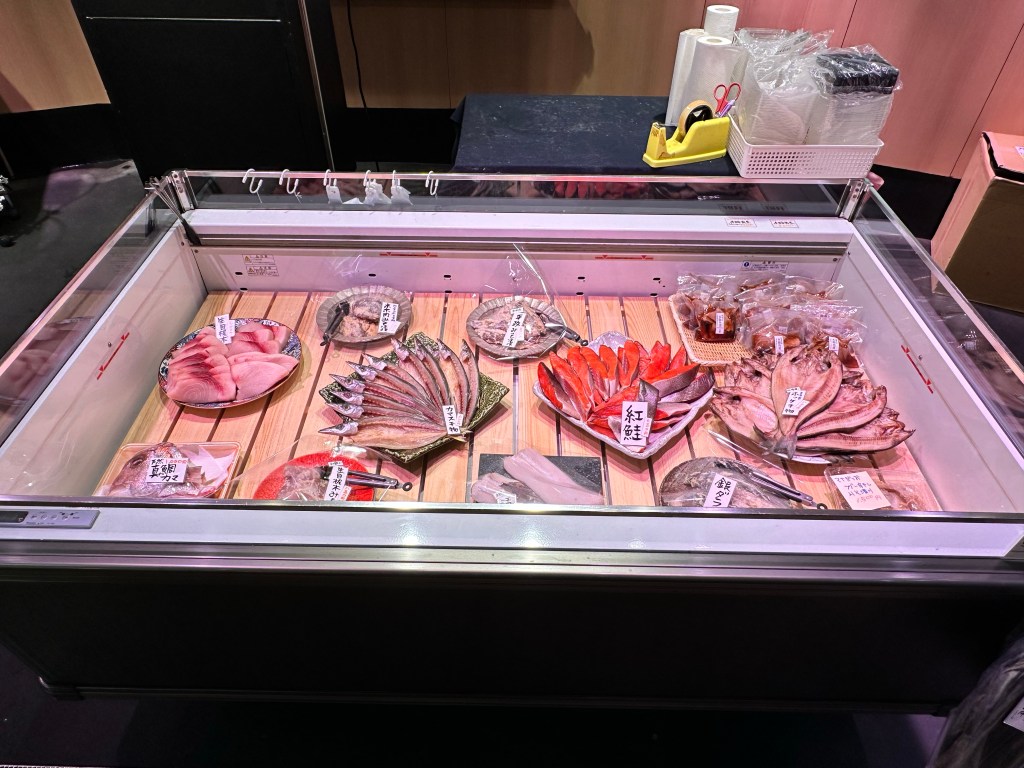
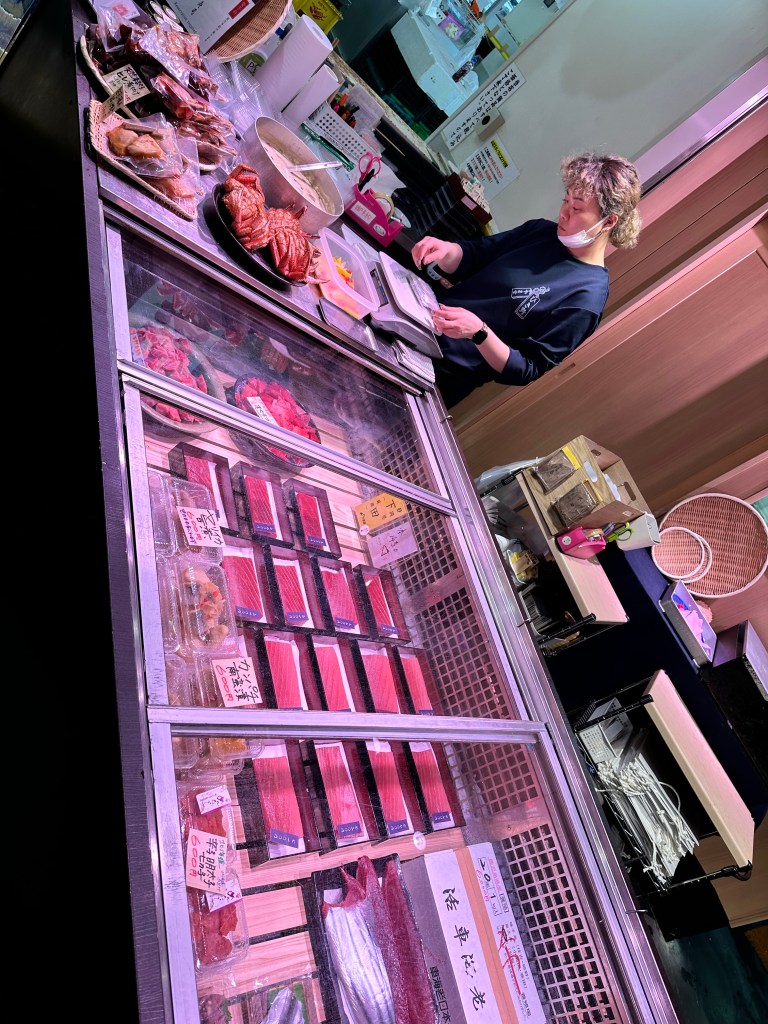
Today began with a breakfast tour of the historic Tsukiji fish market, which was moved there after the great Kanto earthquake of 1923.
It was still pouring with rain so I put on my still damp shoes which were an inevitable consequence of being a smart Alec and insisting on travelling light☹️.
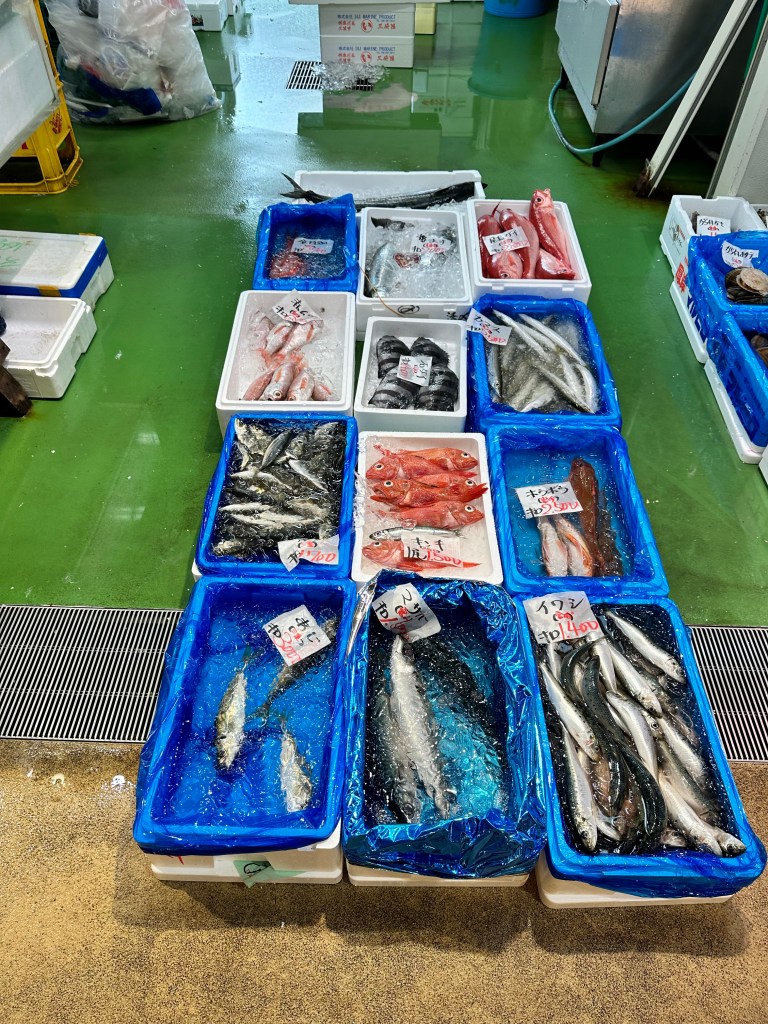
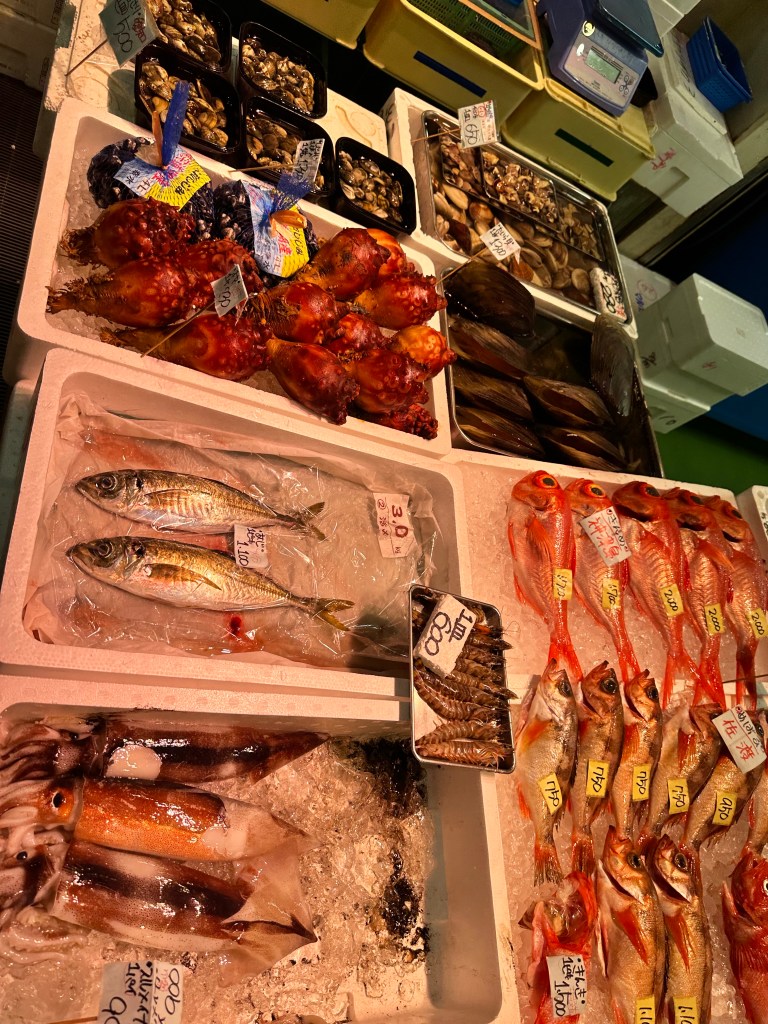
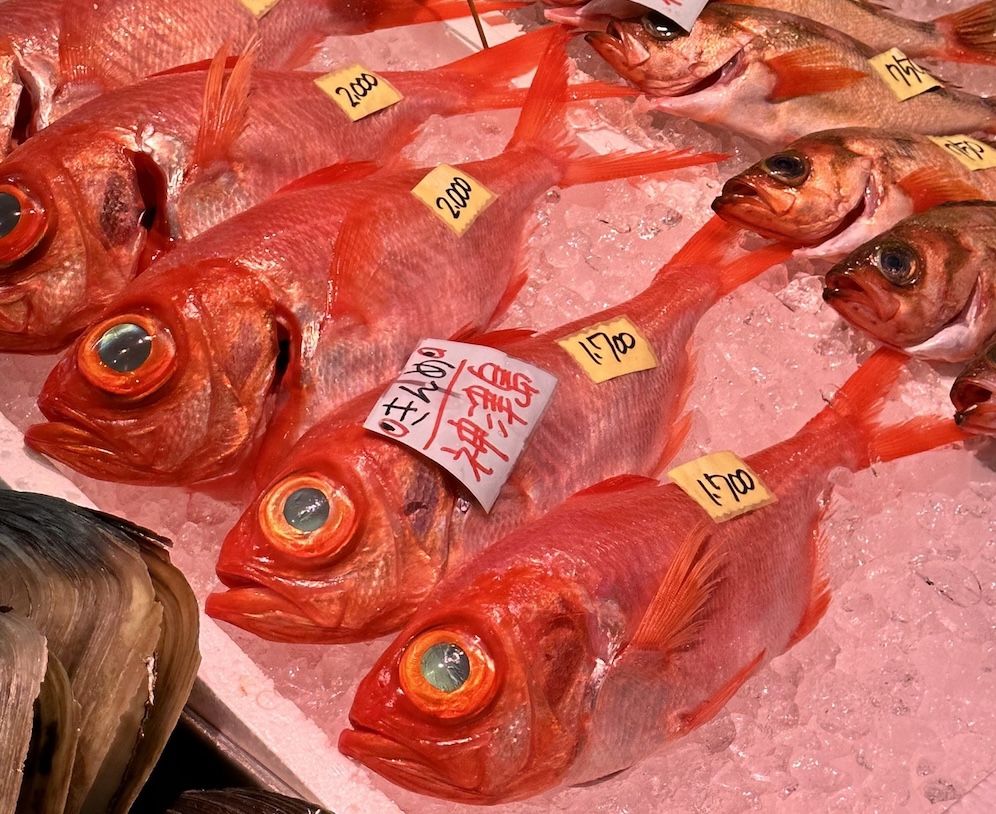
The market now sells some vegetables and meats alongside the fish and walking through it is an attack on the senses. It’s full of strange sights, sounds and smells. I have no idea what the majority of the things we saw actually were. The smells were interesting to say the least and the selection of food is alien and displayed like a work of art.
Considering it’s effectively a fish slaughter house it’s remarkably clean and sanitised and often beautifully presented
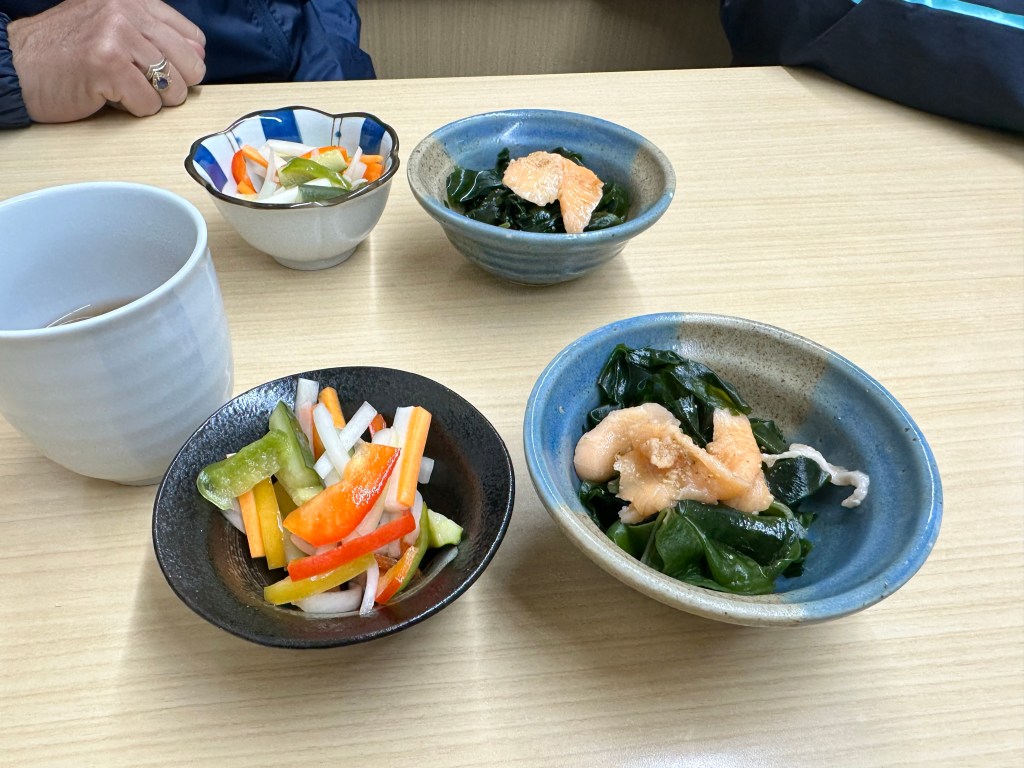
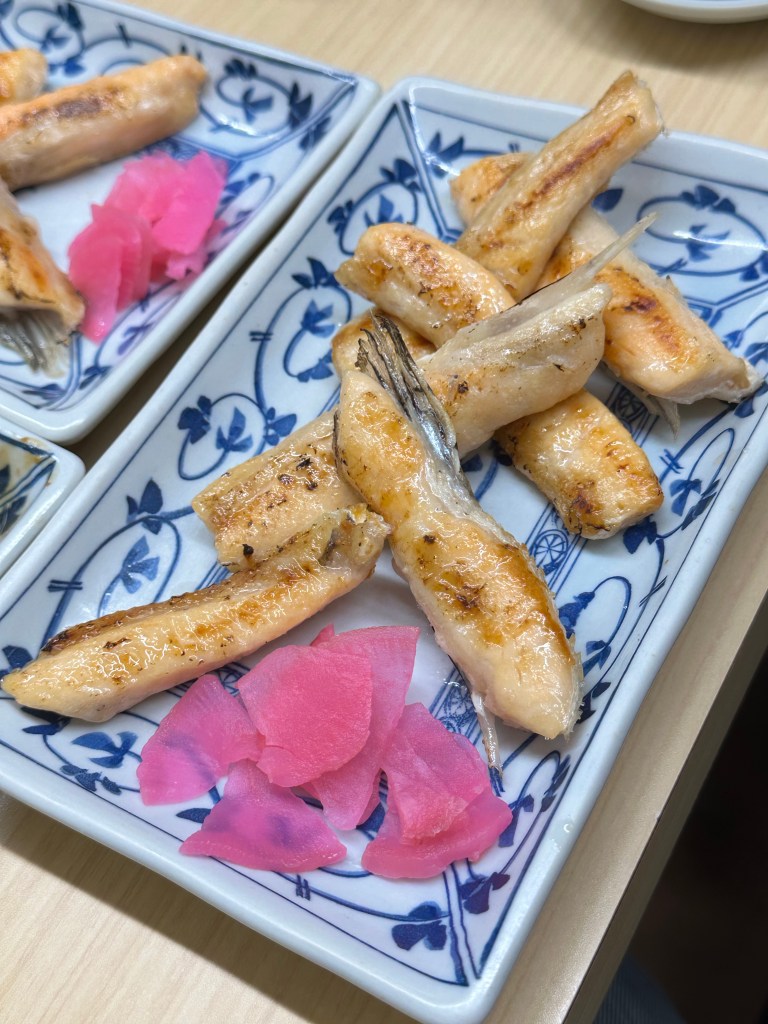
We started with breakfast, eating rice, grilled salmon belly, tuna and saba (mackerel) with wakame seaweed and miso soup. Fish and rice may seem an abnormal way to start the day and, like so many things here, it’s certainly different to what we’re used to, but it’s probably just as strange to the Japanese that the English traditionally eat fried pig slices, offal tubes and chicken ova at breakfast time.
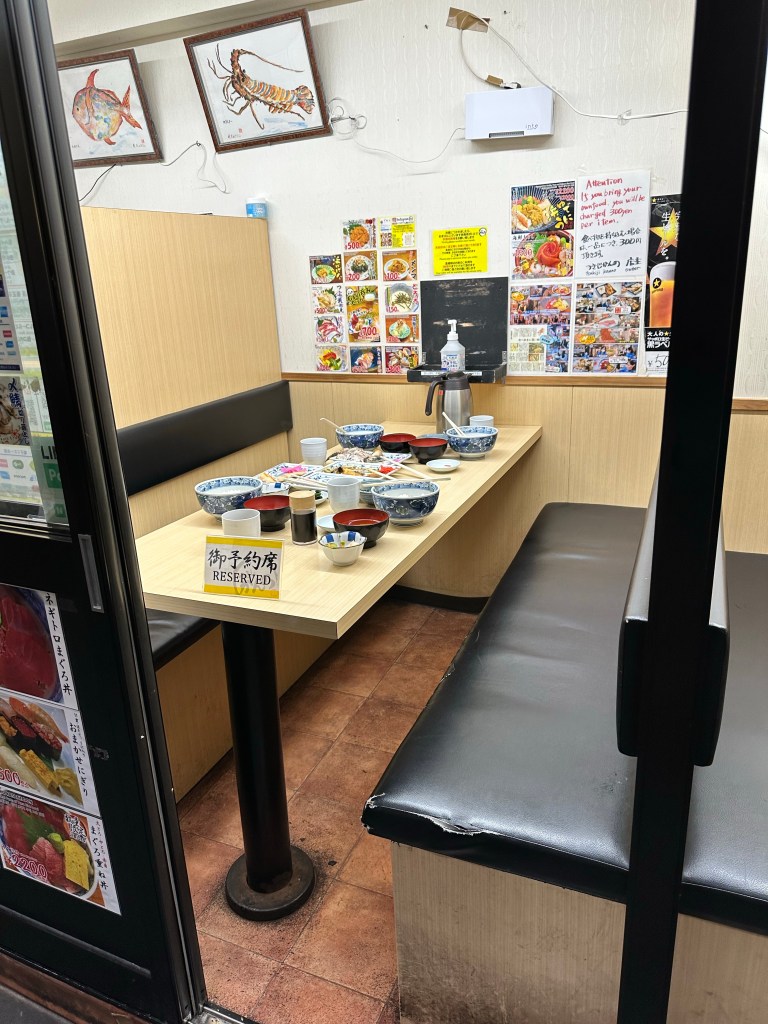
Breakfast in our little cubicle
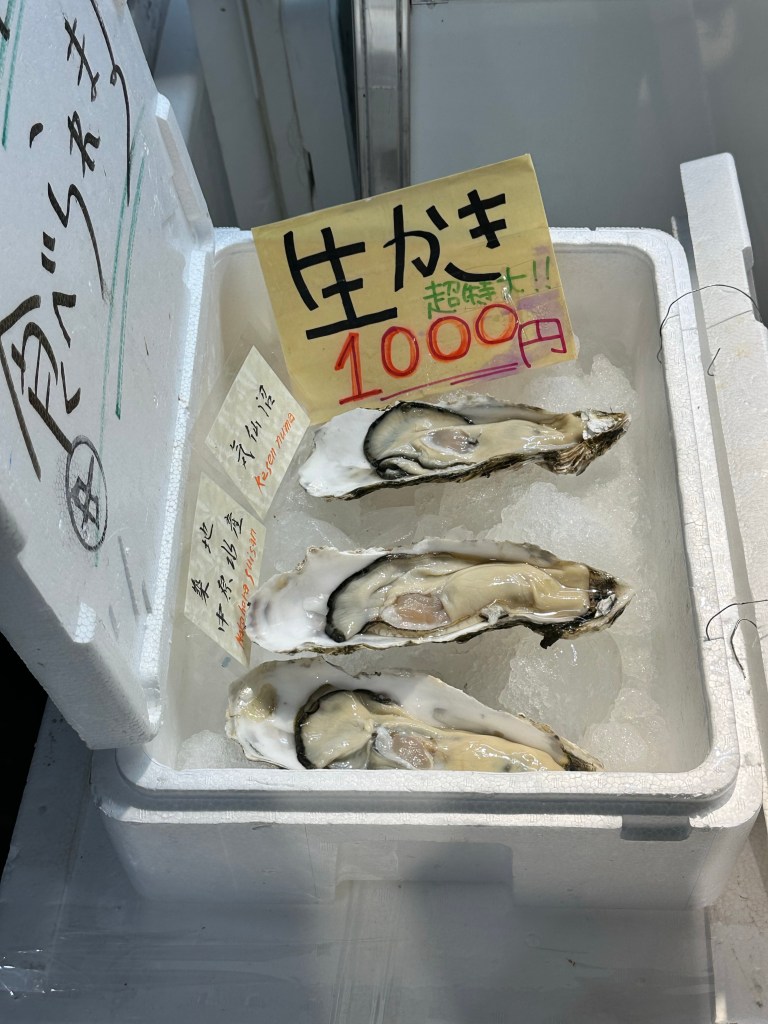
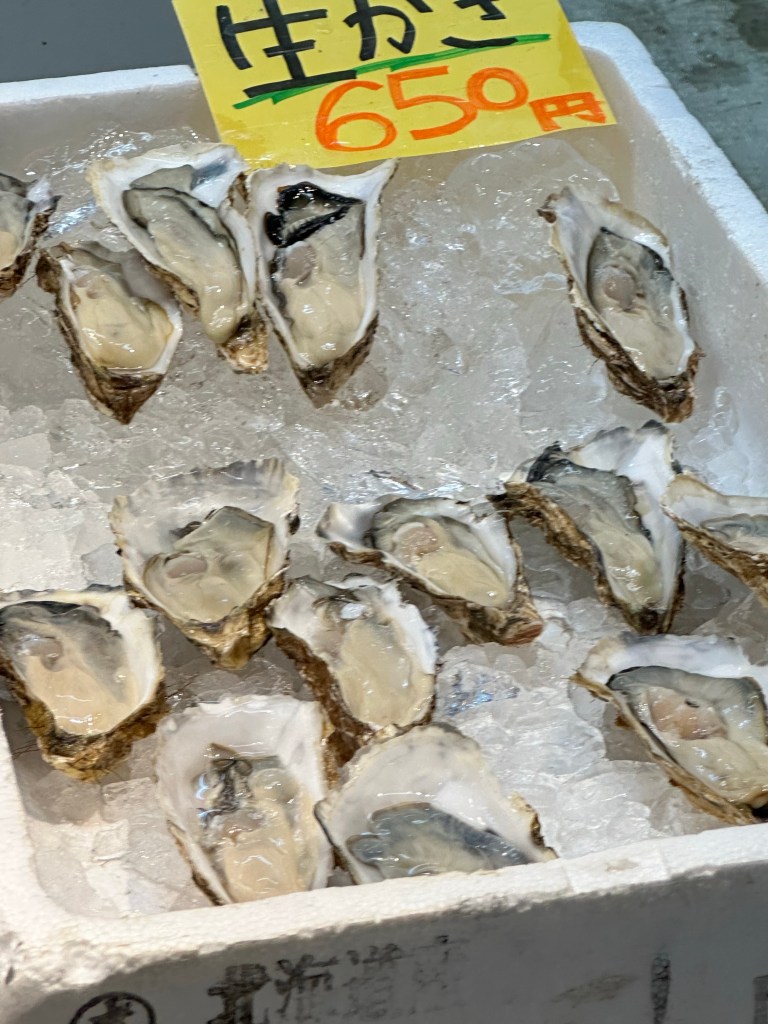
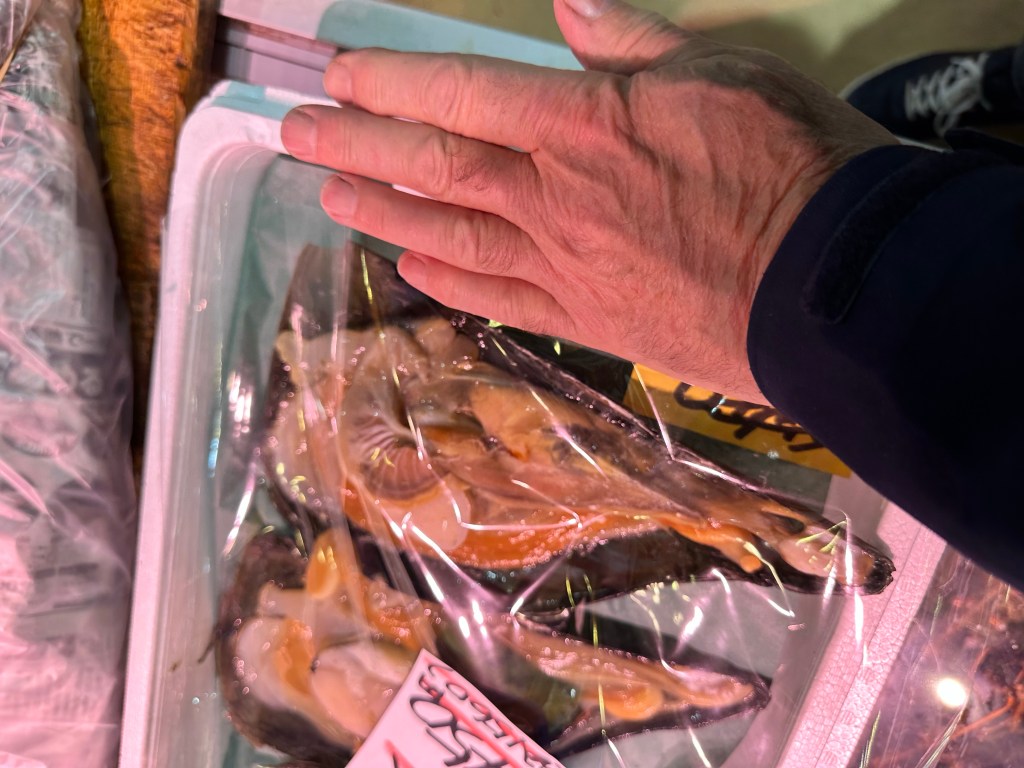
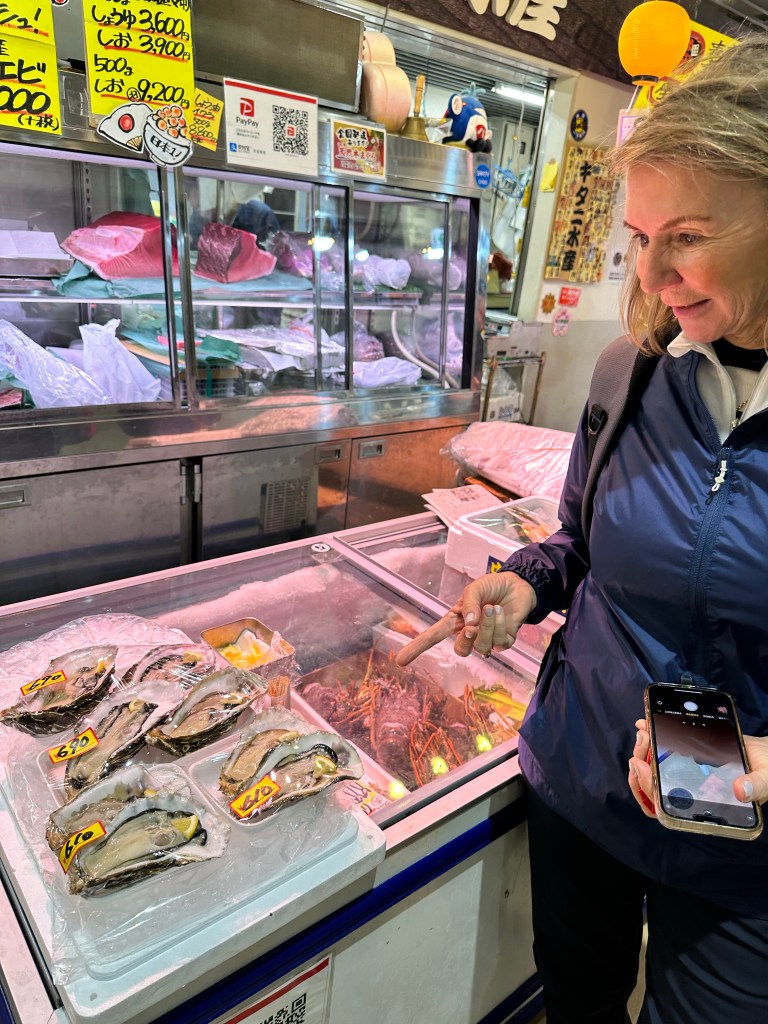
Following breakfast we continued our tour to the second part of the market which was equally impressive. Brigitte, who knows her seafood, was shocked at the size of the oysters which were over 15cm long. The bottom left photo is a giant scallop that is nearly 30 cm.
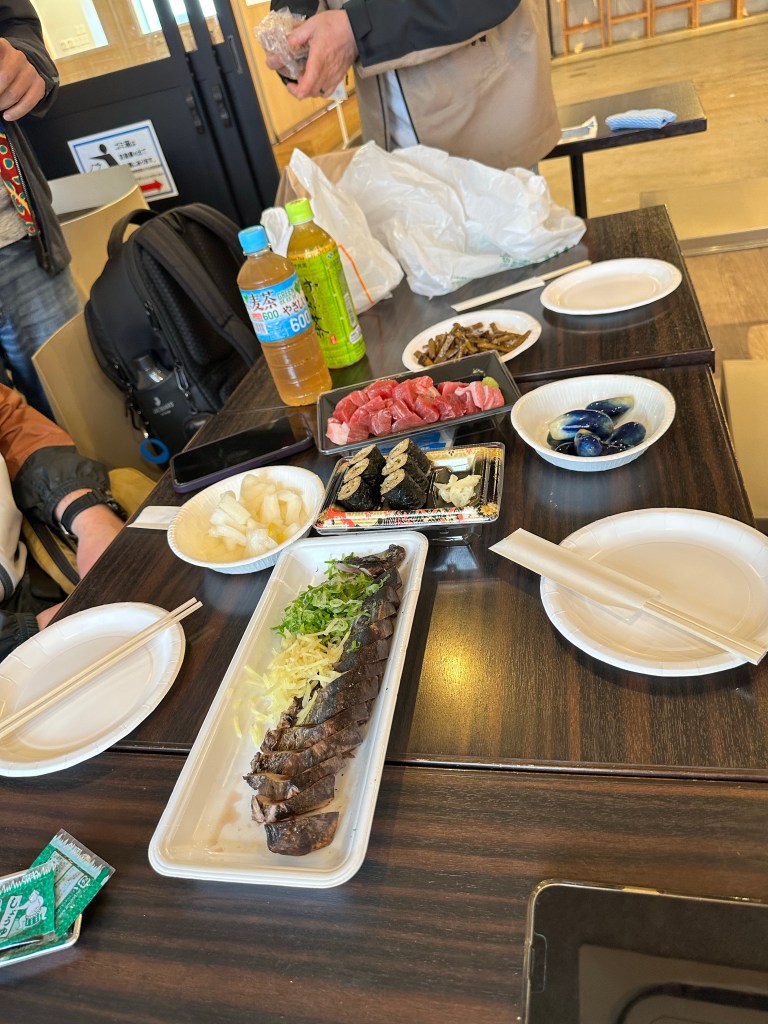
Having stuffed ourselves with fish, we then went upstairs, sat down and we’re presented with yet more fish that our guide had been buying along the way for us to sample!
The long thin tray is traditional Katsuo Tataki (Bonito seared over a fire made of rice straw) plus various cuts of tuna, scallops and pickles.
Delicious, but no more fish today, thank you.
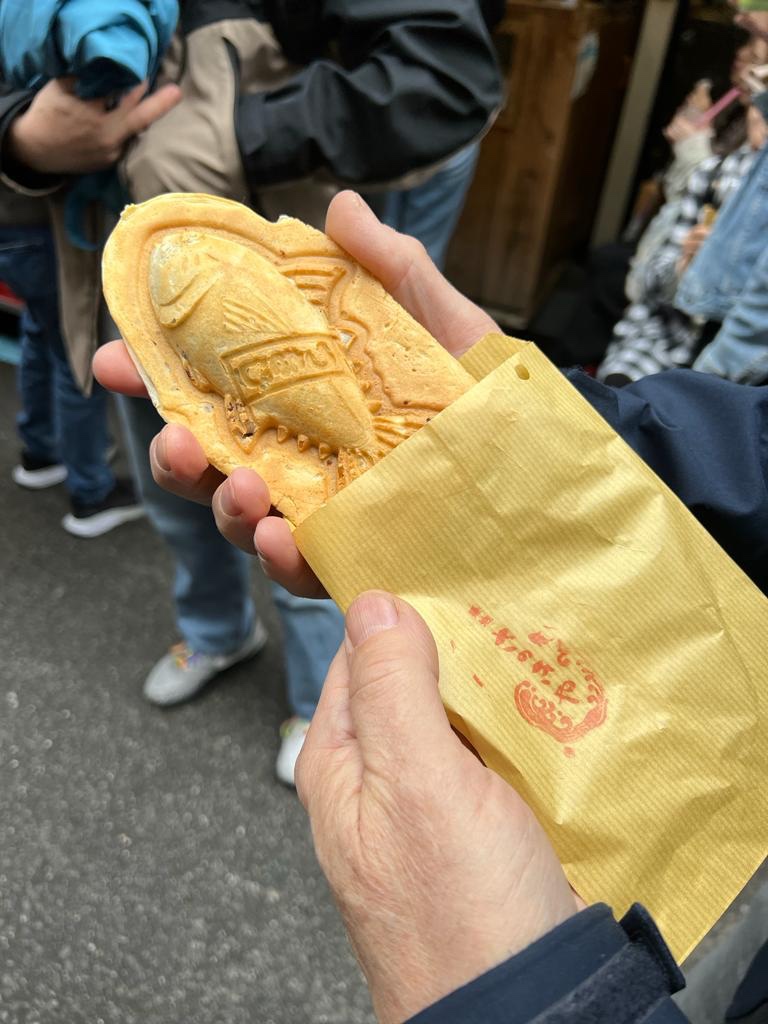
…then for dessert we went outside and had sweet bean curd – in a fish shaped pastry!
Apparently few Japanese admit to being religious but 67% say they have been to a Shinto shrine and 69% to a Buddhist temple in the last year. (Shrines are always Shinto, Temples always Buddhist). Shinto is about being one with nature. Buddhism, more about being one with self and finding enlightenment.
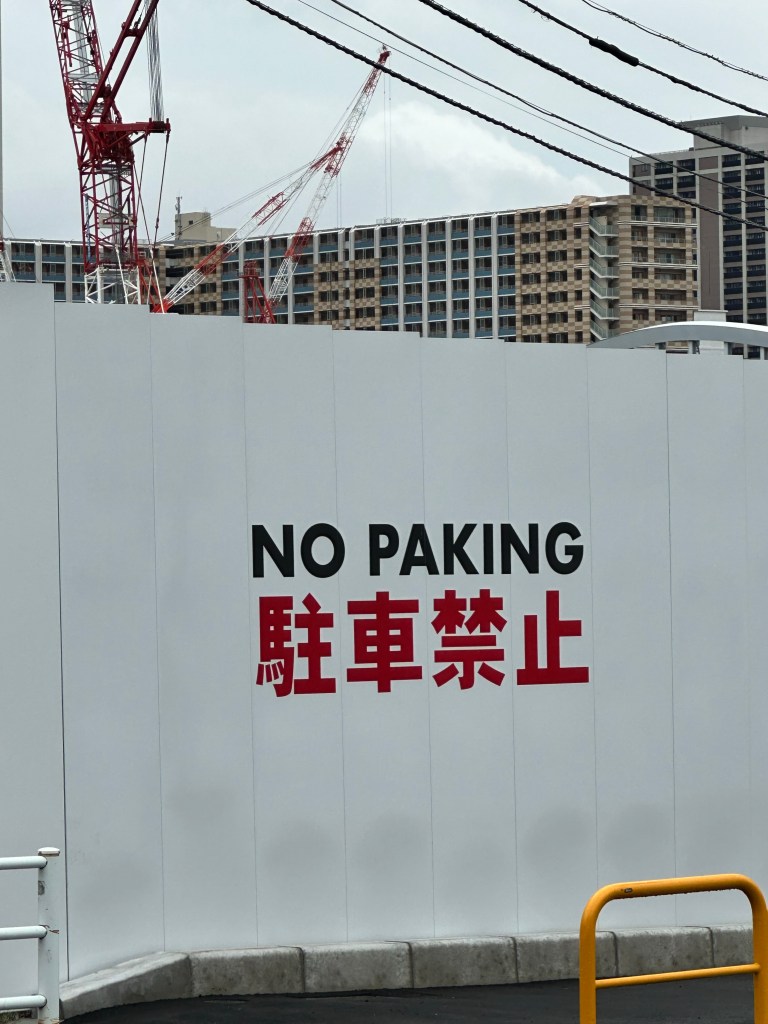
Here’s an interesting sign. We were told that, because the Japanese don’t pronounce the ‘r’, they didn’t bother to print it!
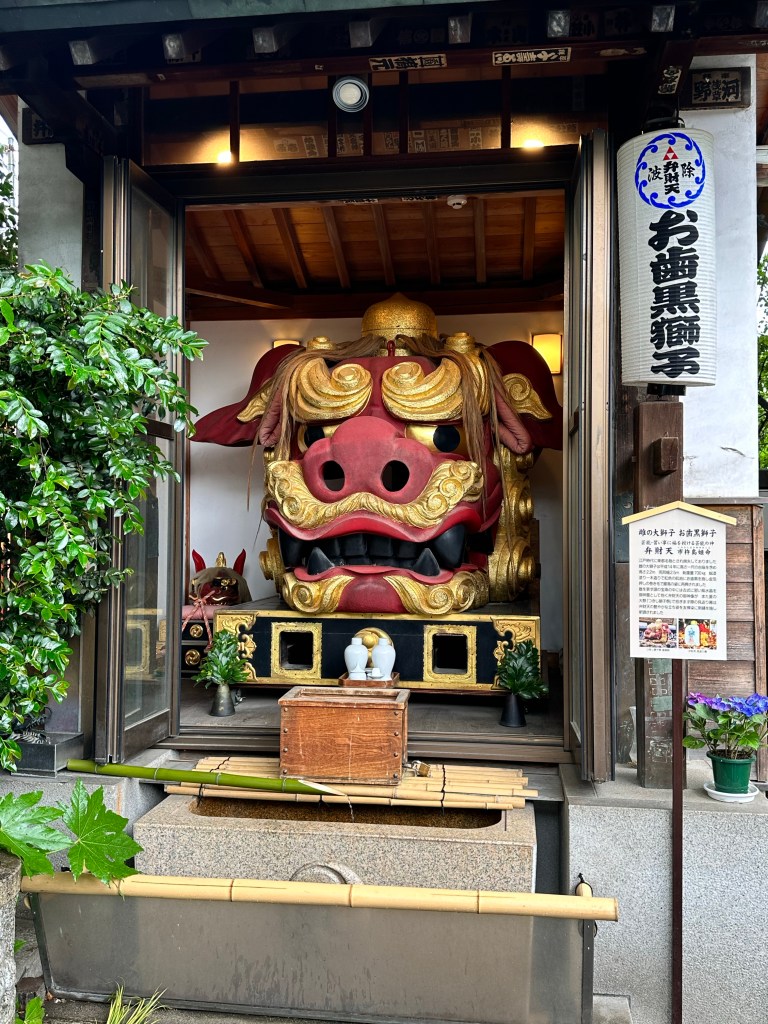
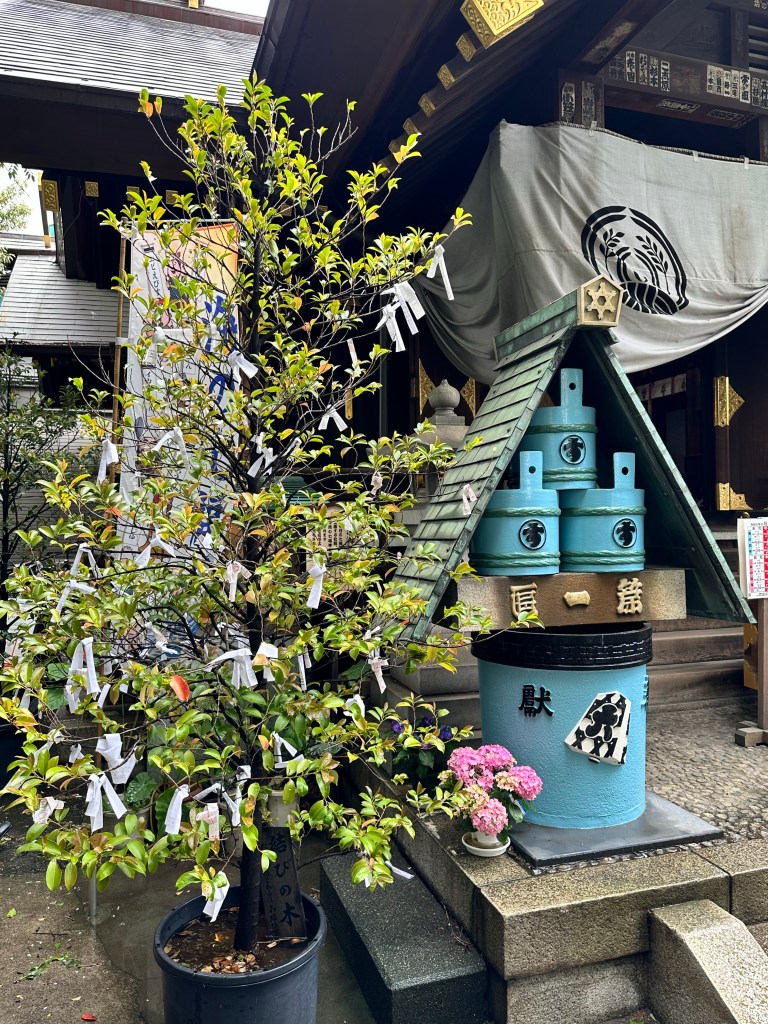
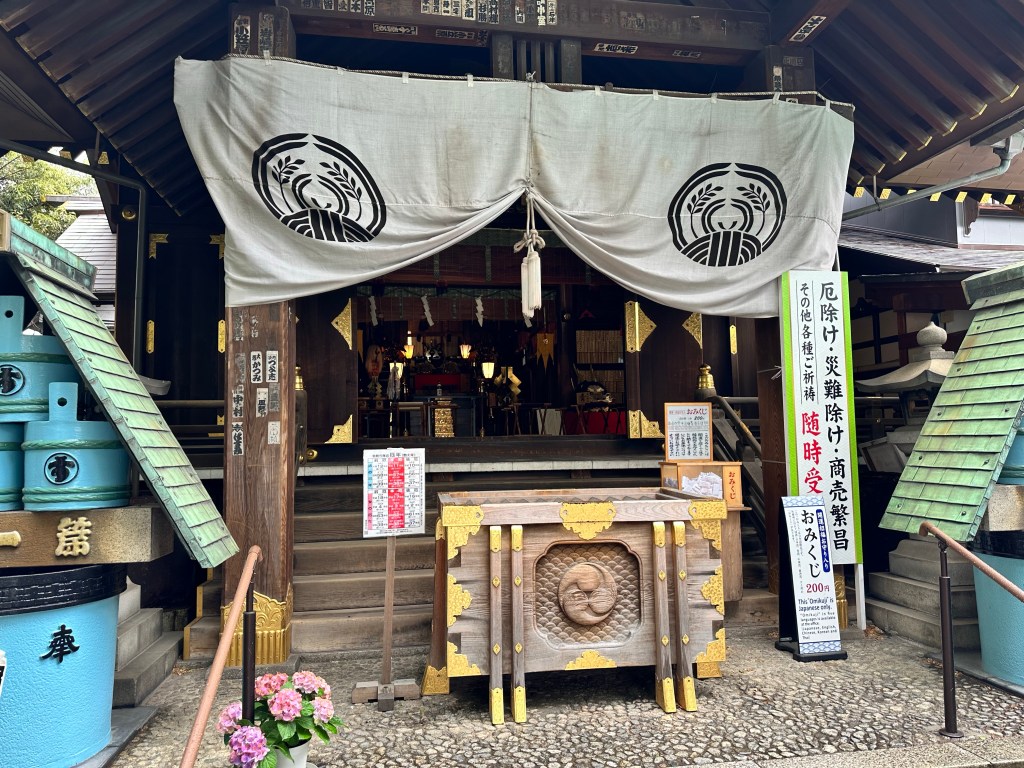
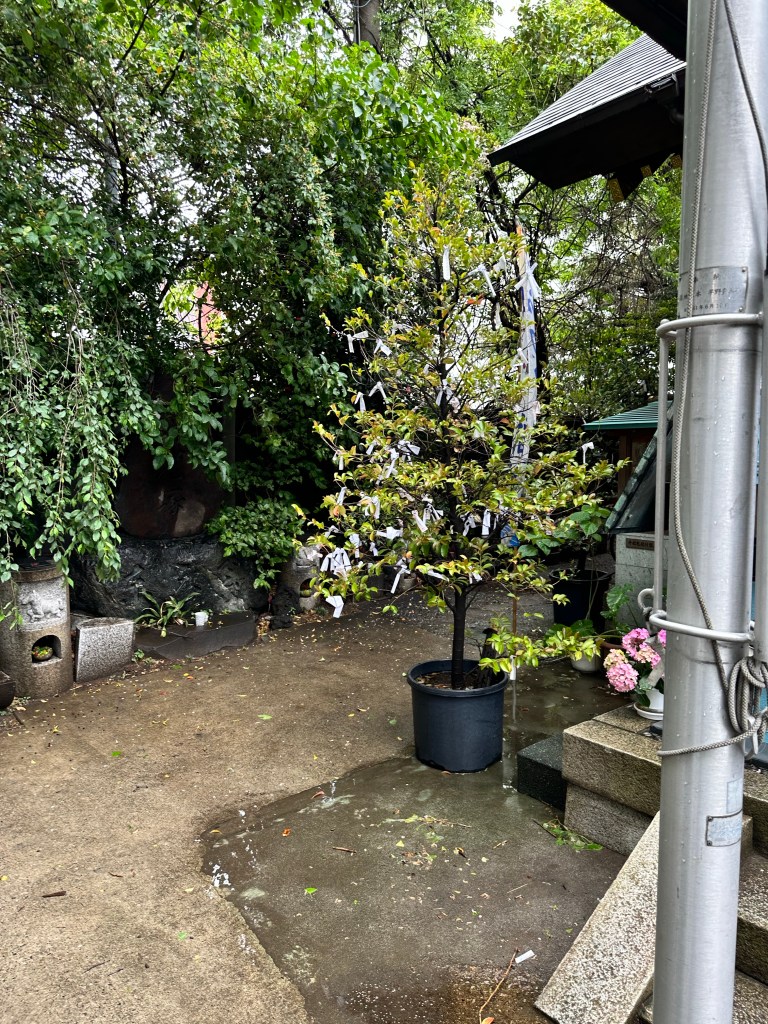
En route we passed by the Namiyoke Inari Shrine so we popped in for a look. Shrines are often built for a purpose and this one, because the surrounding land is low and adjacent to the sea, is there to protect from floods and tsunami. You go to a little window, make a donation and then you can ask a specific question ie, “is my business safe from a giant tsunami this week?” and you are given a straw, inside which is written your luck. If it’s good news, you thank the Gods, do some ceremonial hand-clapping in front of the God of the shrine and leave with a happy spring in your step. If the news is not so good, you take it to the tree and tie it to one of the branches, as you can see in the last picture below, and ask the God to change its mind.
Is it just me, or are there all sorts of ethical issues in this process? Who, for instance, gets to write out the lucky slips? Does one person do the happy notes and another the bad news ones? Does one apply to be the ‘bad news’ writer? What if a psychopath gets the bad news job? “Your business will be destroyed by a giant squid riding a surf board on the tsunami wave, brandishing samurai swords in each of its tentacles”. It may seems like a fun job at first but I bet it becomes tedious after a while and you long to write the happy notes. Who clears up the bad notes from the tree? Do they recycle them? If you keep getting the same luck note doesn’t it start to smell fishy? Doesn’t everything smell fishy next to the fish market?
I’ll stop now but so many questions remain..,
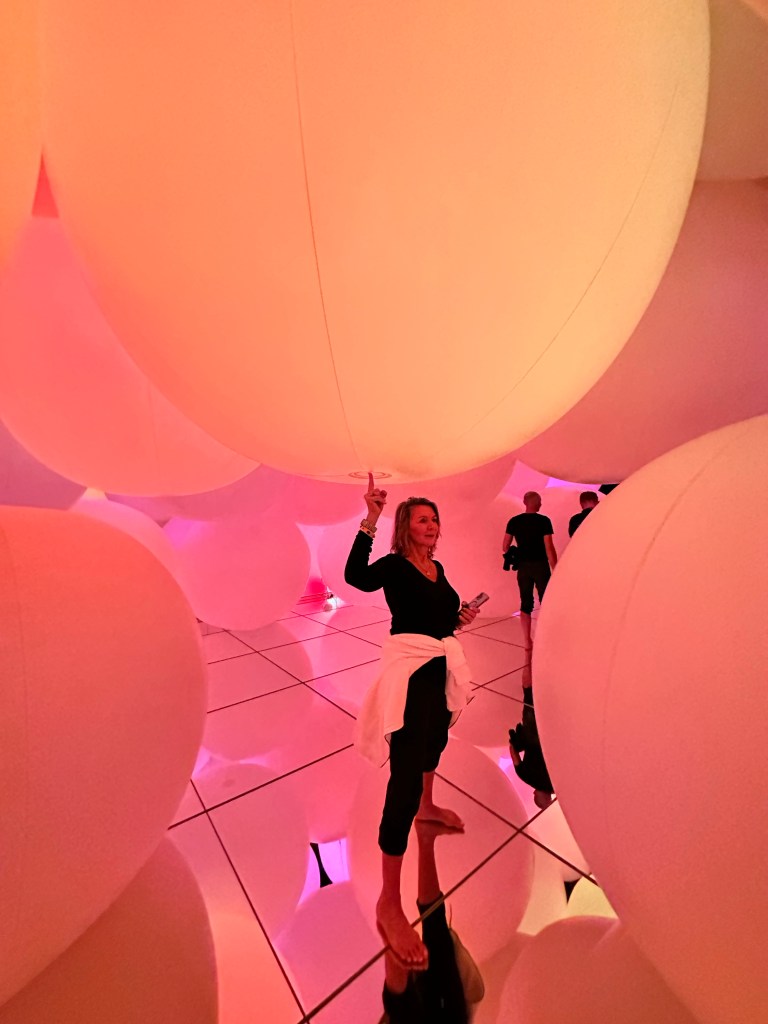
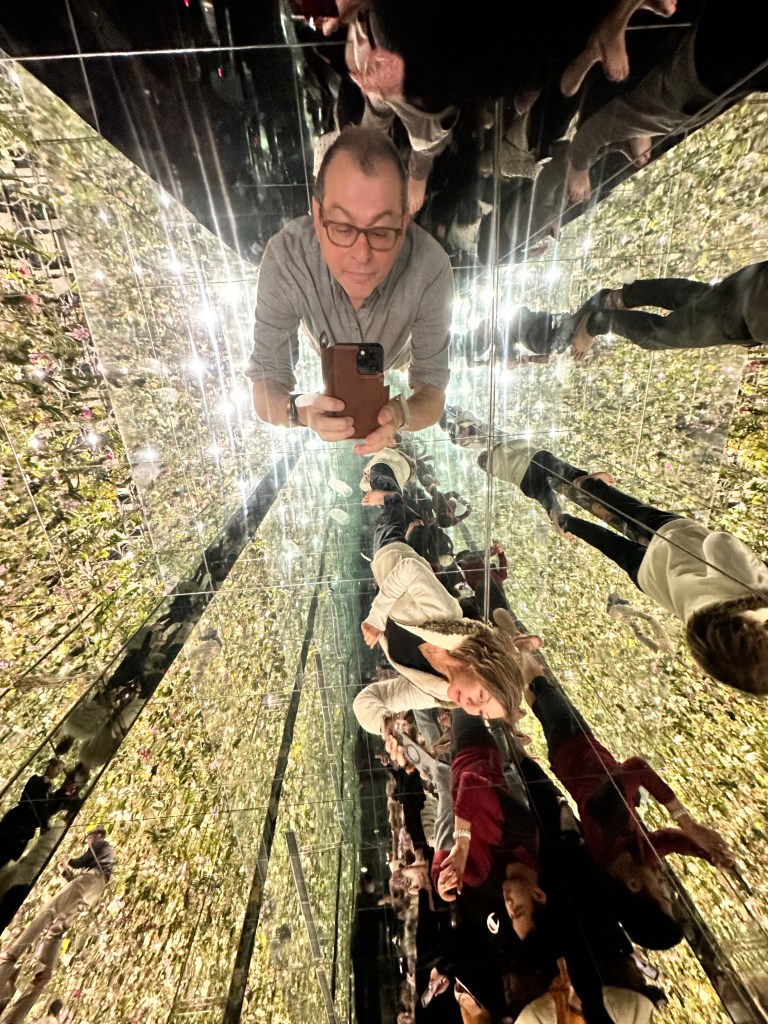
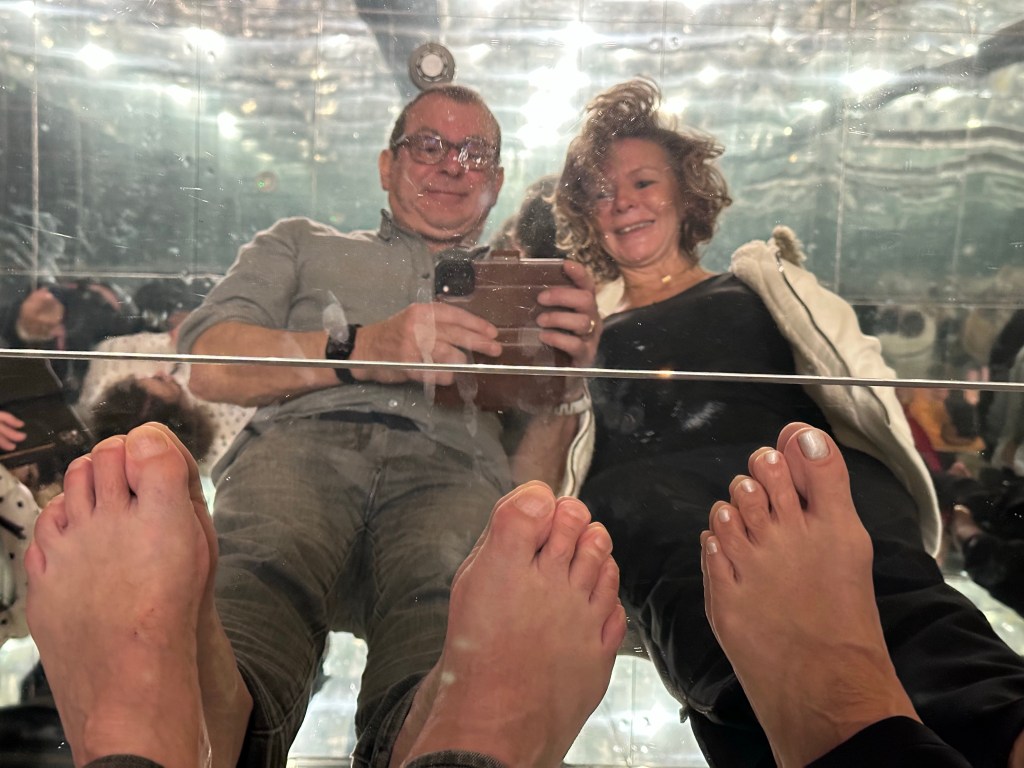
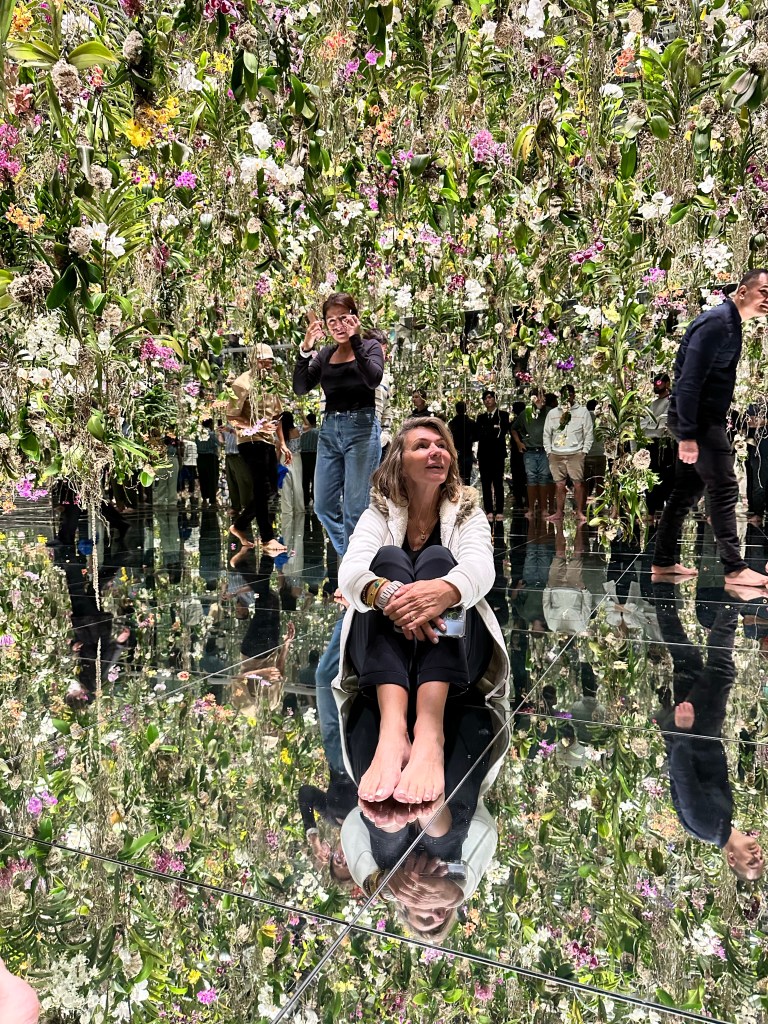
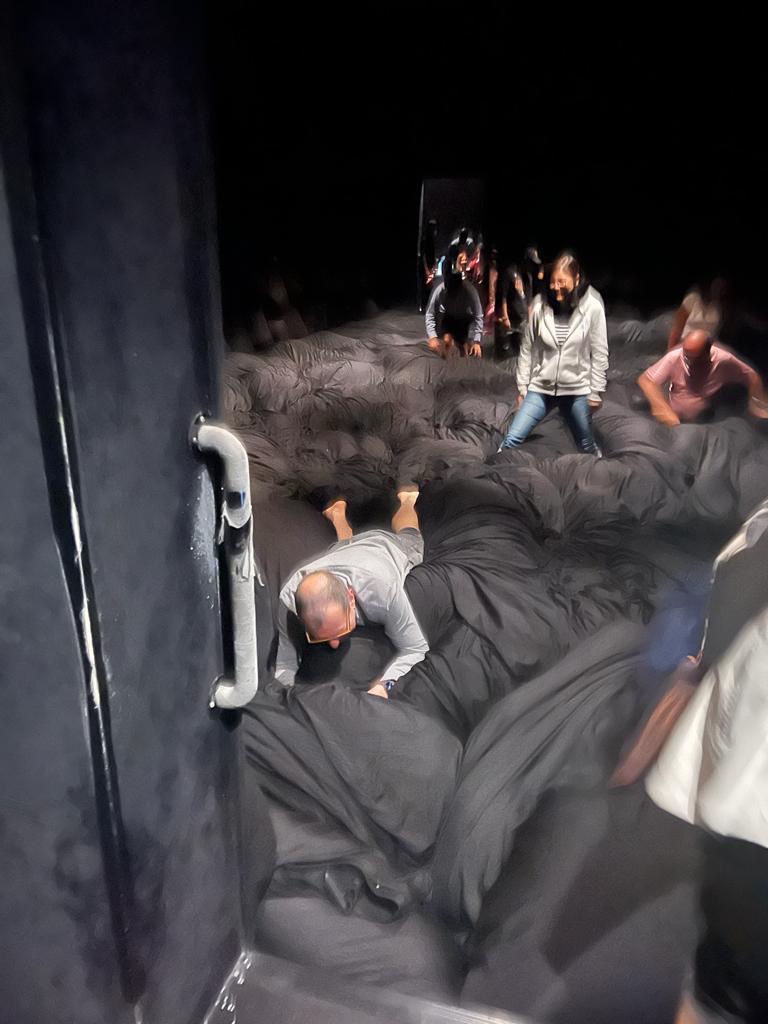
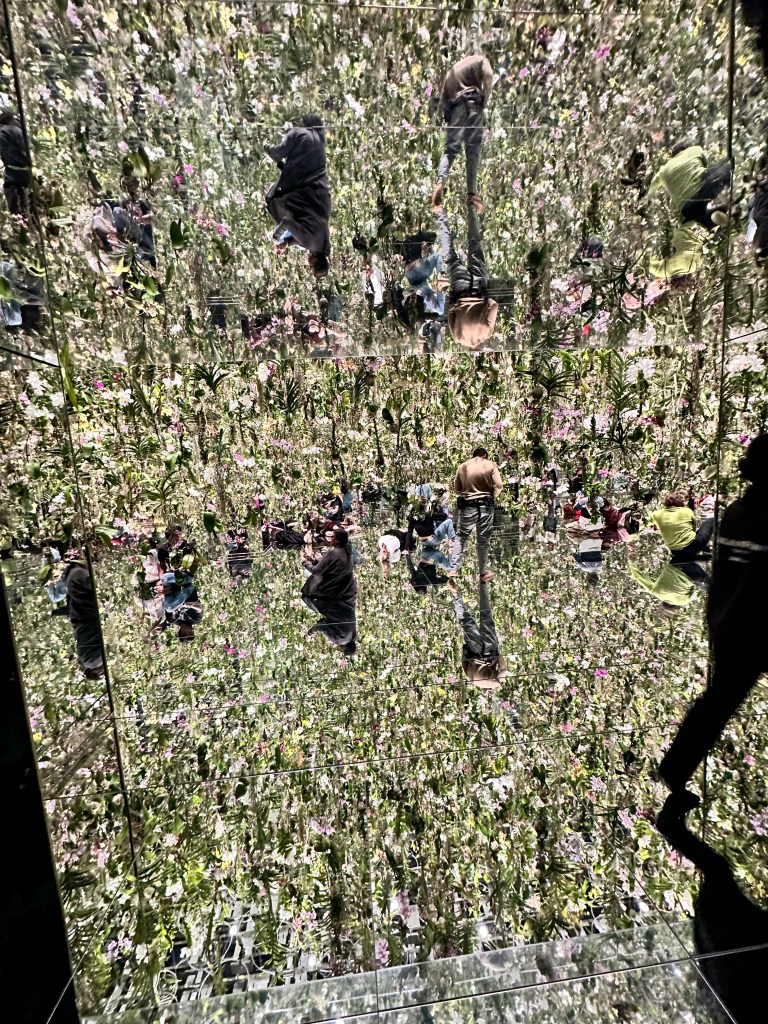
After our market trip it was back to the hotel for a siesta (old habits) and then we set out to the harbour area to visit the Team Labs ‘Planets’ exhibition which is “an immersive experience”. Team labs have these around the world and they get rave reviews so we went, and it was incredible. check out the website and find one close to you.
We started off wading through water up to our knees, then I fell into a room with a very soft floor knee deep in beanbags. Then your senses are immersed in an incredible light show. This event is called water and gardens but each location has a different theme.
I had to drag Brigitte out of this one!
Due to fishy overload when we came out of the show we went to the local Italian, purly to convince our stomachs that we haven’t gone completely mad.
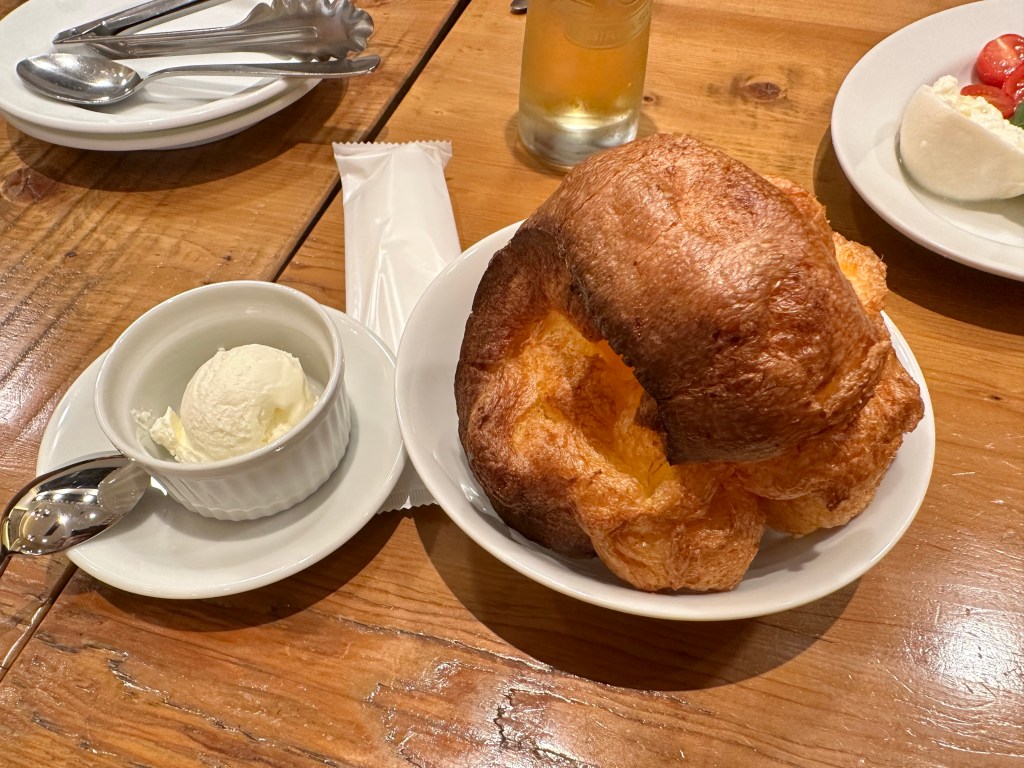
We placed our order and a few minutes later, as our stomachs looked forward to some typical Italian fare, an amuse bouche appeared – A Yorkshire pudding served with cream and maple syrup. 😂 Obviously their cuisine translation app went awray, or they instinctively knew a Yorkshireman when they saw one. To give them credit, it was a mighty fine Yorkshire pudding so we ate them, with the cream and syrup, for dessert.
And now for the moment you’ve been waiting for..,
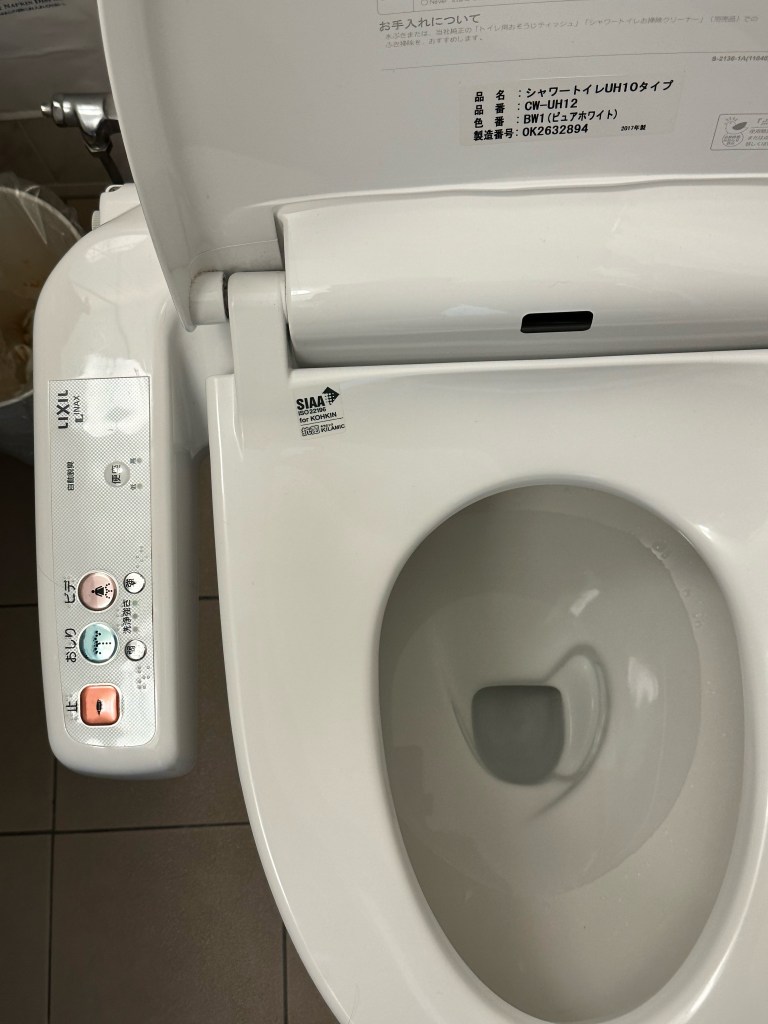
Japanese Toilet Roulette
Japanese toilet roulette is a fun game to play here. Firstly, you sit on the unnaturally-hot heated toilet seat, which is a weird sensation to begin with as it’s far hotter than ambient bottom temperature. Then you start to play by pressing a random button because, unlike European imitations, you can’t read the instructions, so it’s anyones guess what is going to happen.
If you’re lucky it will just flush, or you’ll get a pleasant, warm and somewhat damp sensation in your nether regions. If you’re unlucky, a stinging jet of hot water will suddenly strike your gentlemen/or ladies parts, depending on which you are endowed with. If you’re really unlucky, an articulating mechanical arm will appear and do god-knows-what to you’re dangly bits. I’m just speculating about the mechanical arm as I have never actually experienced this but, knowing the cunning of Japanese toilet scientists, such a device could well be lurking under the rim so my advice would always to be hyper-vigilant and be ready for a quick dismount à la Nadia Comãneci. (Any kids reading who need to Google Nadia are too young to read about toilet roulette!)
STOP PRESS: Toilet roulette update:
Earlier this evening Brigitte discovered that the odds for a poor toilet roulette outcome can be significantly increased if you find one incorporating a blow dryer!! She set it too high and toasted the parts of her anatomy that just aren’t meant for toasting. We now need to find out the Japanese for ‘rubber ring’ or the train journey to Hakone tomorrow is going to be very painful for her 😅
Tomorrow leave Tokyo for Hakone on the bullet train so this is my last post from here .
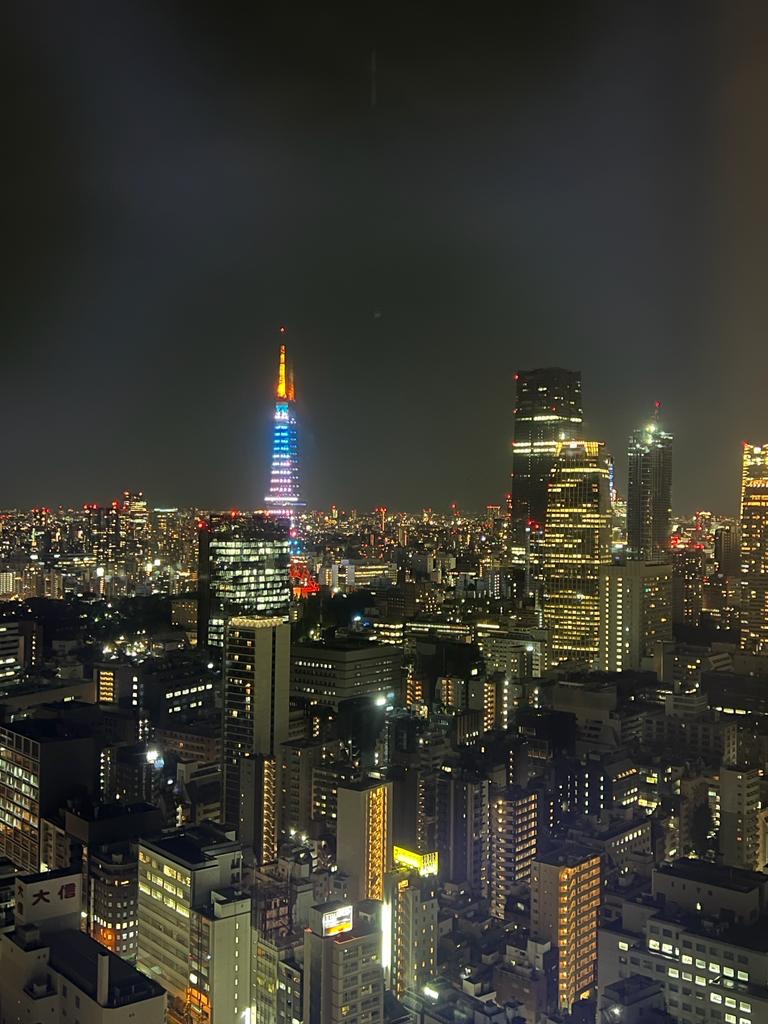
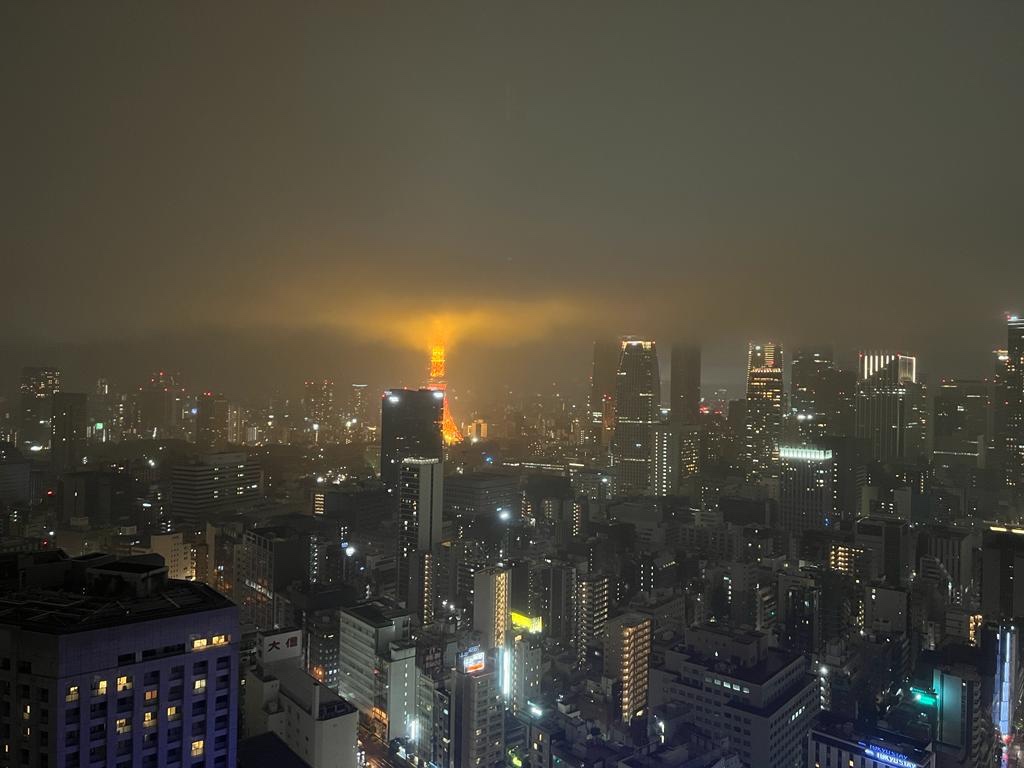
Oyasumi nasai – Night night (from yet another differently coloured Skytree – I’ll guess we’ll never know if there are more)
Postscript. Thank you Charlie for pointing out that the Japanese don’t steal umbrellas because the punishment is to have the umbrella inserted up the offender’s trouser leg and opened!
Today we had a guide for the whole day to show us around Tokyo. It’s such a big city though, that I think you would need at least four days to really get a good feel for it, so we have only just scraped the surface.
What we did see agreed with the guide books, it absolutely is a city of contradictions.
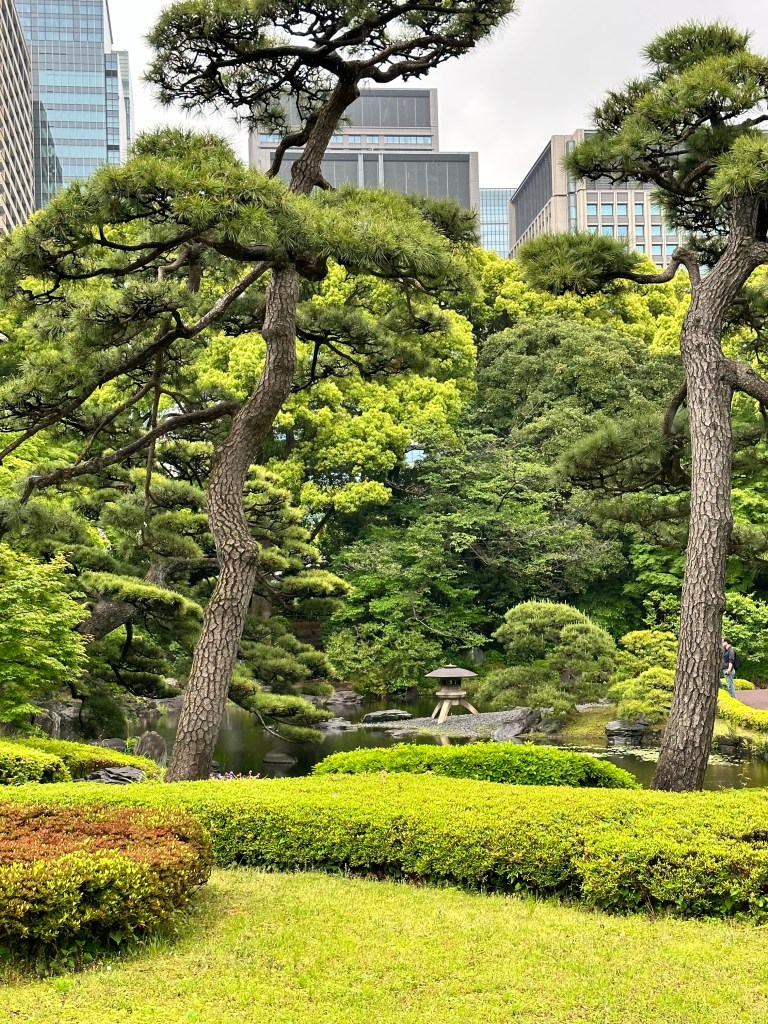
You visit an incredible modern building and find a tiny portable Shinto shrine underneath. You visit an area full of skyscrapers and there’s a peaceful forest in the middle of it and almost everywhere, minimalist beauty. The shop windows, the food halls the restaurants, everywhere seems to have an elegant simplicity. No brash displays, no marketing messages leaping out at you just calmness and serenity….
…….Until you turn the corner and cross the road….
Shibuya Crossing is the world’s busiest pedestrian crossing, with as many as 3,000 people crossing at a time! Today was Sunday, it was pouring down with rain and it was a national holiday so it was unusually quiet but you can see what it’s like (Piccadilly circus and Time square rolled into one)
Shibuya crossing from 17 floors above.
And I have no idea what was going on here but it appeared that a small number of teenage girls had broken out of their detention centre, hijacked a bus and decided to attack the city by singing at it very loudly!
The video doesn’t do the terrible cacophony justice,
Unfortunately, we didn’t pick the best day for sightseeing. It started off raining for the first few hours…..and then it turned into a torrential downpour.
You would imagine that with all the rain we get in the UK we would know a thing or two about umbrellas but let me tell you, we know nothing.
It must rain hard and often in Tokyo because the Japanese have turned umbrella management into an art. To start with, if you get caught out in the rain without an umbrella, you just find the nearest umbrella vending machine and for a couple of quid, it will dispense to you an umbrella.
When you want to go into a store, you must first put your umbrella into the umbrella dryer to remove the excess water. You then insert it into a hole in the umbrella machine and it gets wrapped in a plastic cover so you can then enter the store with it without dripping on the unfeasibly clean floors. Some stores even provide an umbrella wrapping service at the door for you.
The rare establishments without this facility provide a rack into which you can place your umbrella safely until you return.
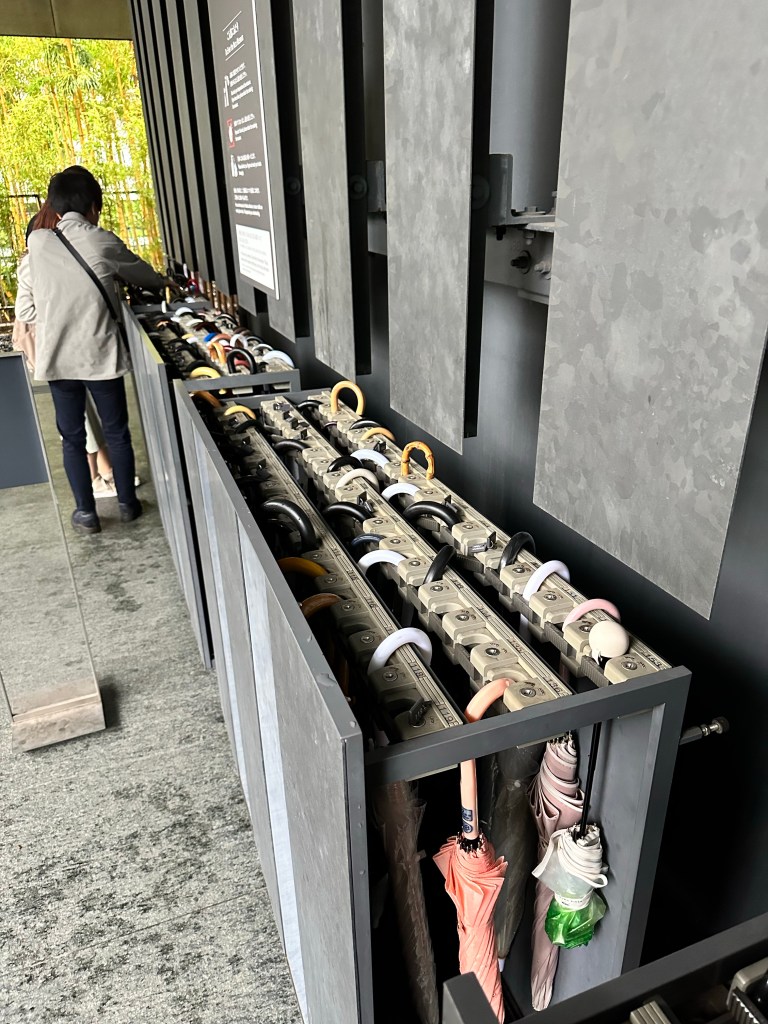
At the museum we visited, they have lockable umbrella racks that slide out from the walls when it rains where you can securely leave your two pound umbrella without fear of it being taken accidentally by someone else (for it would never be stolen in Japan).
Sliding, lockable umbrella racks, the ultimate in parapluie security.
And, just in case it starts to rain during your visit and the vending machine is empty, they have a selection of umbrellas that you may borrow to visit their garden.
Japan has cracked every single umbrella problem leaving the UK trailing far behind in its wake. Another opportunity missed. Shame on us,
Our tour started bright and early and our guide, Maki, started by putting together our action plan.
Maki and Brigitte discuss strategy
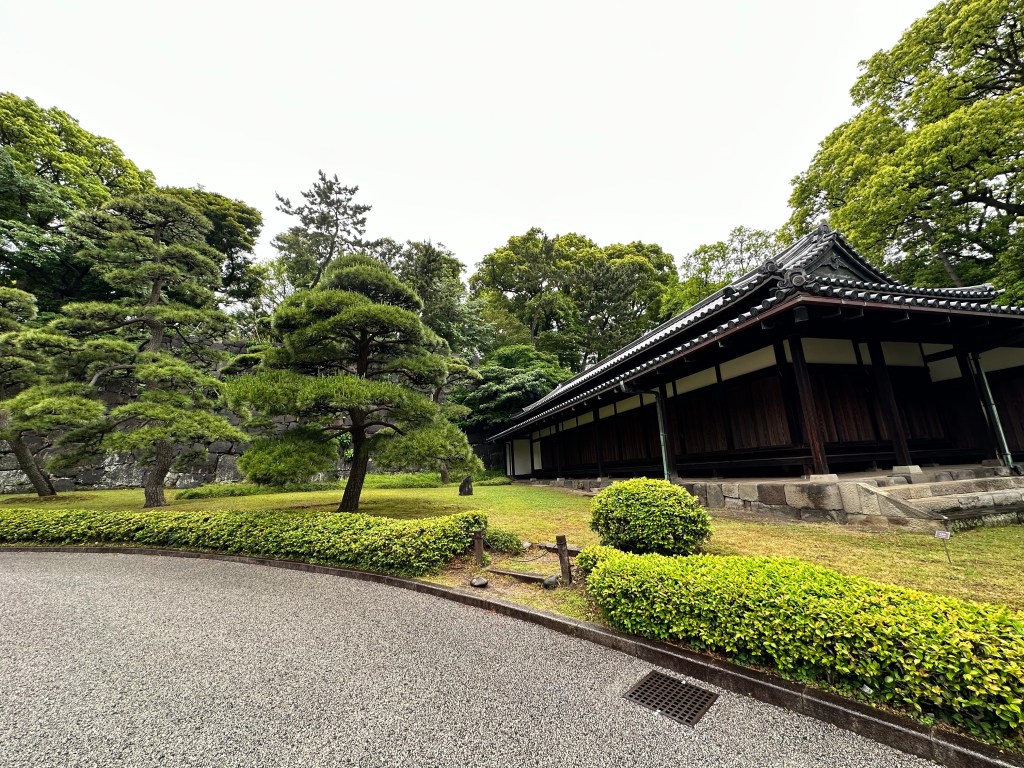
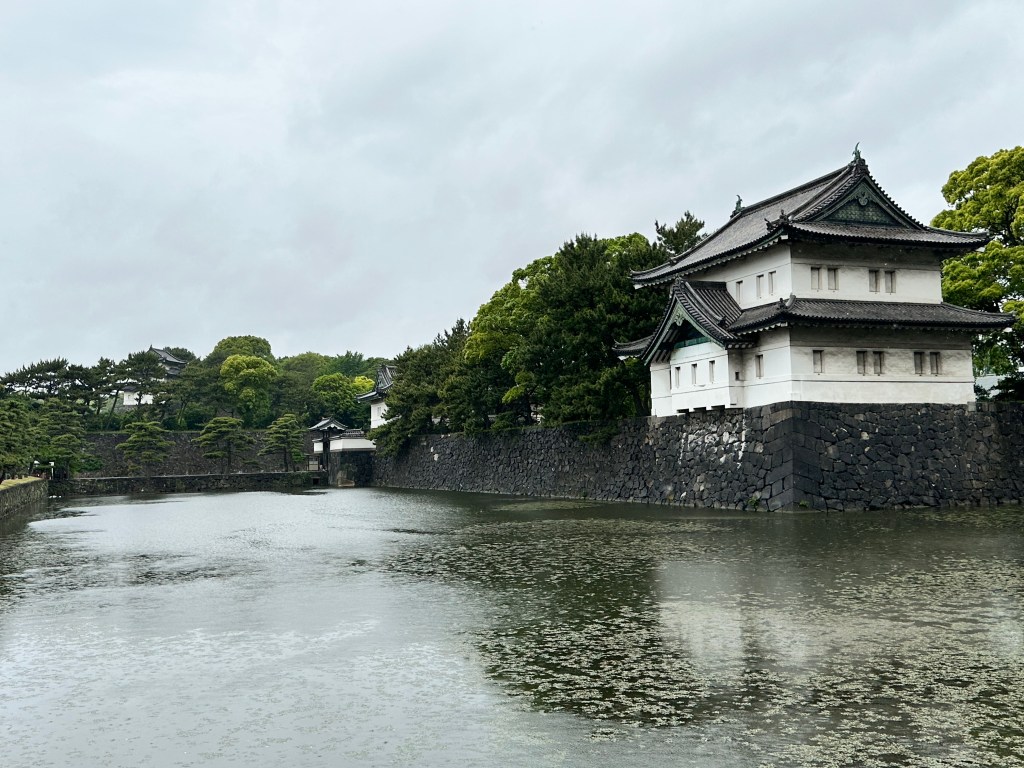
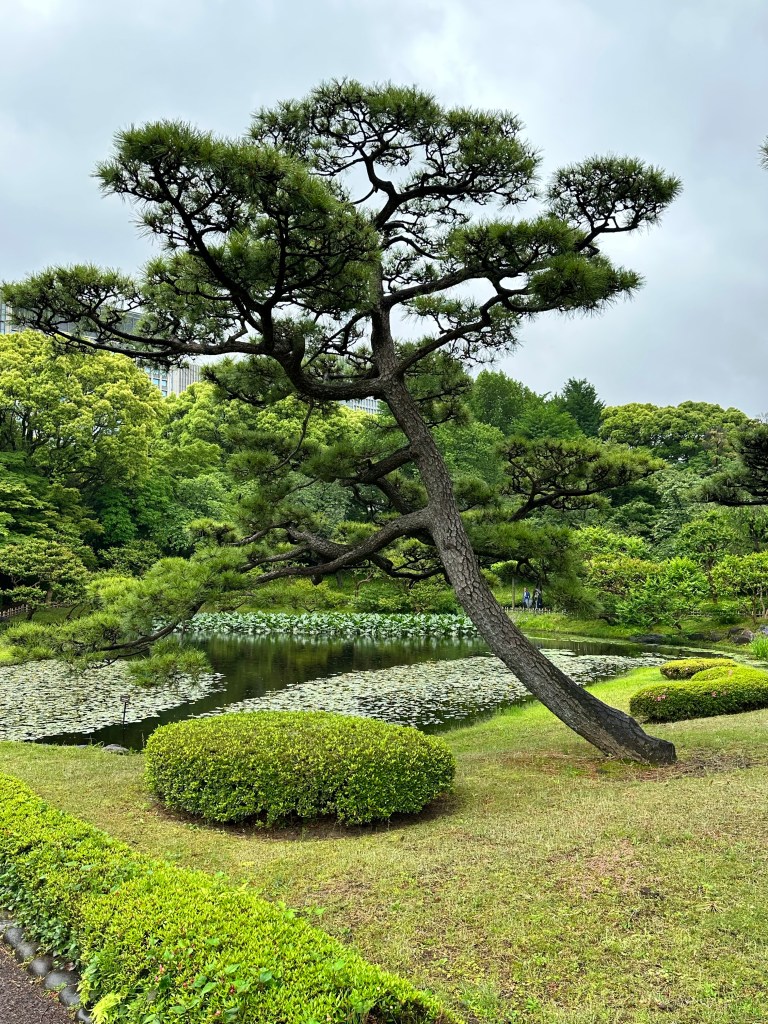
Our first stop was the Imperial palace. Actually, it was a visit to the gardens as, for security, the palace isn’t even depicted on the map of the grounds. It’s a bit silly as it’s surrounded by skyscrapers now and so its whereabouts are known to anyone residing above the fifth floor.
It would have been better had the sun been shining but, as you can see, it’s still a beautiful place even from under an umbrella.
Imperial palace gardensThe fish didn’t seem to mind the rain one bit
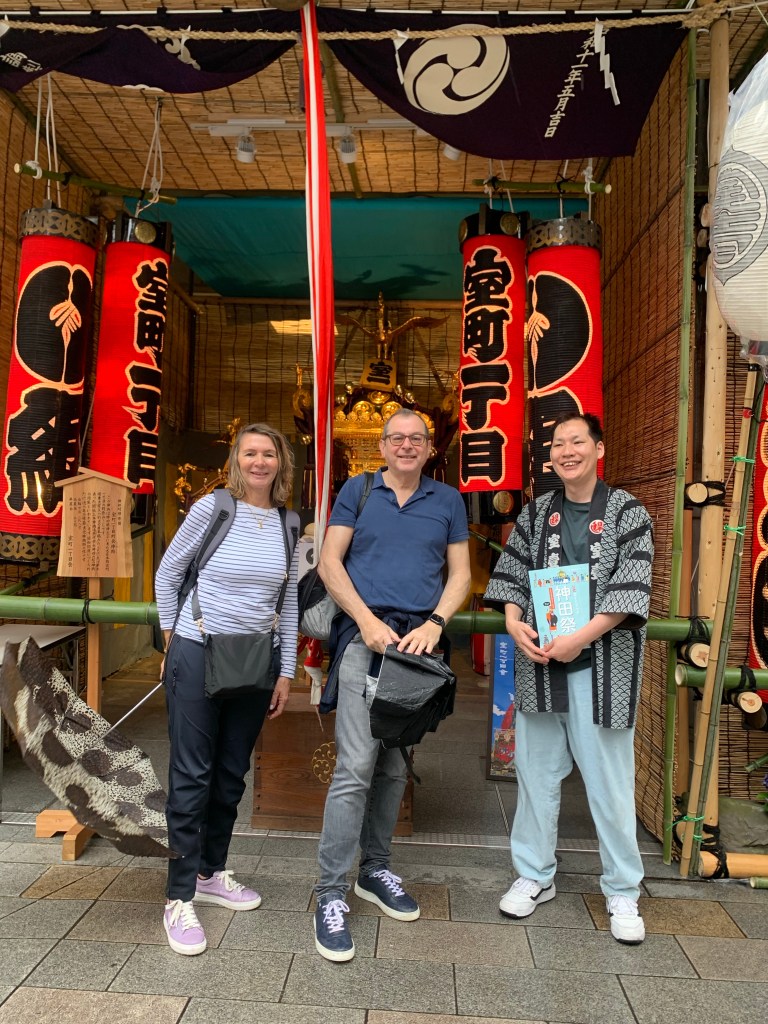
We then travelled to the Nihonbashi area as the guide wanted to show us the Harrods of Tokyo (The Mitsukoshi store) and outside we found ourselves at a portable shrine.
Every small neighbourhood has one of these and on the day of the Shinto Kanda Jinja festival they stick a very long pole through each side of the shrine (the gold thing in the above picture) and one hundred locals carry the shrine throughout the area, 25 per corner). It is so heavy and travels so far that each of these shrines need five teams of people, so that’s five hundred people. In the local area there are 100 of these portable shrines, each with 500 people so that’s 50,000 people walking through the streets on the day of the festival carrying portable shrines!
Each shrine contains the spirits of the gods and as they walk the spirits sprinkle good fortune throughout the streets so, with so many shrines, it must be an incredibly lucky area. Probably full of lottery winners.
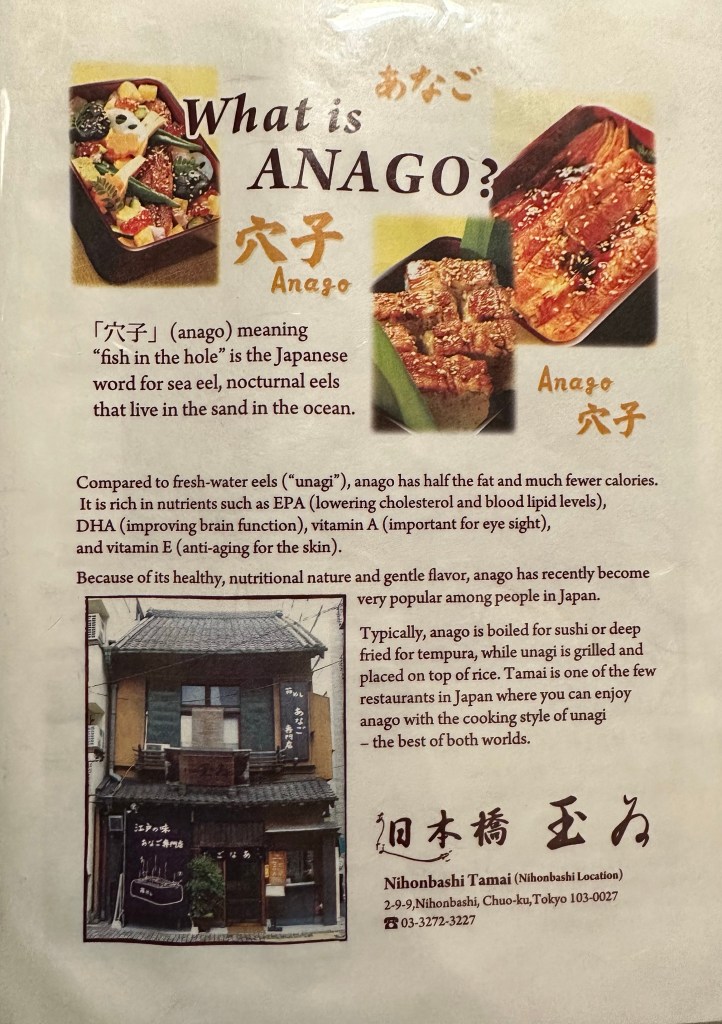
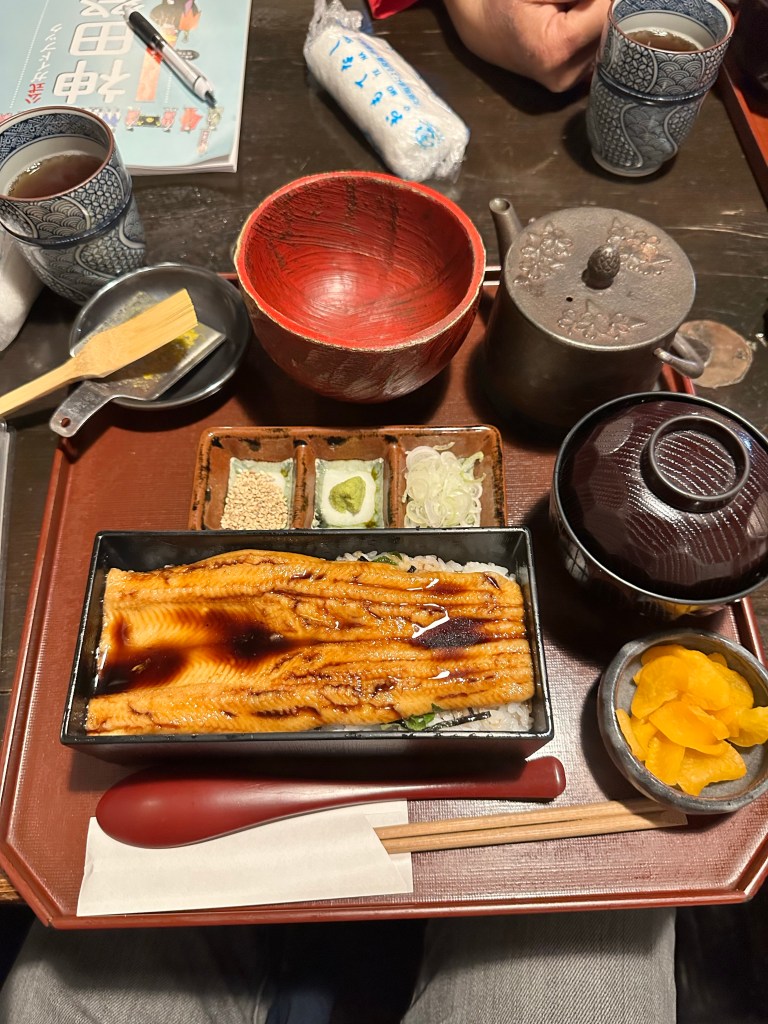
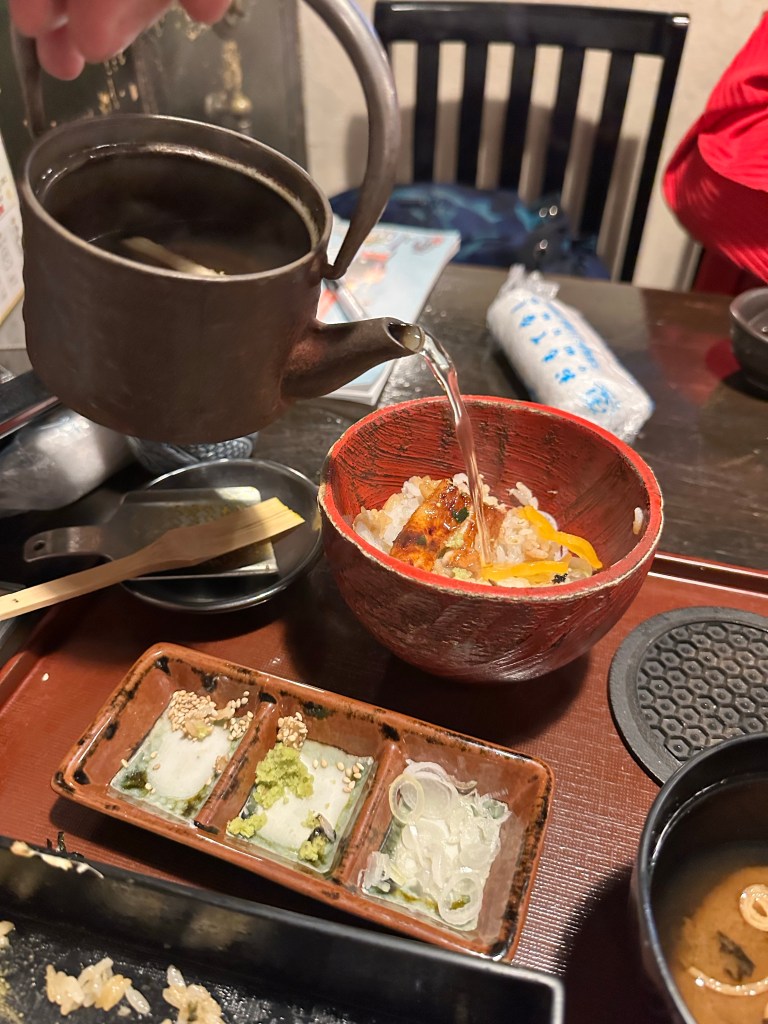
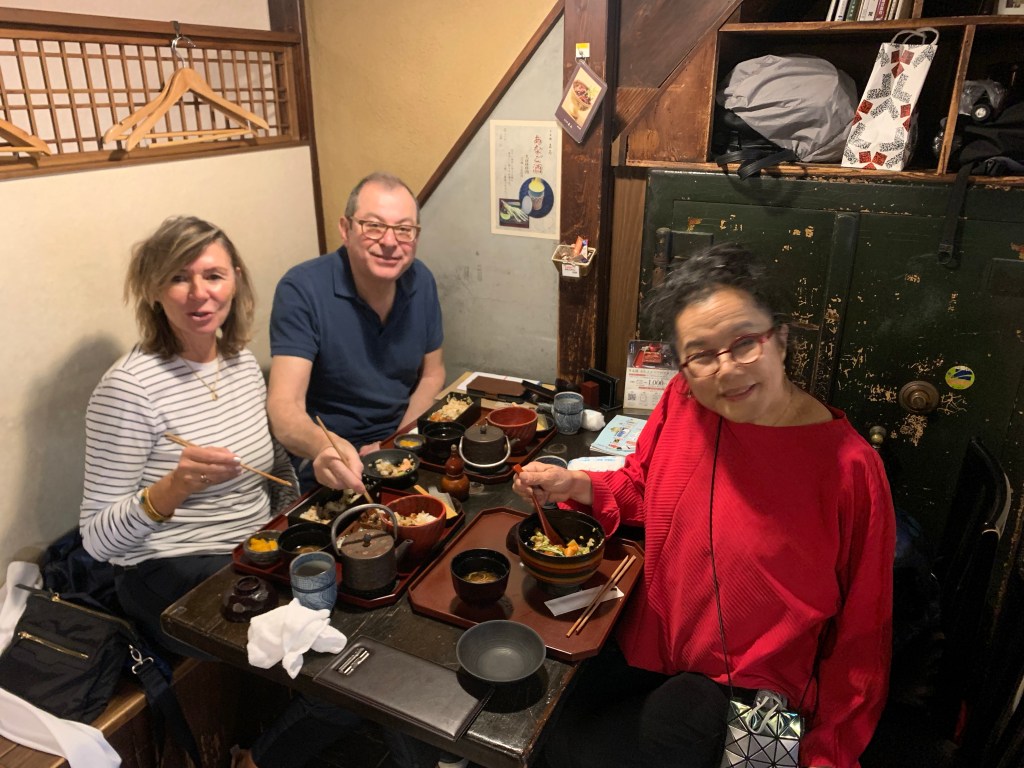
We requested something typically Japanese for lunch so Maki took us to an eel restaurant. (Yes, you read that correctly) No, it’s not run by eels, nor are little eel waiters sliding around serving cocktails, it’s ‘just’ a little restaurant serving a fish called Anago and is supposedly incredibly healthy. You can read the menu for yourself. It was actually really good and you had to eat and add seasoning in a certain order, culminating with combining the last mouthfuls with a broth to make a soup. Like many things were discovering in Japan it’s odd but delicious.
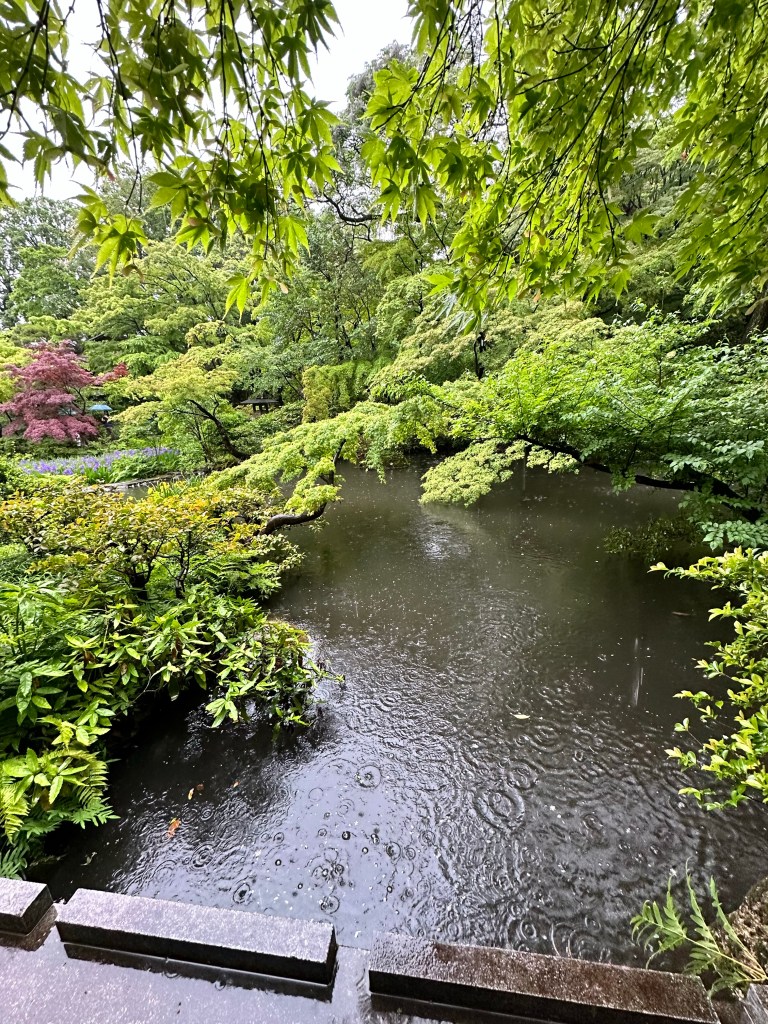
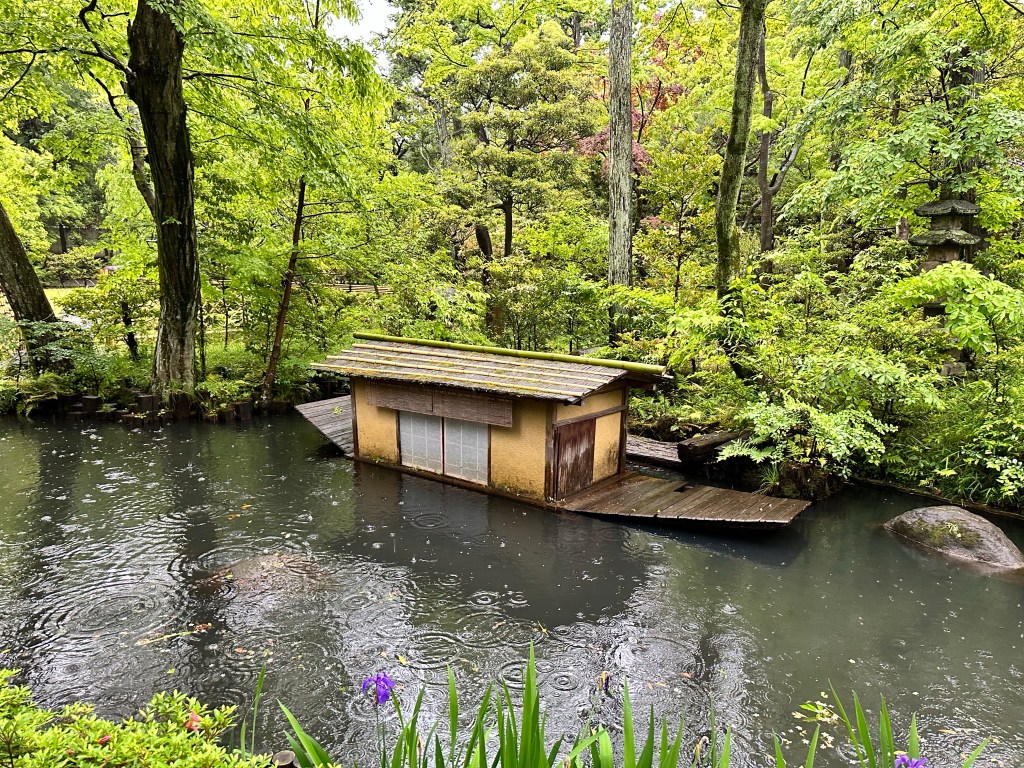
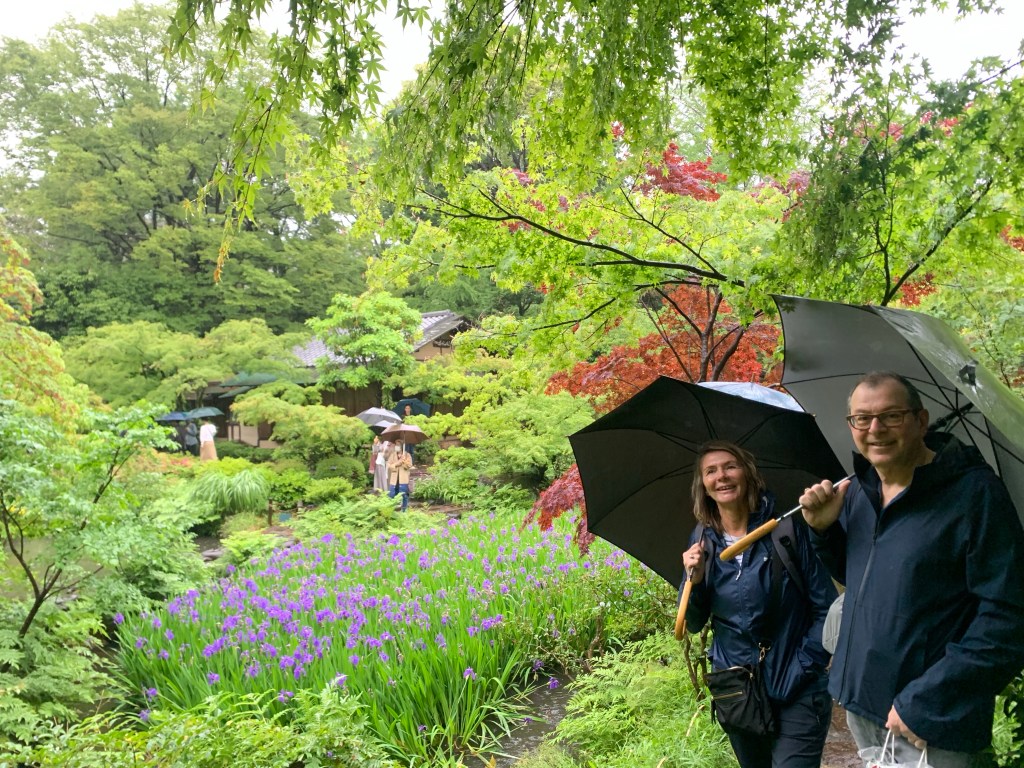
After lunch it was a visit to the Nezu museum which was a fabulous building in an incredible Japanese garden which, to be honest, we enjoyed more than the exhibits. They were interesting, very delicate, simple and stylised but not particularly to our taste. Maybe we’re just biased towards European art.
Nezu museum garden
So I think I’ve taken up enough of your time already. I know I promised toilet roulette but I’m going to save it until tomorrow and, instead, show you what I think could become a regular feature…..
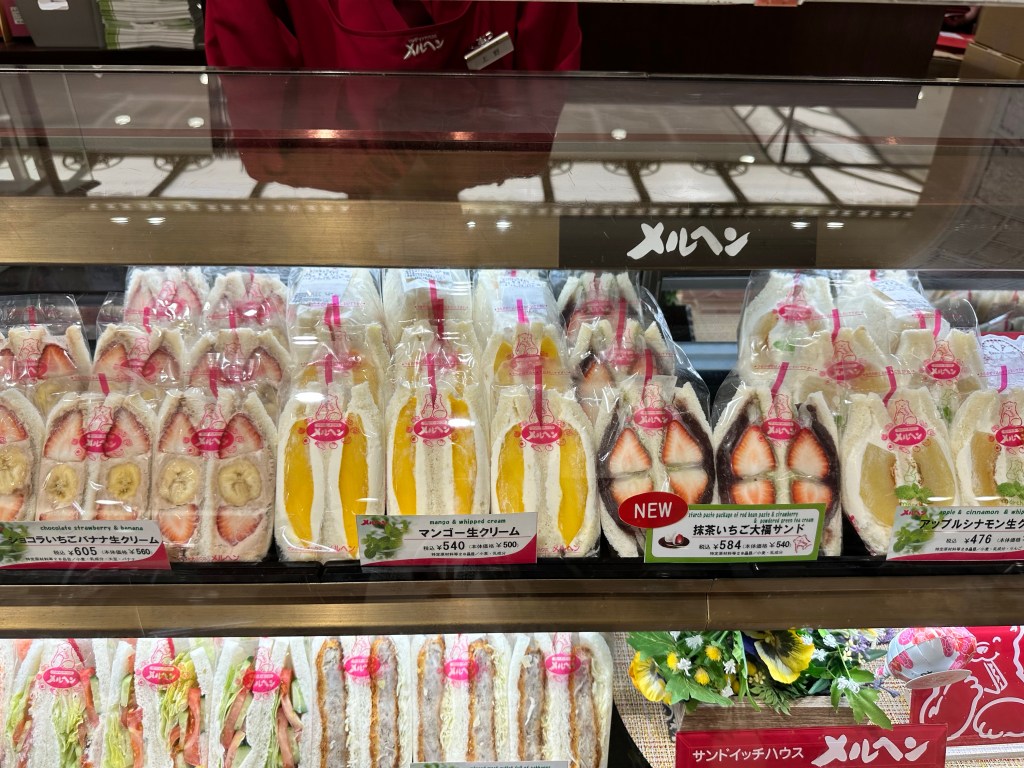
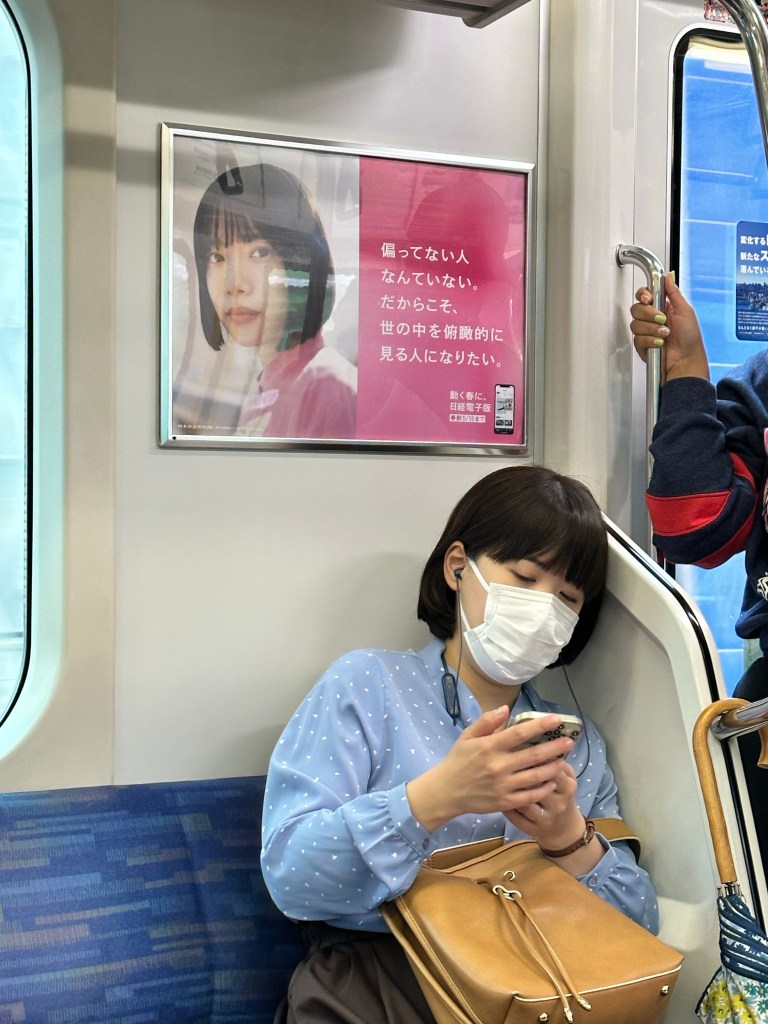
‘Weird things we saw in Japan today’
Look closely…….Fruit sanwiches!!Girl sits under her own advert on the subway?Oyasumi nasai – Night night (from a differently coloured Skytree – no idea why)
Coming tomorrow…Japanese toilet roulette – at last!
We’re here! Though a bit the worse for wear. Longhaul west to east is never the best, especially when it’s a 14-hour flight with an 8-hour time difference. You get on the plane first thing one morning and get off first thing the next morning but the night that should be in the middle goes missing, which is why we’re both completely knackered.
Unfortunately, things that seem normal to us Europeans can cause great offence here, such as tipping taxi drivers or leaving your shoes on the floor pointing in the wrong direction. Yawning, during a conversation, therefore, with the extremely polite Japanese, is probably unforgivable so we’ll have to get those sleep patterns sorted out quickly.
Luckily, we managed to get an early check-in as soon as we arrived at the hotel and all we wanted to do was lie down and go to sleep – so what we did, of course, was dump our bags in the room and rush straight out to explore Tokyo!
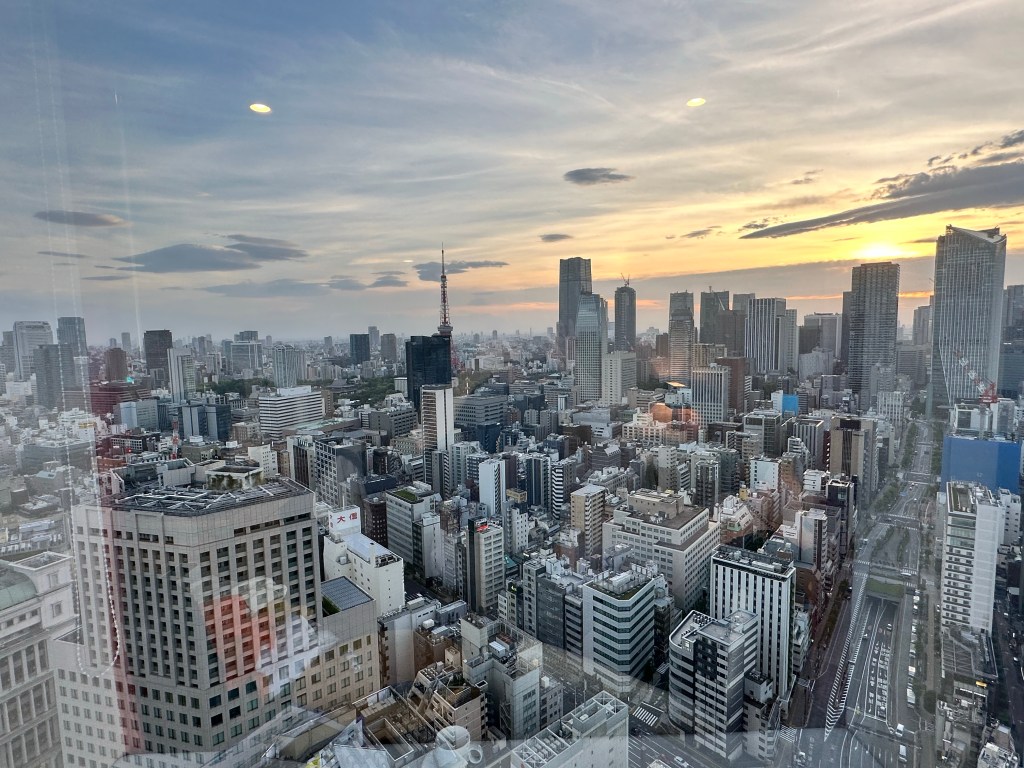
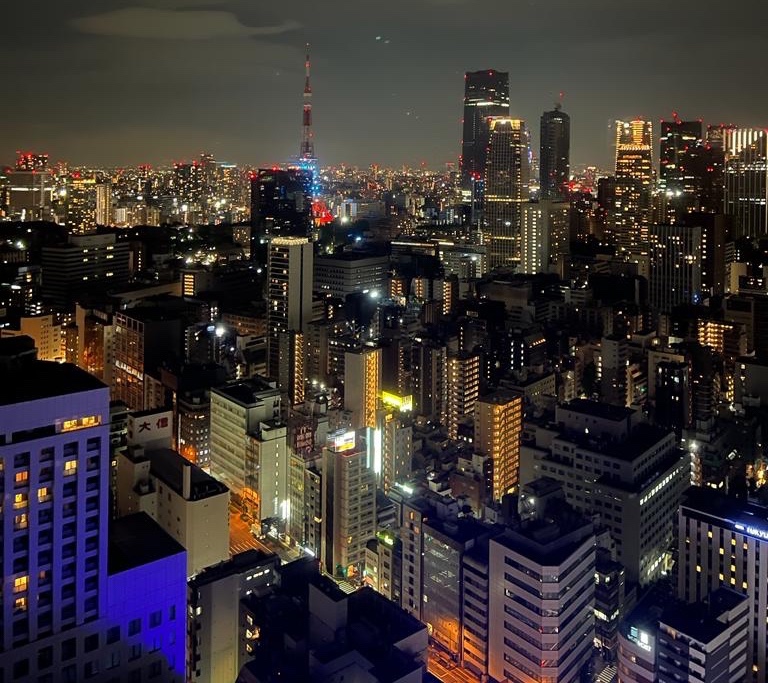
The view from our hotel room. In the middle is the Tokyo Skytree, at 634m it’s tallest tower in the world
We have no tour guide until tomorrow, so we jumped straight in at the deep end and decided to go grapple with the Tokyo subway system.
The station is only five minutes from the hotel so we we’re there within the hour! Well, it is a bit of a maze.
Finding the right train was easy and, after only another half hour, we were back exactly where we started. Right train, wrong direction😫.
No matter, within the hour we had arrived at Tokyo main station, collected our train passes for the bullet trains and spent another hour reserving all our train seats for the next two weeks. You would think that, in high-tech Japan, this could all be done on the Internet in five minutes, but it’s a completely manual process so it takes some time.
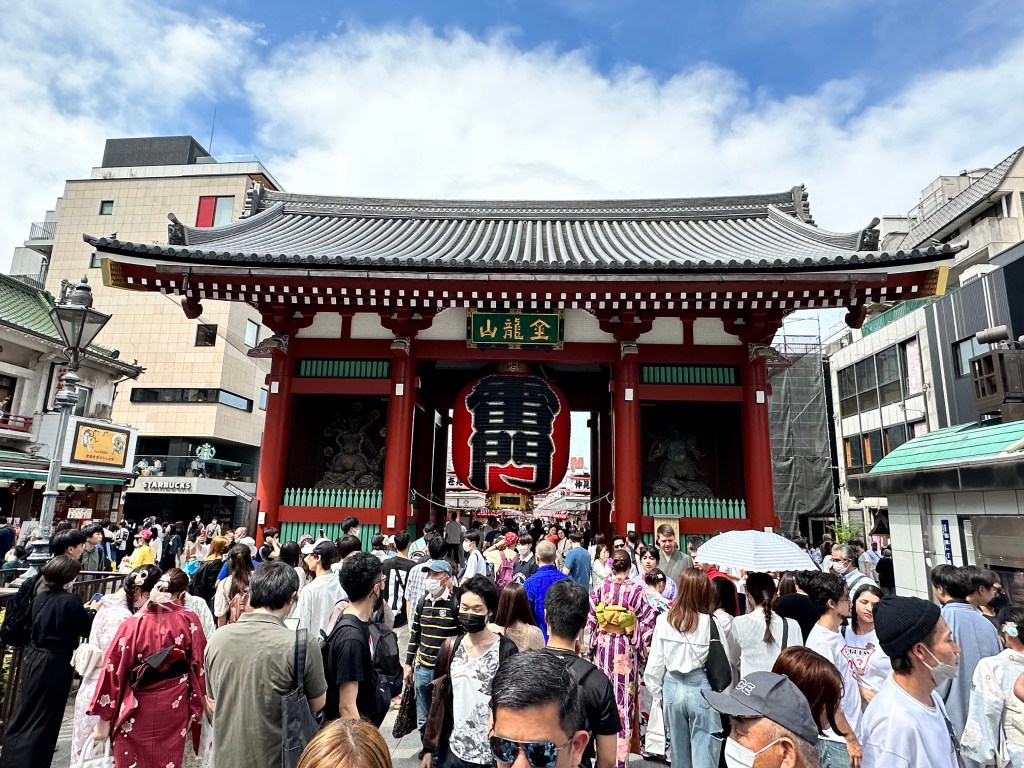
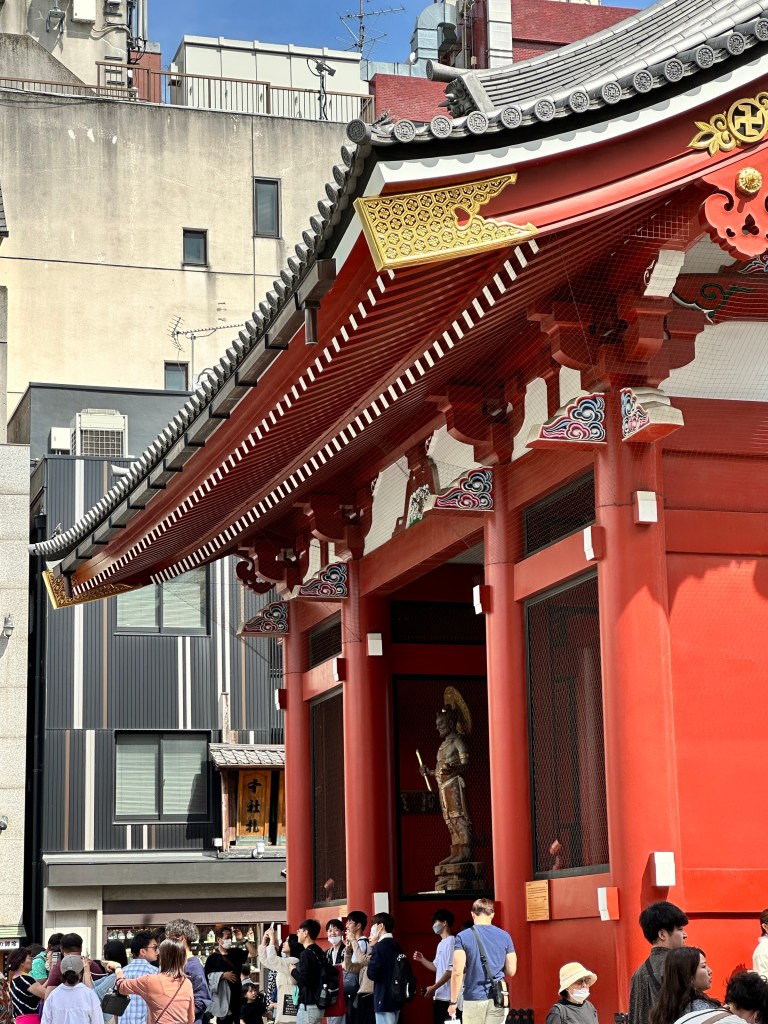
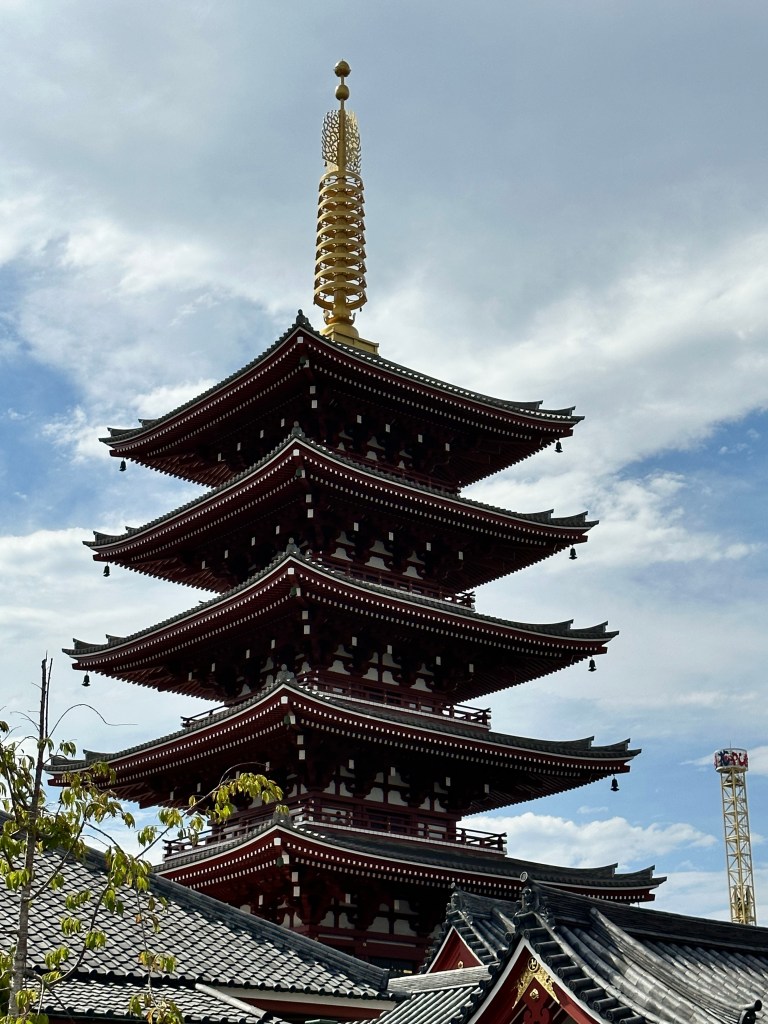
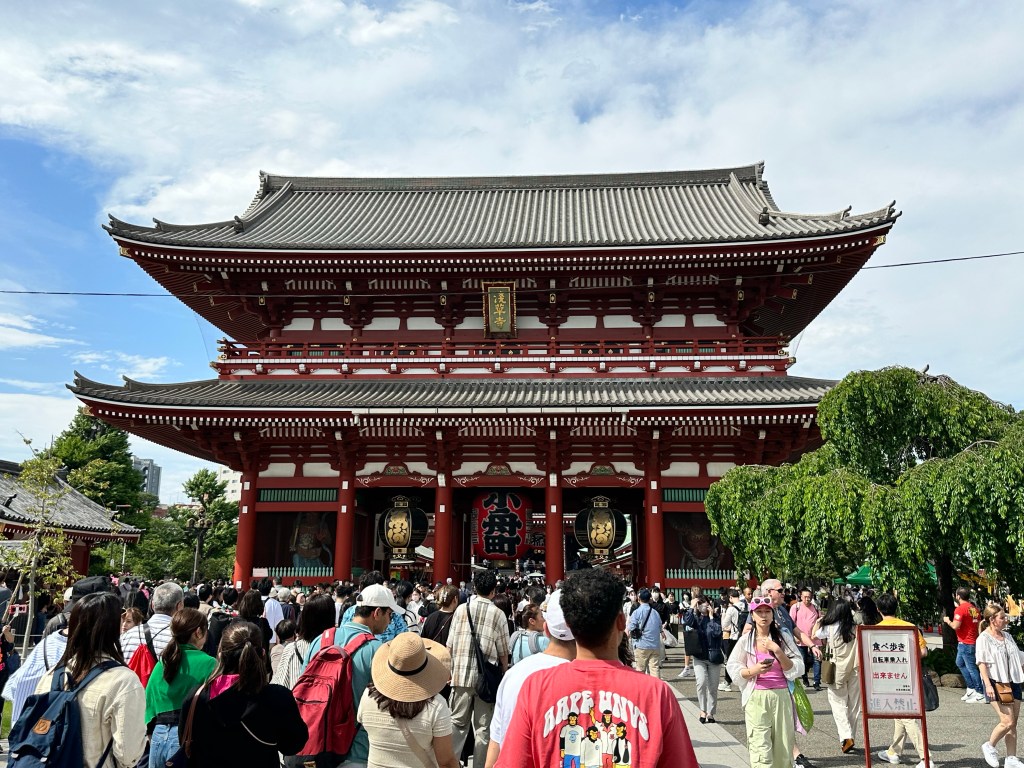
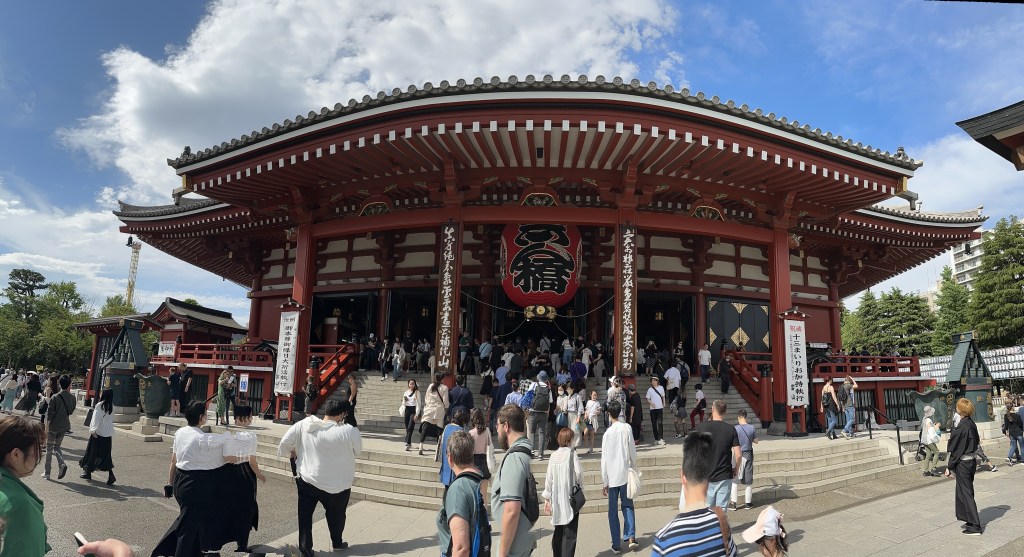
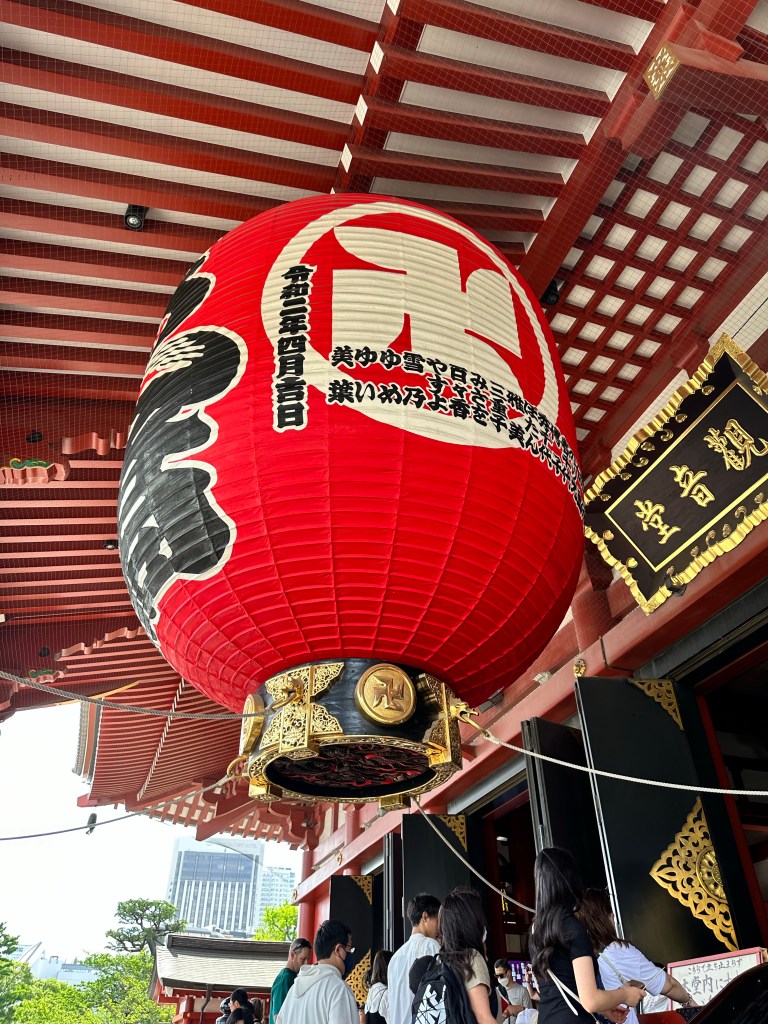
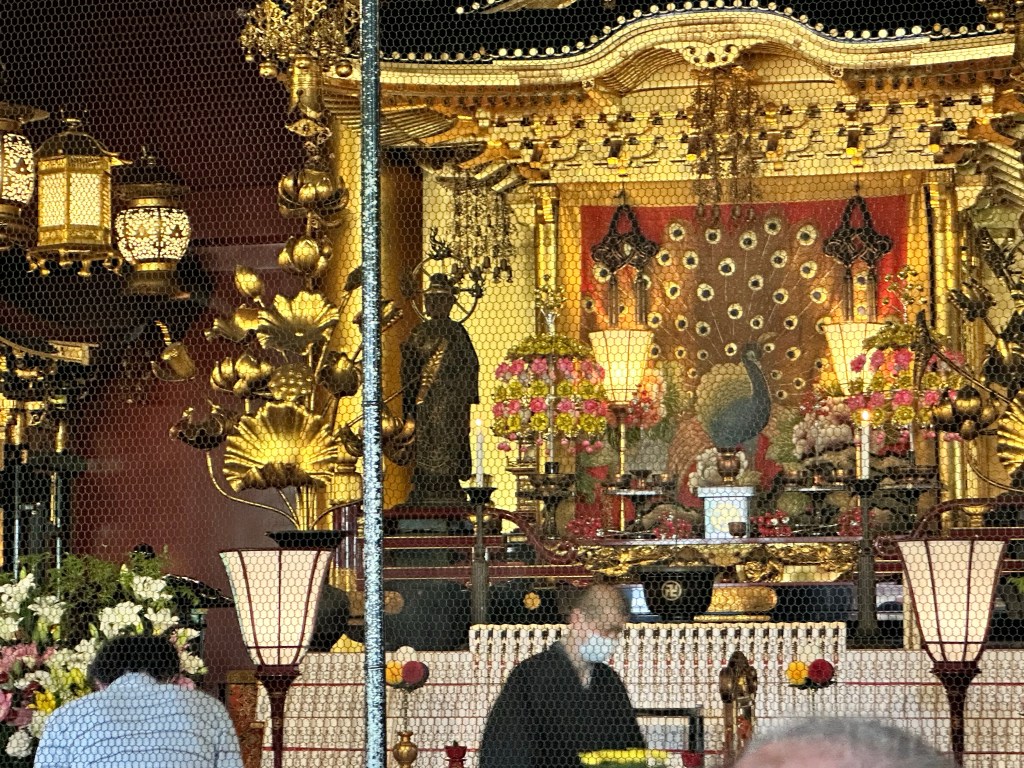
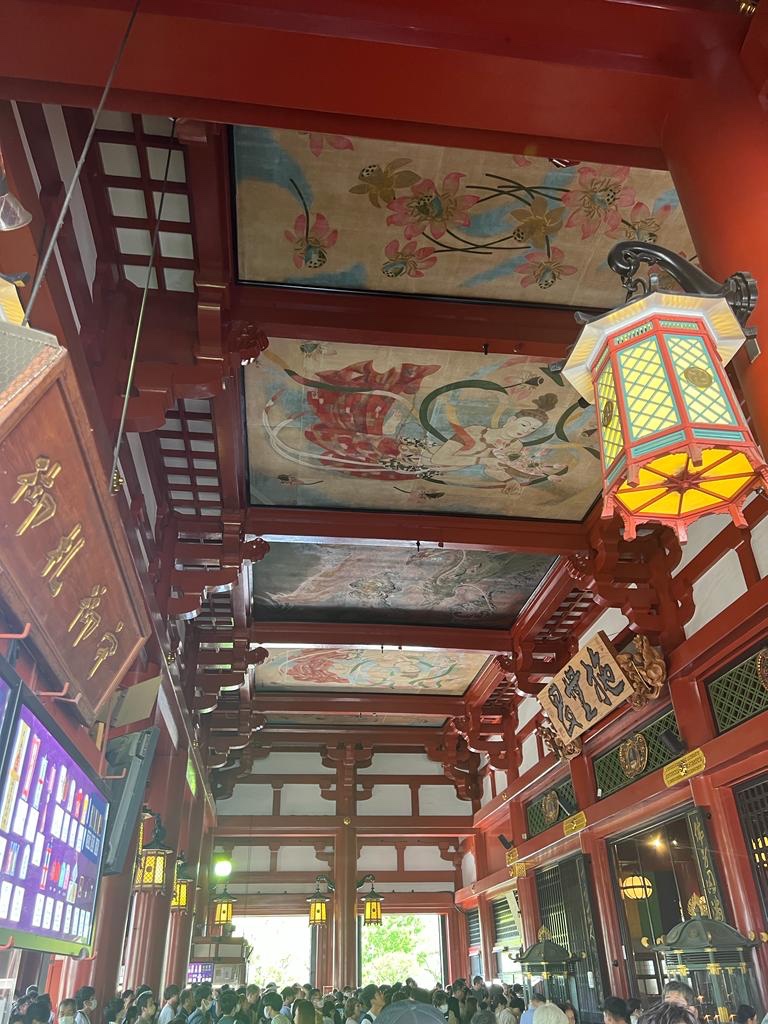
With all the admin finally complete we set out to explore. Firstly we went to Ginza, the upmarket shopping district but it is just full of very European stores rather than being an interesting showcase for Japan so, as we didn’t need Gucci gloves or Prada pants, we decided to leave and caught another three tube trains (one out of Ginza, another back to Ginza and a final one out of Ginza again, but this time in the correct direction!) to Asasuka to see the Senso-Ji which is an ancient Buddist temple and the oldest temple in Tokyo. It’s one of the most visited religious sights in the world, visited by 30 million people a year. Unfortunately most of them seemed to have turned up today 😫
Senso-Ji temple, its gates and interior.Lots of interesting things to see around the temple
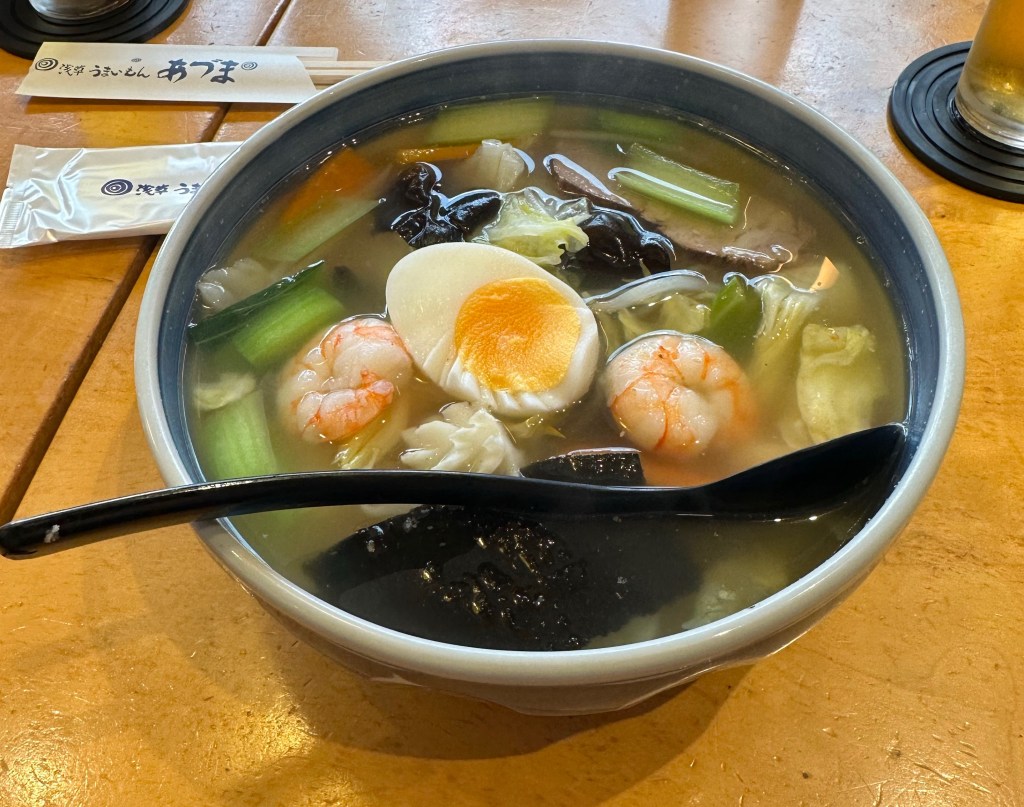
By now we were both flagging so we had a quick (and very refreshing) bowl of ramen
… then we abandoned our sightseeing for the day and returned to the hotel (only one wrong train this time so we are improving).
The hotel has a very nice restaurant so we decided to eat in, have an early night and make an early start tomorrow.
Tomorrow is our first full organised day. Today was a bit overwhelming, loads of people, strange train systems and just a big bustling city when we really just needed sleep, so our first impression of Tokyo could be better. However, we know that it’s a huge diverse city and tomorrow we start exploring in ernest with a professional guide so I’m sure we will get to see the real Tokyo.
To view all posts select ‘All’ from the menu above
Tokyo, Japan’s busy capital, mixes the ultramodern and the traditional, from neon-lit skyscrapers to historic temples. The opulent Meiji Shinto Shrine is known for its towering gate and surrounding woods. The Imperial Palace sits amid large public gardens. The city’s many museums offer exhibits ranging from classical art (in the Tokyo National Museum) to a reconstructed kabuki theater (in the Edo-Tokyo Museum).





 Andrew and Brigitte’s Japanese Adventure