Day 9 – Hiroshima and Miyajima
Hotel pet hates # 1
One of my pet hates when travelling, is being in a hotel room, several floors up, with aircon and you have no idea what it feels like outside. You can’t open the windows because hotels assume all their occupants are suicidal so they seal them up and so you don’t know whether to wear shorts or jeans, sweater or no sweater?
To solve this problem I have invented the ‘Wole’ (Weather hole) which hotels will be able to fit to their exterior hotel walls. You will then be able to stick your arm or leg through the Wole to judge the exterior conditions so that you can decide what to wear. When closed, it seals perfectly so the aircon still works.
I’ll be starting a crowdfunding site shortly, please give generously. The first 50 subscribers will receive a discounted Home-Wole*
*All rights reserved – Patent pending – Registered trade Mark.
We had a very early start to meet the taxi at 7.15 today so no opportunity to slip a black egg into Brigitte’s breakfast.
As the taxi left the hotel our two receptionist bowed up and down furiously, though slightly out of synch. I think of it as waving your guests off, but with your entire upper body rather than just your hand. I suppose it’s also a good core workout for them so tourists are contributing to Japanese overall fitness, which is a good thing.
I realise Japanese bullet trains are old technology now, having been around almost 60 years, but they are still fifty years ahead of anything we have in the UK. They arrive on time and leave on time. Always. To the second. They are spotlessly clean, comfortable, inexpensive and have fully reclining, heated seats! A 200-mile journey takes a lotyle over an hour for a fare of £64 – first class.
Similar high speed trains run in France, Spain, Germany and Italy to name but a few.
In comparison, Leeds to London in the UK, a similar journey, takes almost two and a half hours and costs over £300 if you’re a tourist and don’t know how the crazy ticket pricing works. That’s when the trains are actually running. Hmm.
Something you would never see on a British train. Look carefully as the rear windows go by…
The train guard always leans out of the windows and salutes the passengers out of respect as the train leaves the station.
Brigitte seemed excited when she came out of the bathroom at Hiroshima station. In fact I’ve rarely seen her so excited on exiting a toilet. It transpired that she has found an exciting new toilet feature previously unwitnessed. It’s genius and I’m quite jealous not to have discovered it myself….
It’s effectively a silencer for a toilet. How good is that? Loud bottoms fear no more!!
Before we started our tour we went for a quick coffee where we encountered the worlds smallest milk jug….,
In order to avoid the crowds we planned this trip to miss Japan’s ‘golden week’ which is the end of cherry blossom and the Japanese holidays.
What I didn’t plan for was the impact of Japan having only properly re-opened to post pandemic tourism in March, hence the huge number of tourists we are seeing.
To make matters worse, they decided to hold the G7 summit in Hiroshima next week and much of Hiroshima and Miyajima will be closed. At the moment, everywhere is full of groups of police. (Although they are polite and bow as you walk past them. I think that they should replace the ‘C’ in Police, on their bullet proof vests with a’T’).
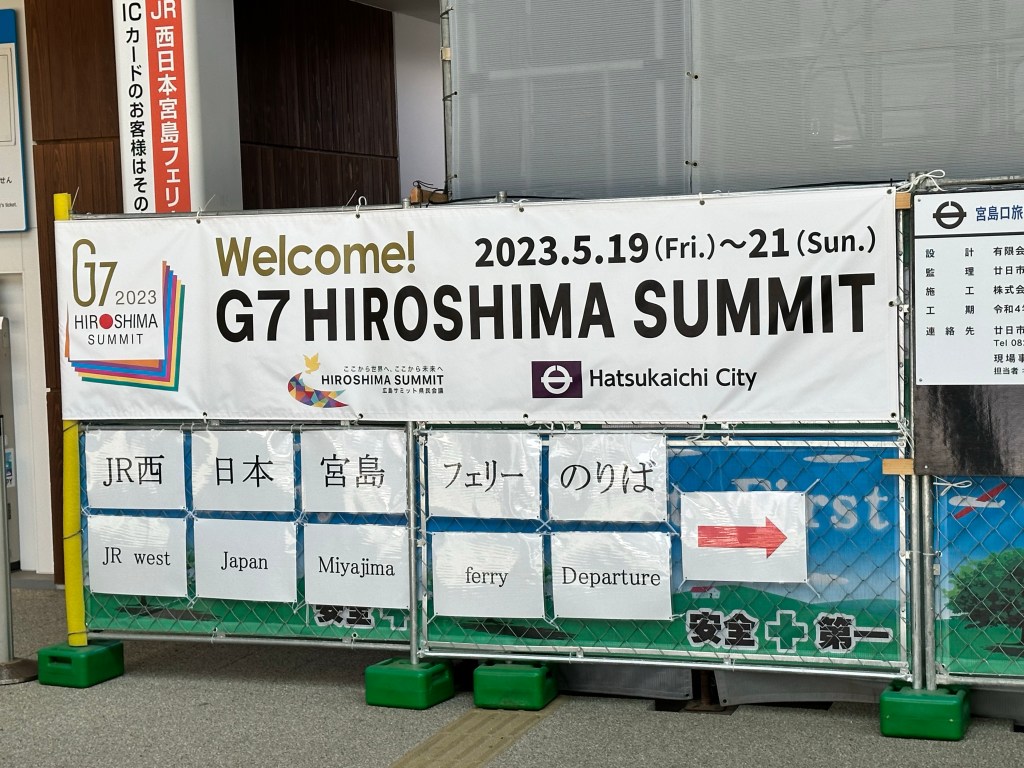
Areas are being cordoned off, re-painted and swept by the various secret services so that Joe Biden, and six leaders of previously important nations can have a quick junket here. Or maybe I’m just naturally cynical?
It’s the reason for us having to do Hiroshima and Miyajima in one day.
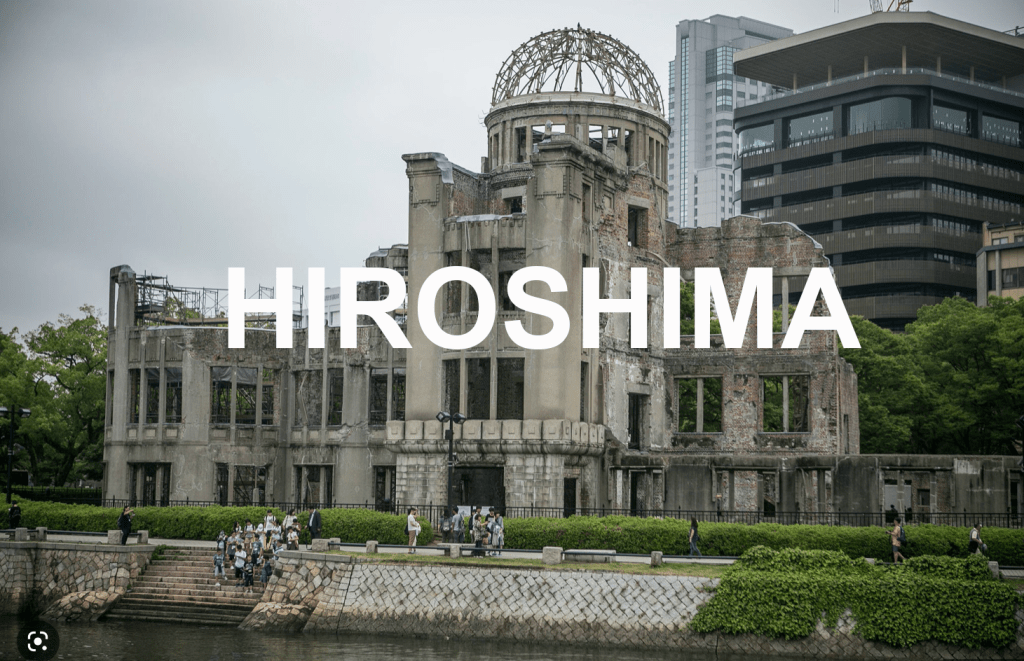
Our tour guide today is called Kunika and she took us straight to ground zero.
What happened here on August 6th 1945 is unimaginable. At 08:14 everything was normal. At 08:16 everything was gone. People, animals, trees, buildings. Everything. Gone.
Just a few buildings partially survived as they happened to get lucky in terms of airflow and being shielded from the 3,000 degree heat but, mostly, everything was blasted or incinerated.
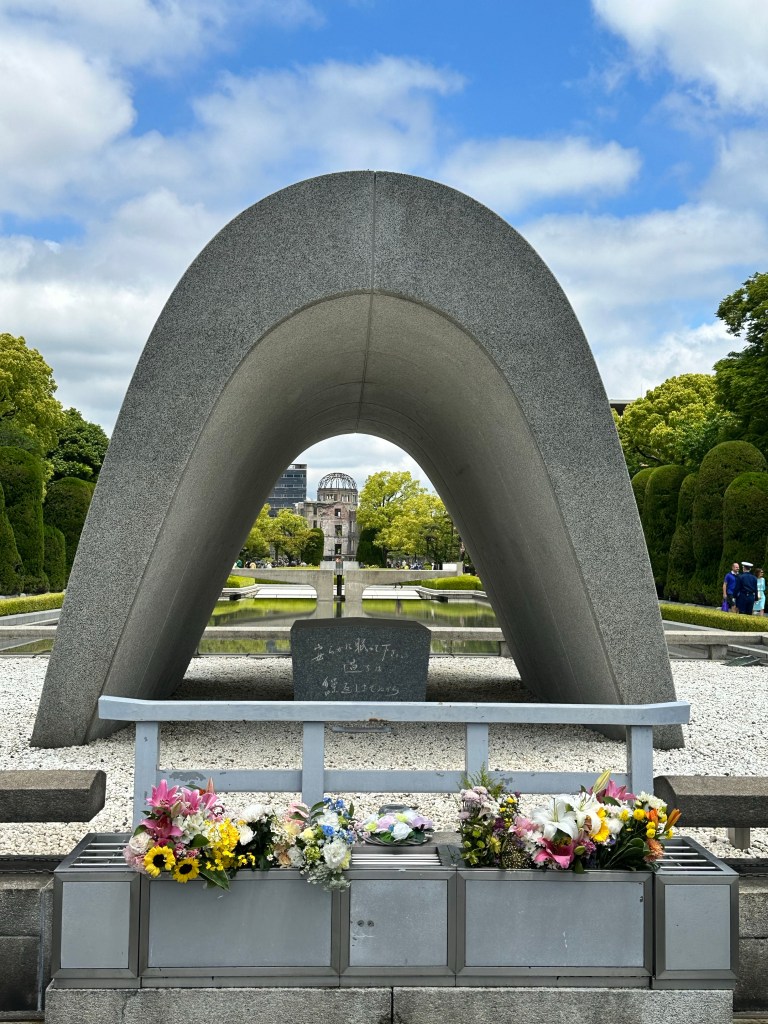
There are many memorials and the Peace Memorial Museum is dedicated to remembering what happened here, to try and ensure it never happens again. It’s redolent of visiting a European Holocaust museum, extremely emotional and overwhelming at times. You have to keep pausing and taking deep breaths to comprehend the enormity and horror of what actually happened here.
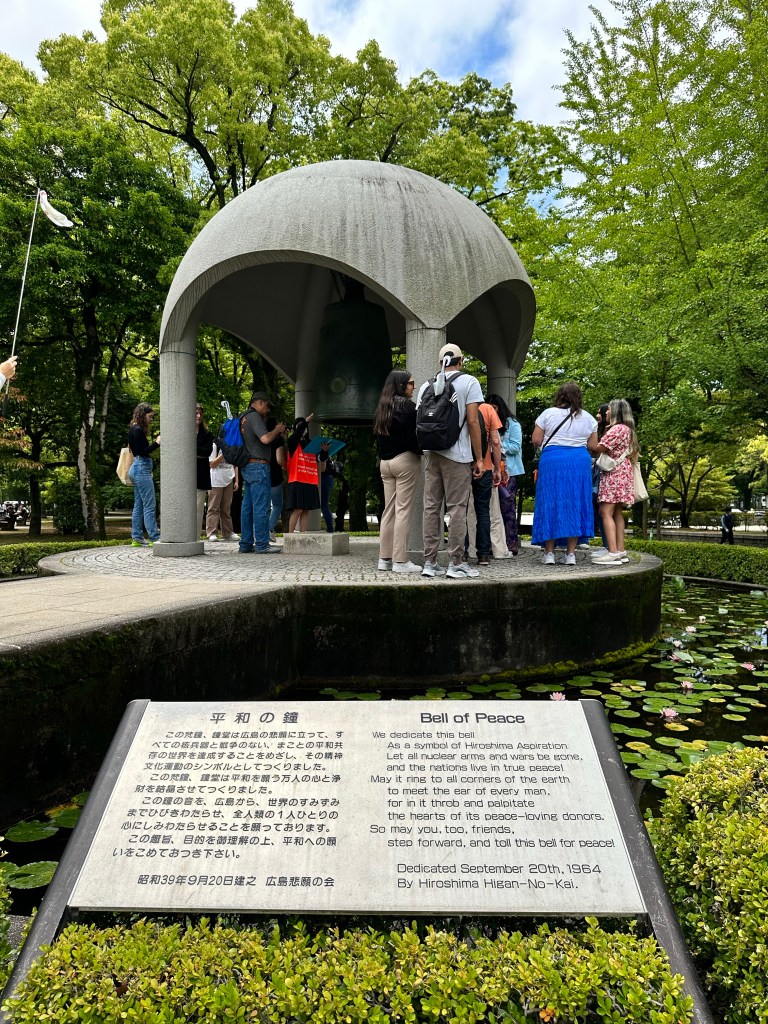
Hiroshima is now a city dedicated to peace and the abolition of nuclear weapons. We all hope their wish comed true but unfortunately I have my doubts.
In my opinion it should be compulsory for every politician in the world to come here, understand the story, and see the consequences of a nuclear detonation in a populated area before they are allowed to take office. They should also be made aware that modern Hydrogen bombs are one thousand times more powerful than the one that decimated Hiroshima! I’ll get off my soapbox now, sorry.
I won’t go into the events or the history here, it’s easy to read about what happened but if you don’t know the details do go read up on it.
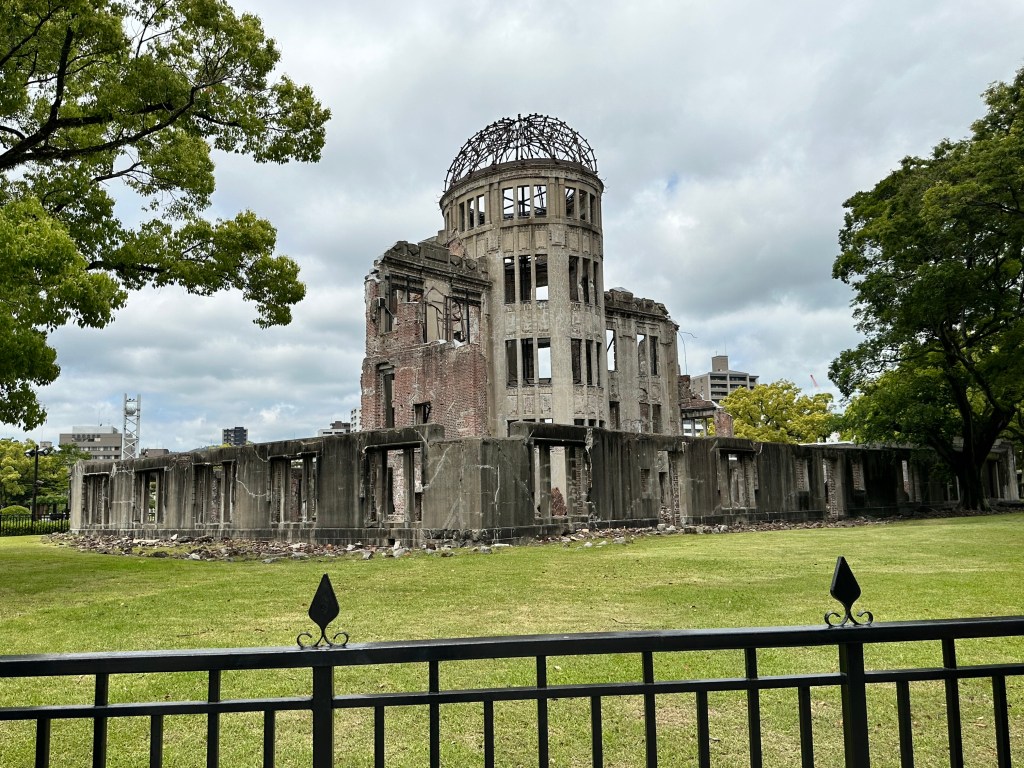
The bomb dome, or peace memorial is one of the few buildings that was partially left standing. It’s skeletal remains are now a monument to the event and a Unesco world heritage site.
After visiting Hiroshima’s memorials and museums, we took a ferry to Miyajima who’s name means Shrine Island. (Hiro-shima means big island) Jima and shima both mean island, they just translate into English slightly differently).
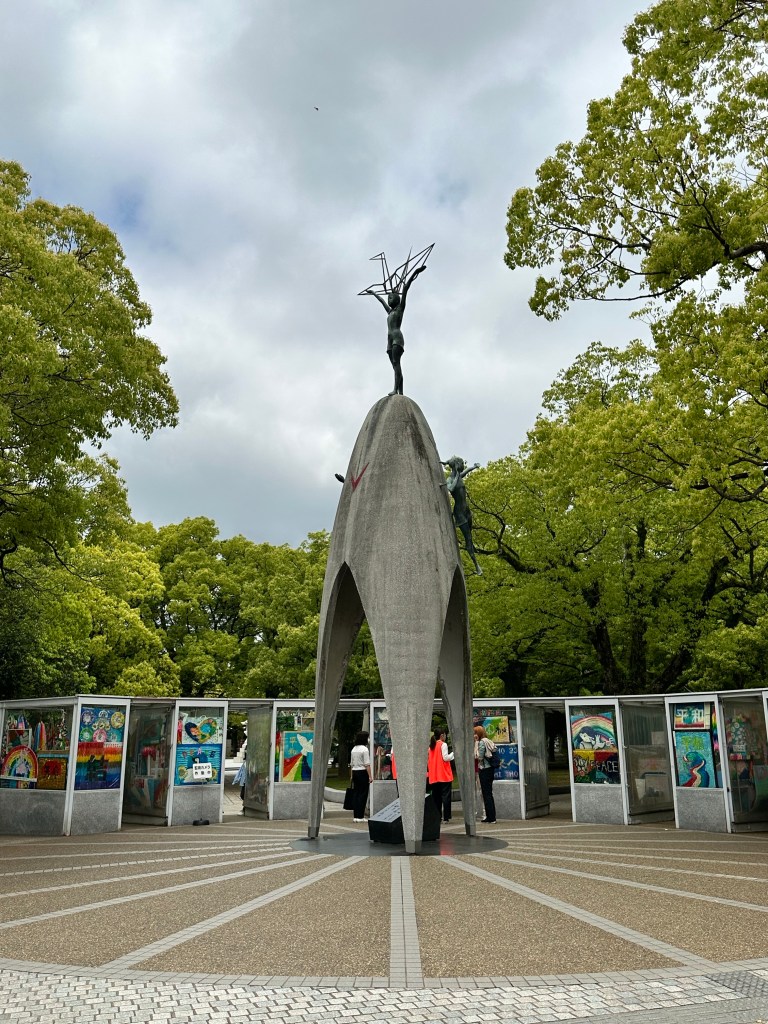
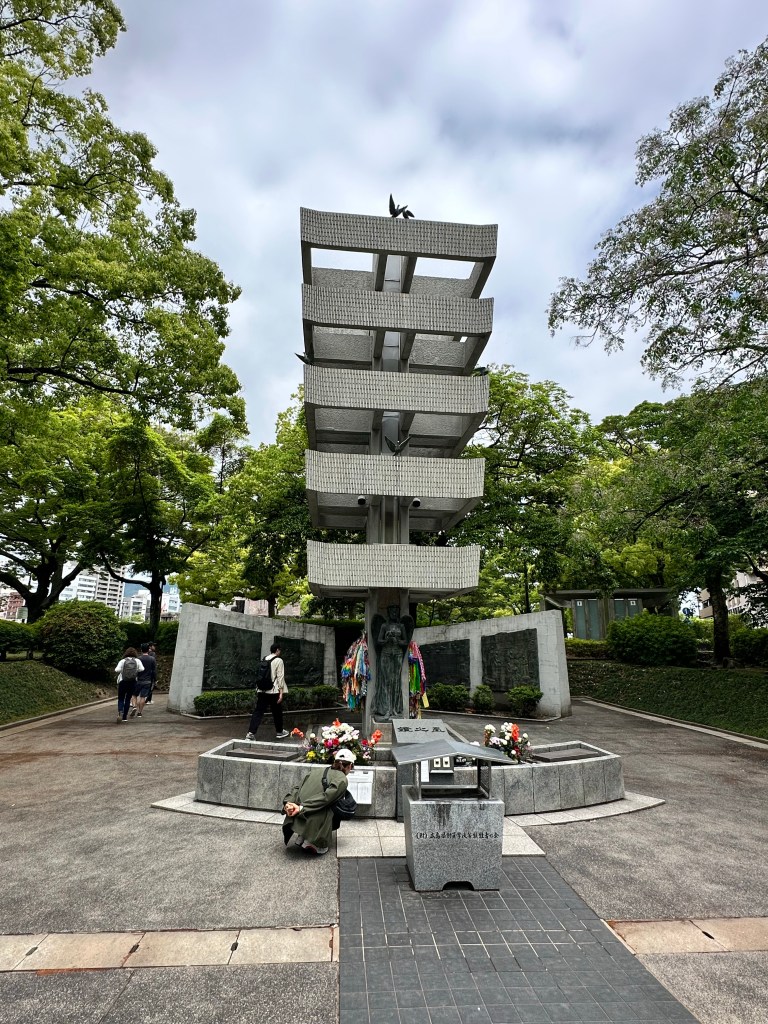
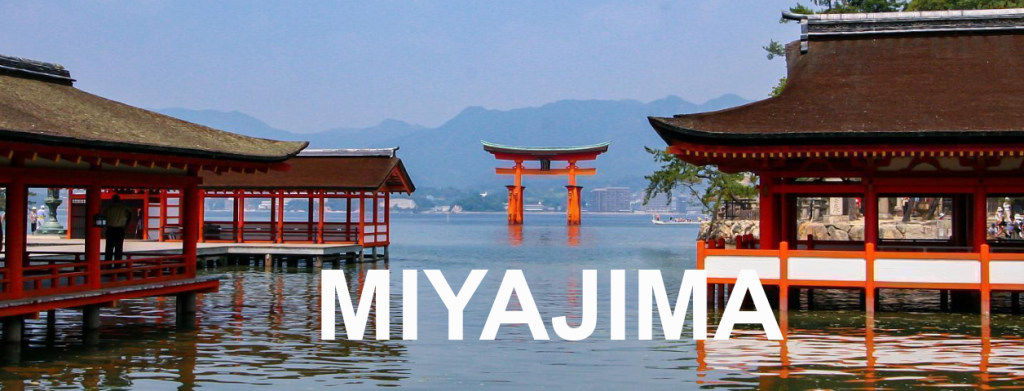
Miyajima is home to the world famous Itsukushima Shinto Shrine, another Unesco world heritage site.
It is best known for its floating Torii gate. Made of camphor wood it is 16 meters high and 24 meters across and it is not anchored or sunk into the ground. The top section is filled with rocks to give it weight so it just sits there.
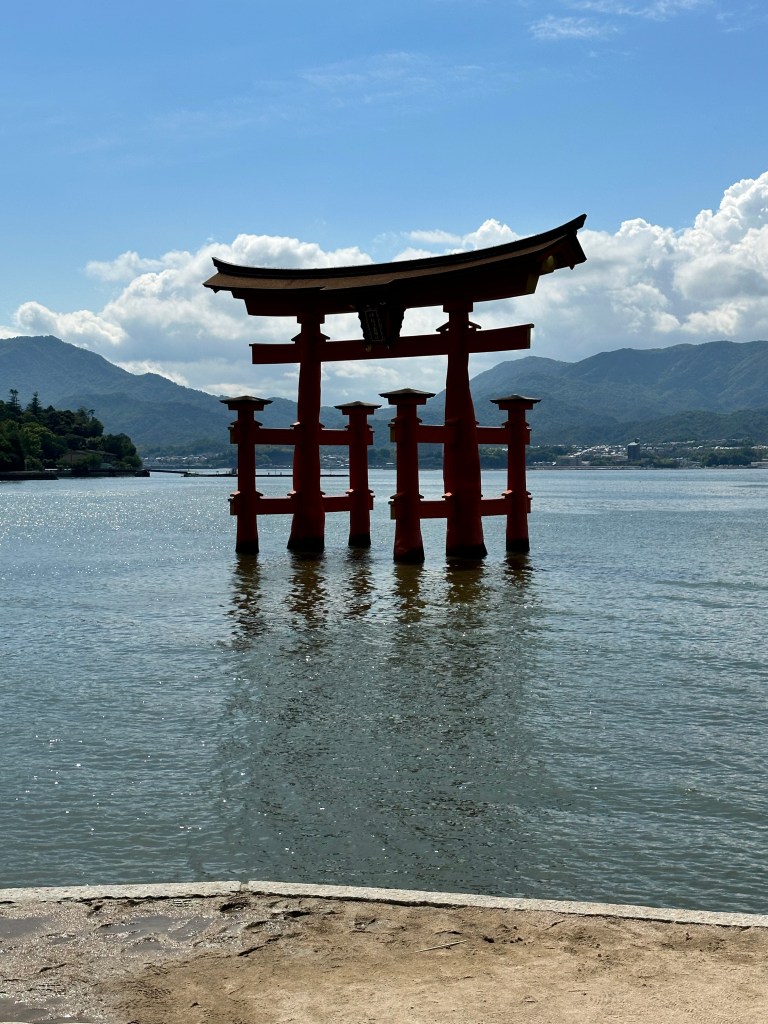
The whole area is considered holy so the shrine is built on the beach so as not to disturb holy ground.
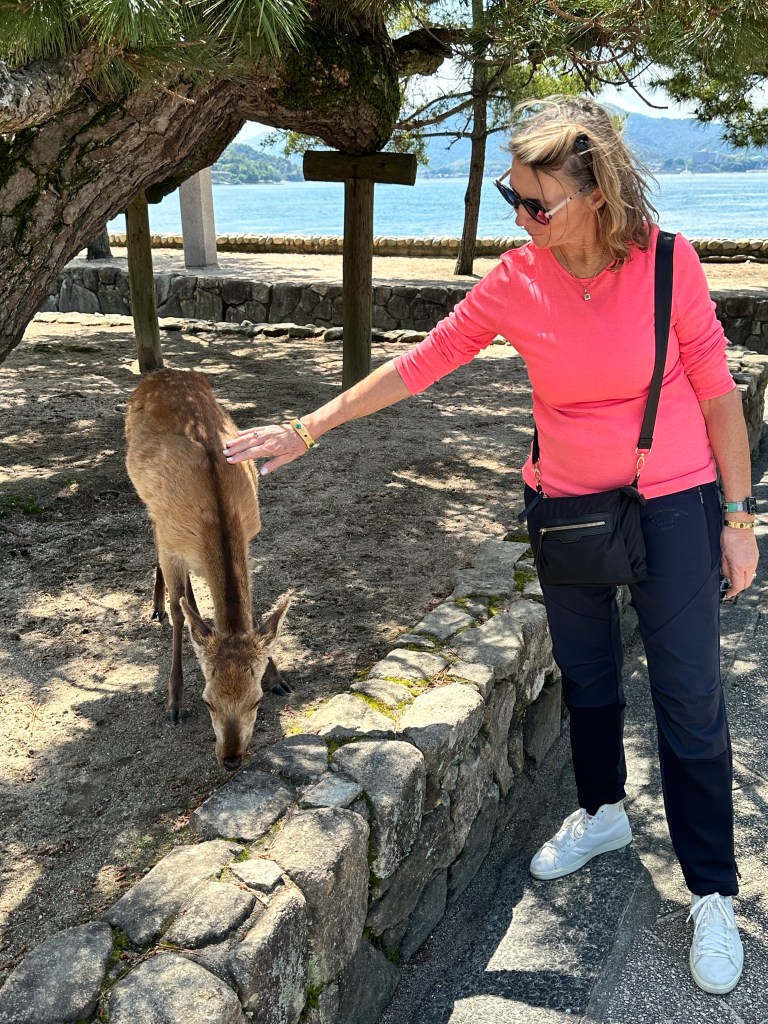
As the boat to the island docked we found ourselves in a strange combination of shops, tourism, holy shrines and tame deer wandering around being petted.
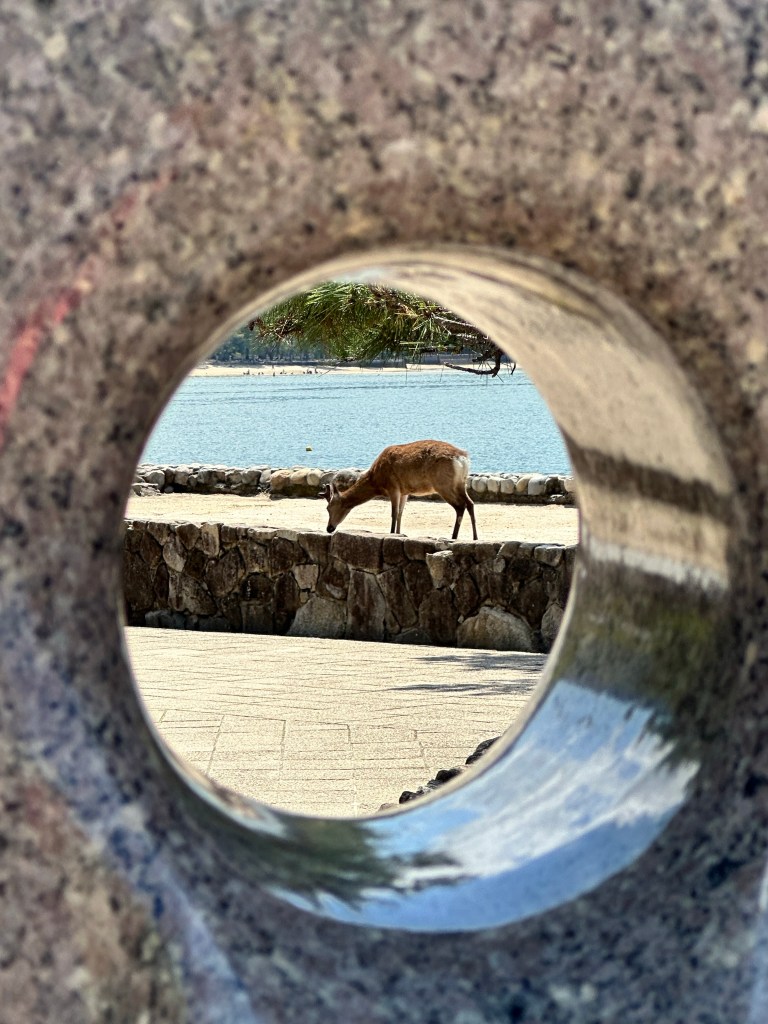
By then it was time for lunch
Hiroshima is famous for its oysters but also for its pancakes called Okonomiyaki meaning ‘Anything you want -cooked’. I think I’ve done this but ‘Yaki’ means cooked. (Often grilled on open flame but not always). Teppan (metal plate) yaki , Teri (with glazed sauce) yaki etc
After the war, with Hiroshima devastated, little remained and there were few places or means to cook. This was a naval and military city so there was a lot of metal around which could be heated up and the government provided wheat flour so that the people didn’t starve and so they created new foods, with a flour base, cooked on hot metal plates, one of which became Okonomiyaki.
It is made up of many layers, like this.,,
First make a round flour crepe for the base, then layer cabbage, beansprouts, meat, noodles, seaweed, crack an egg into an omlette for the lid, flip everything upside down onto the omelette, flip again, serve when cooked. There, you can make your own and add ‘anything you want’.
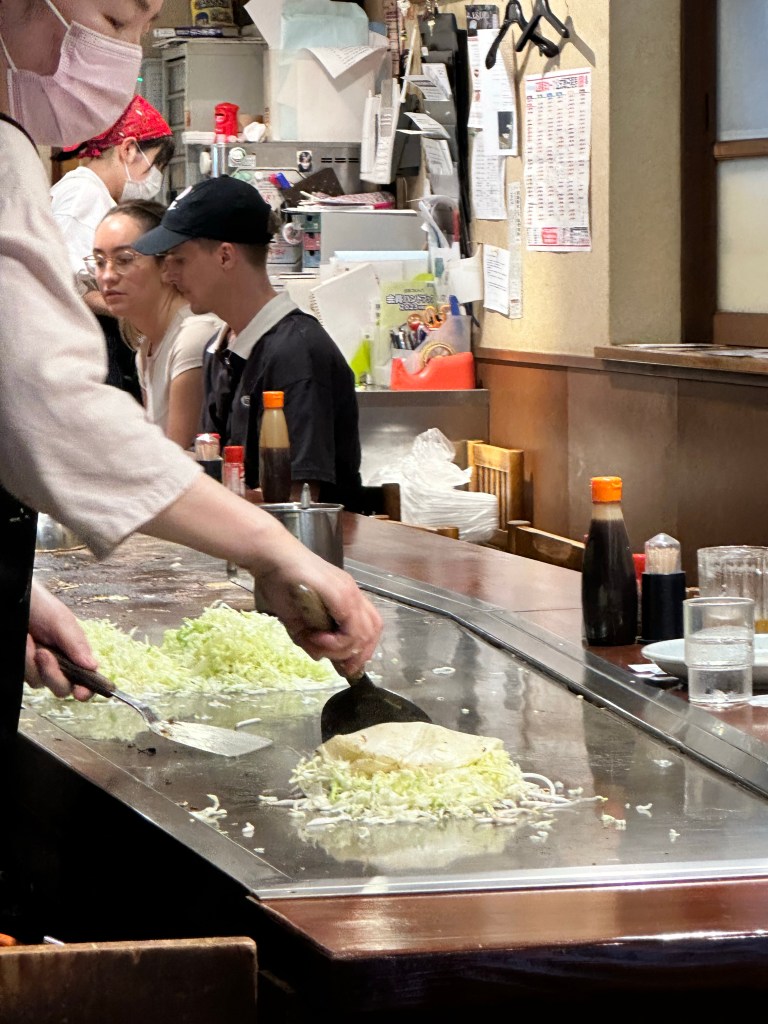
If you get it right you end up with this…
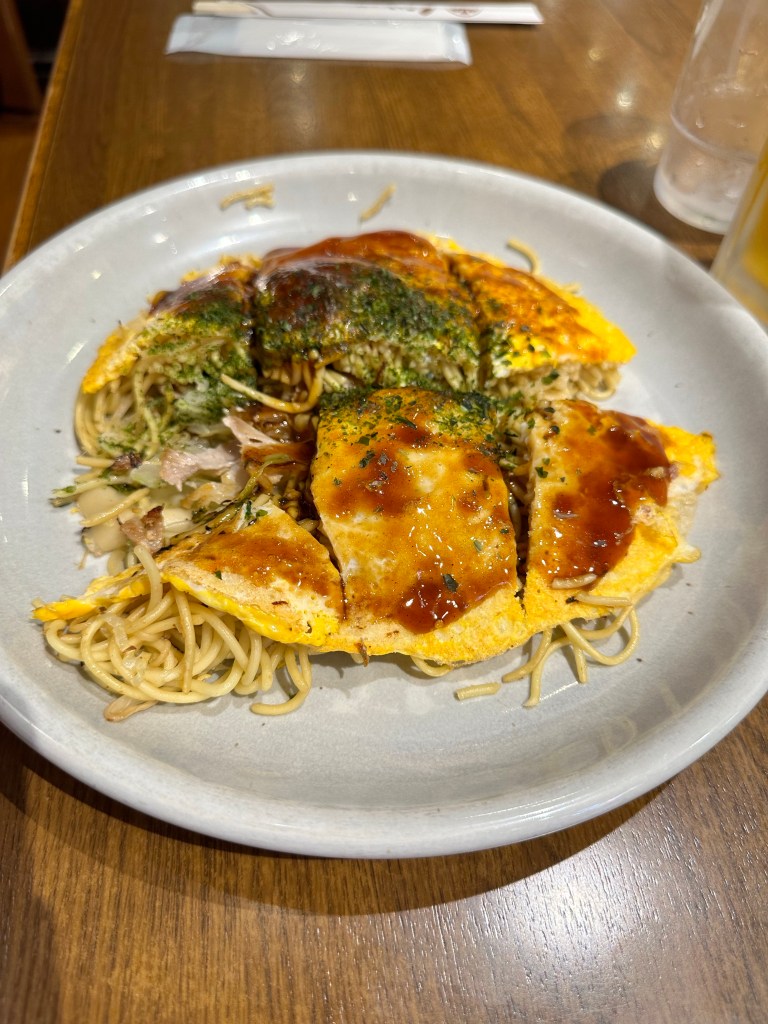
Delicious.
Next it was a short walk to the Toyokuni Shrine Pagoda dating from 1407
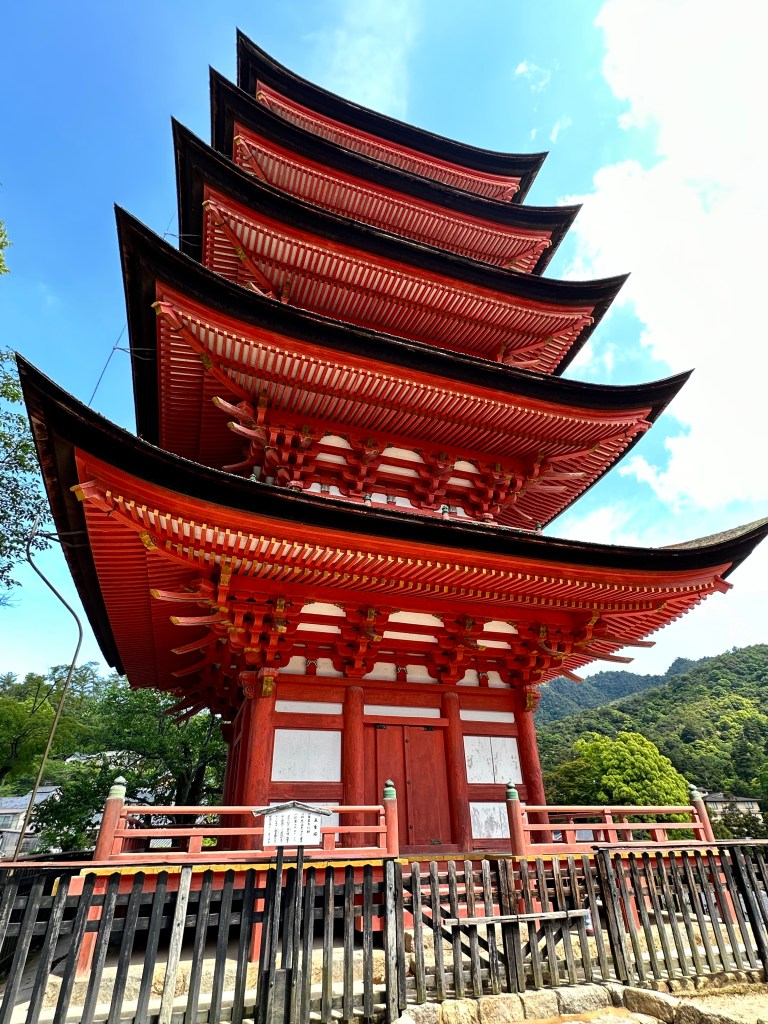
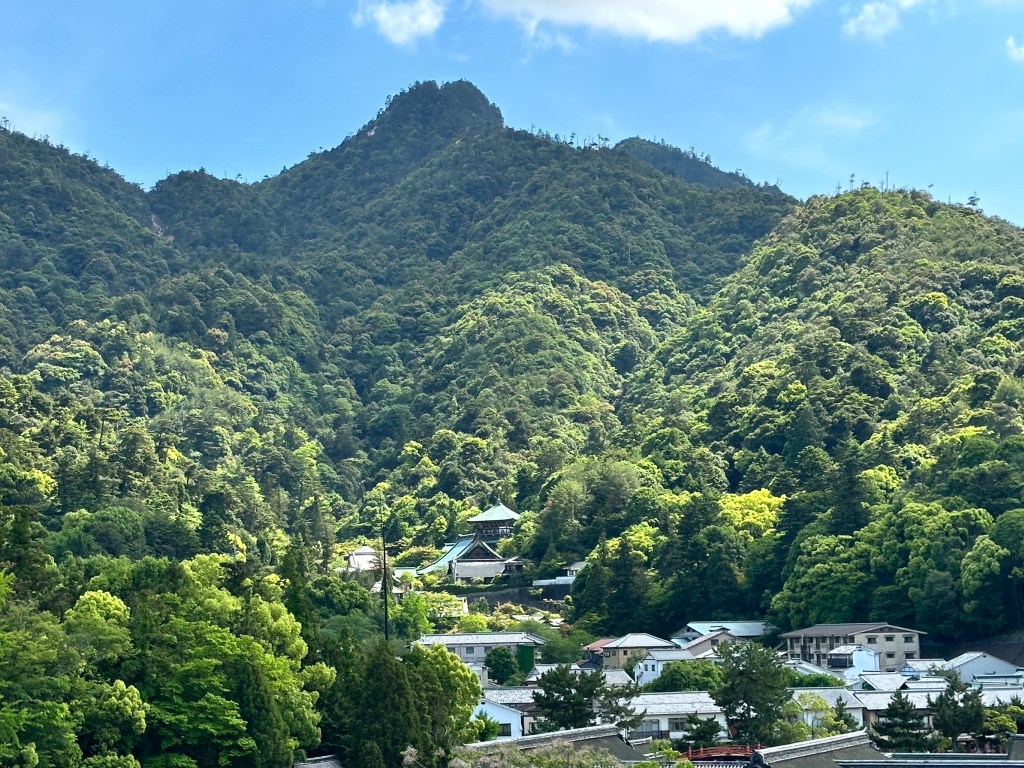
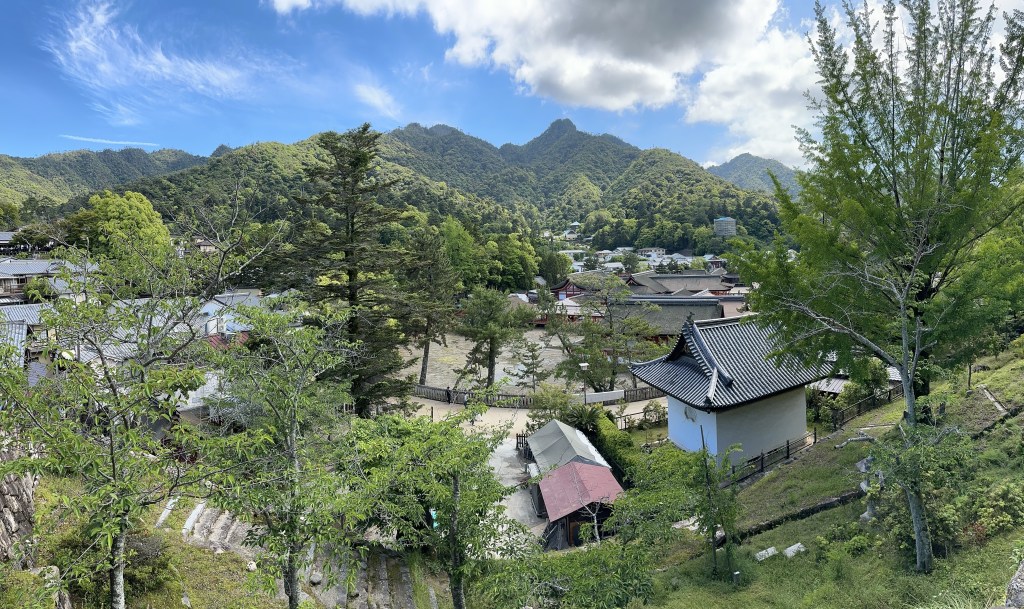
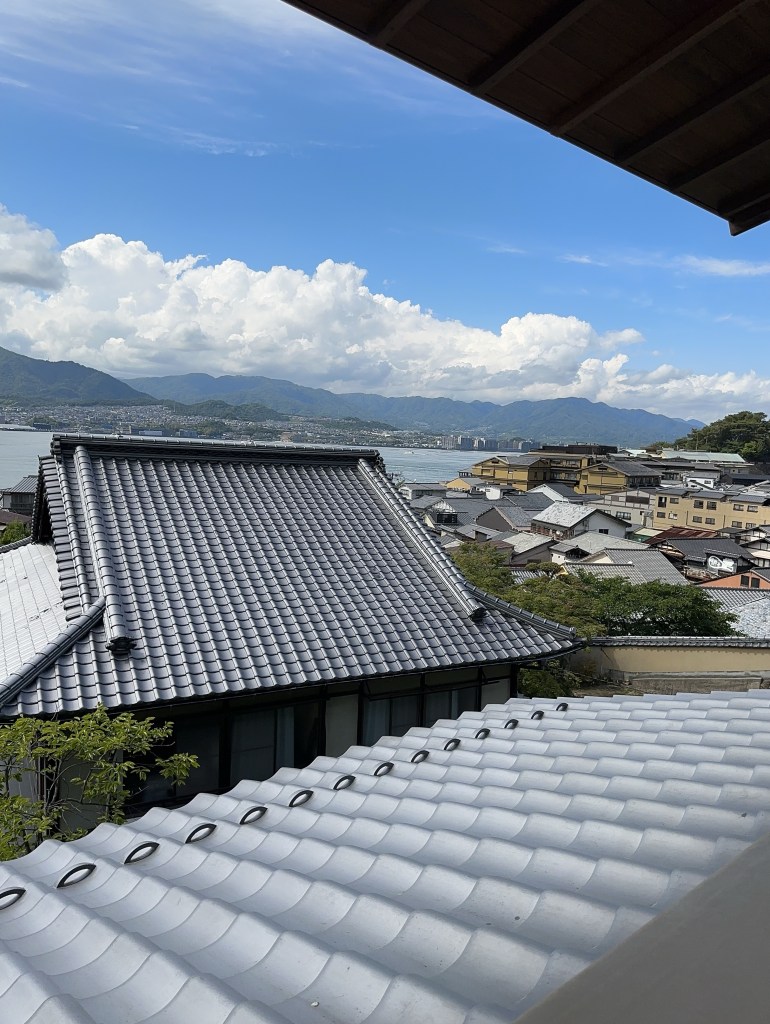
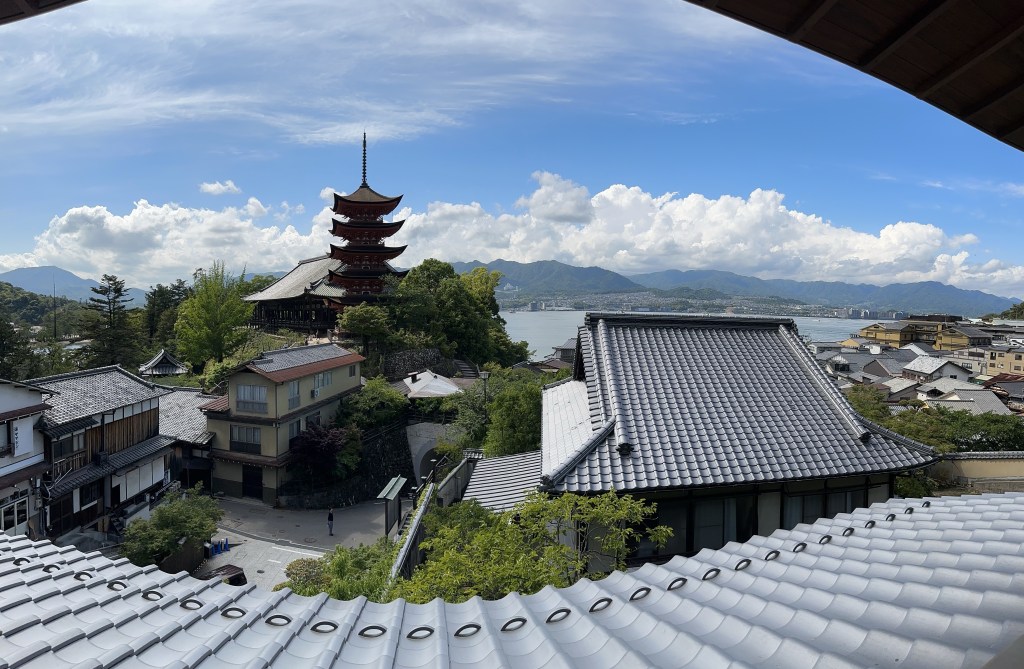
Before visiting the actual Itsukushima shrine…
The shrine and its torii gate are unique for being built over water, seemingly floating in the sea during high tide. The shrine consists of multiple buildings, including a prayer hall, main hall and stage, which are connected by boardwalks and supported by pillars above the sea.
It’s a very intricate structure and is designed to withstand high tides that often submerged it and typhoons that threaten to blow it away.
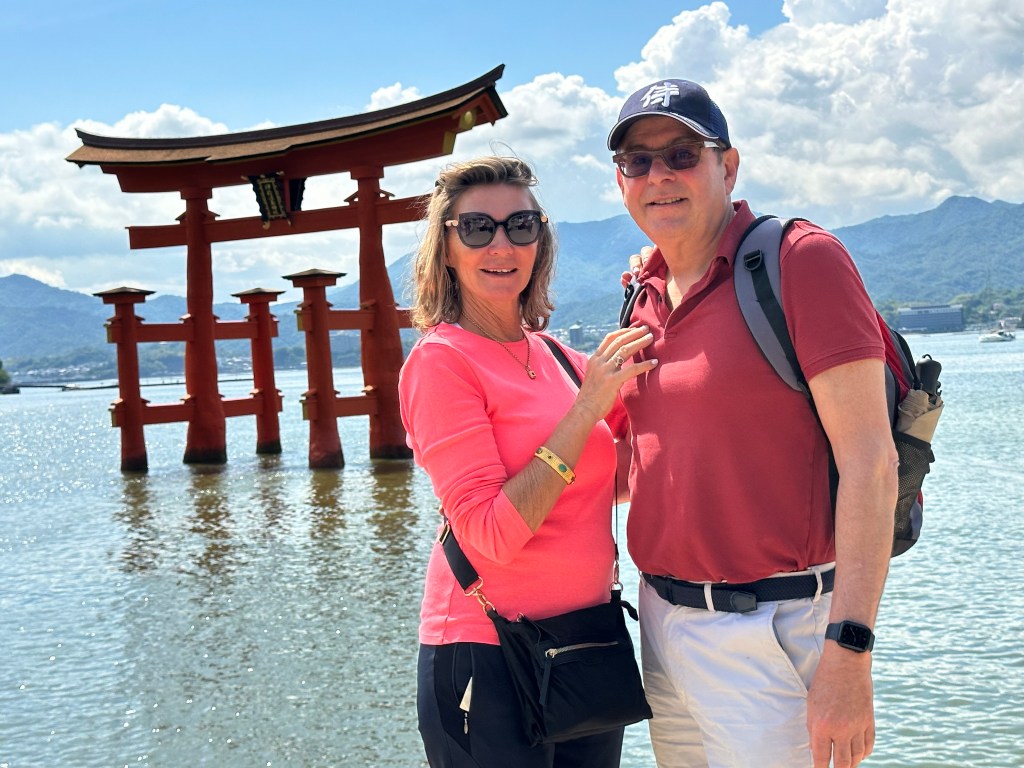
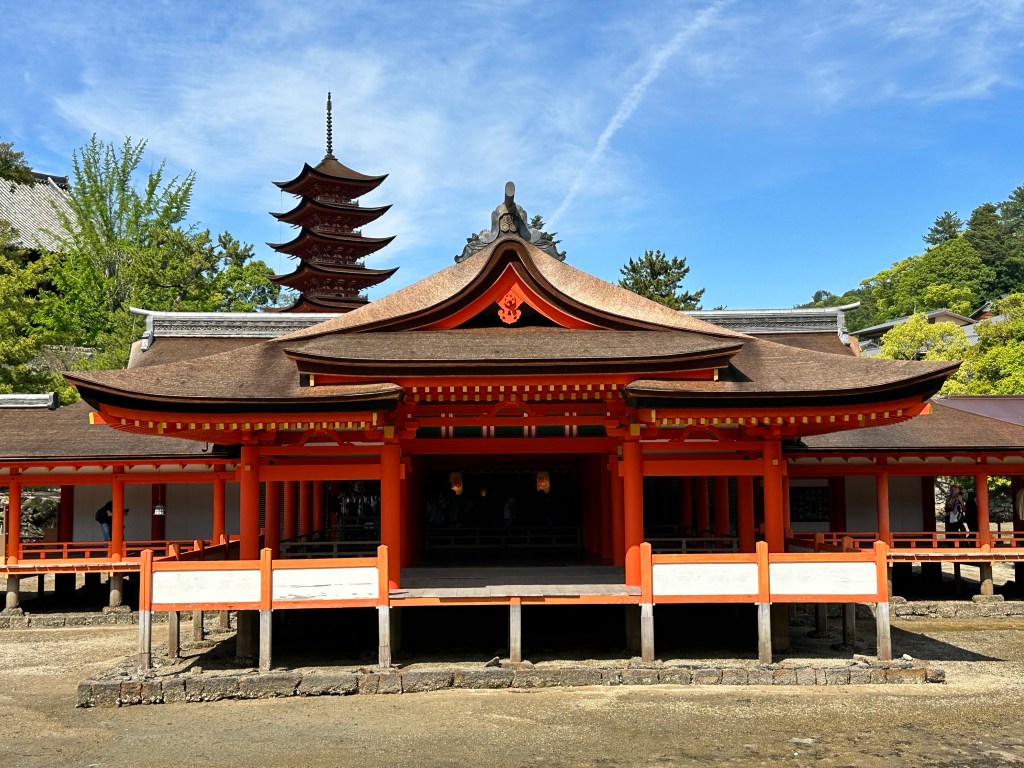
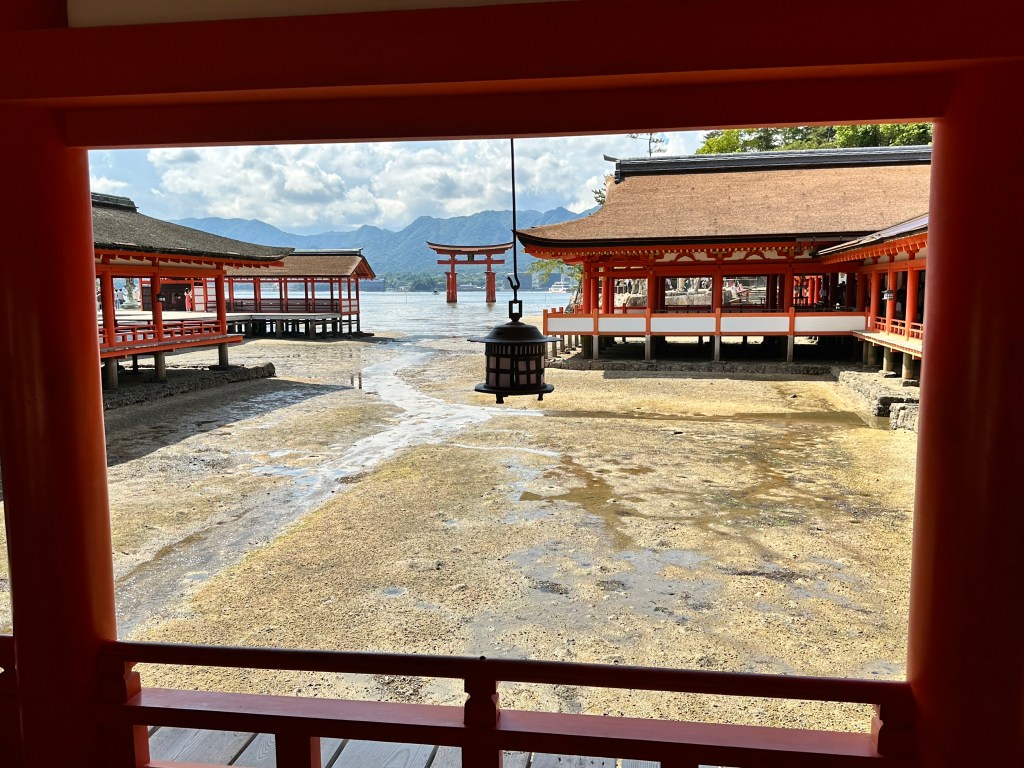
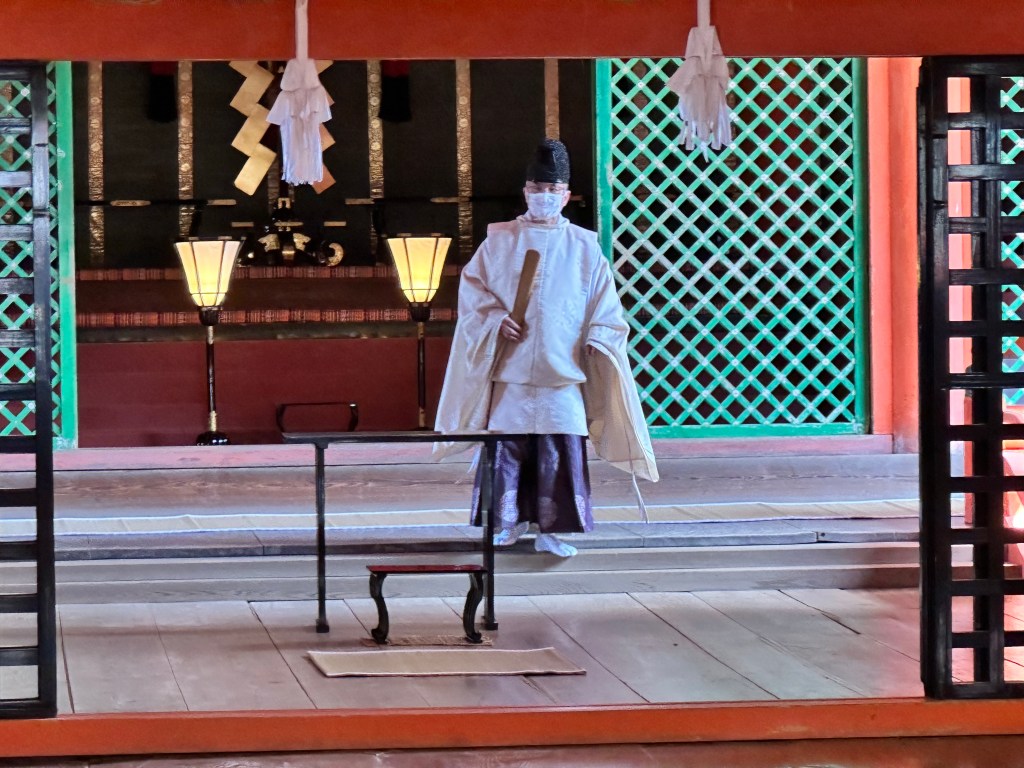
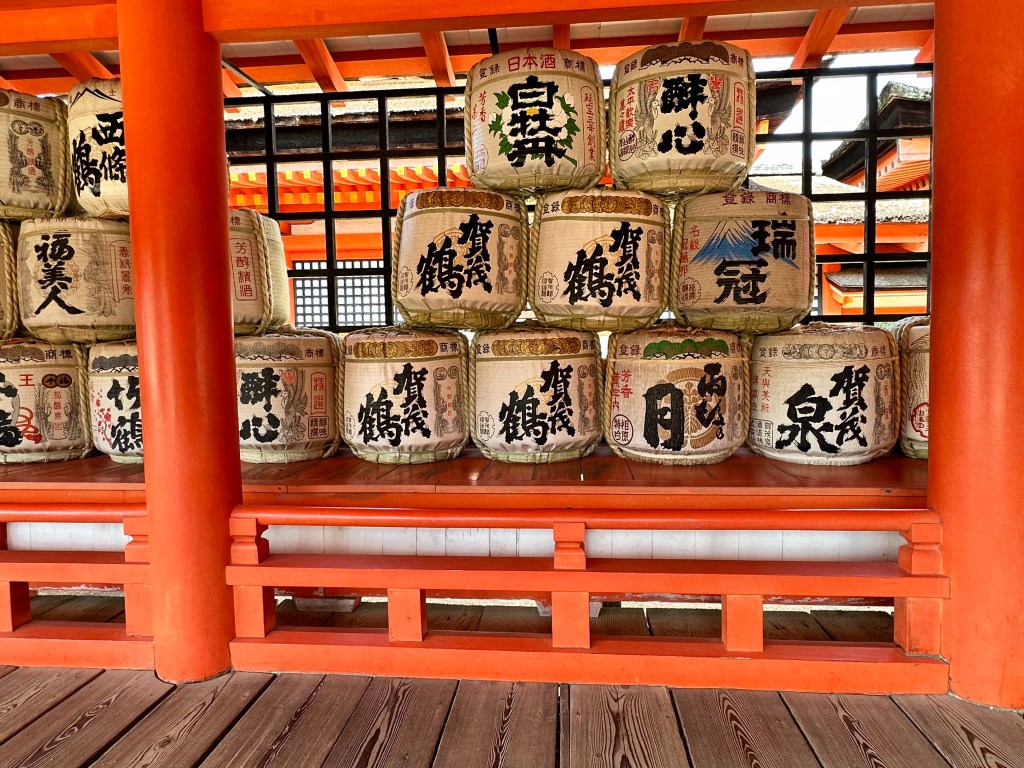
The last picture is of the barrels of Sake donated by all the Sake breweries. Apparently the Gods love Sake. It’s good advertising for the breweries – and the priests get to drink it all!
The mountain on the island is called Mount Misen and it has been worshipped by the locals since the sixth century.
We had to get to the top of course, just because it was there. To do that requires two ropeways (cable cars)- it’s like deja-vu isn’t it?
The tour guide said that It was a one-minute easy walk to the Ropeway. It seems that her English leaves something desired as far as her concept of time is concerned as, fifteen minutes later, after a steep uphill trek, we finally arrived, drenched with sweat (24 degrees today).
It was well worth it as the views were spectacular from the summit..
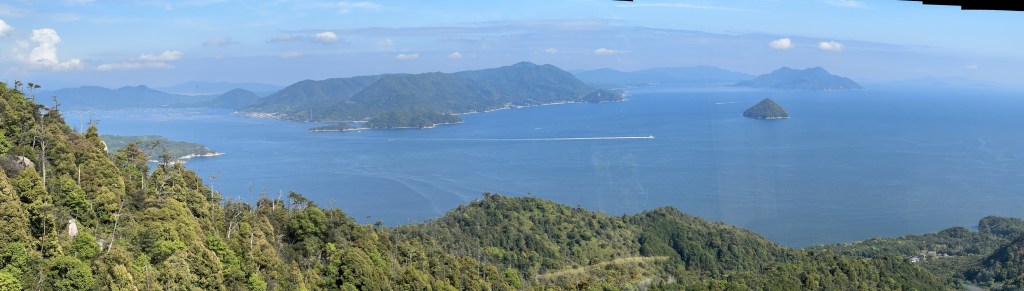

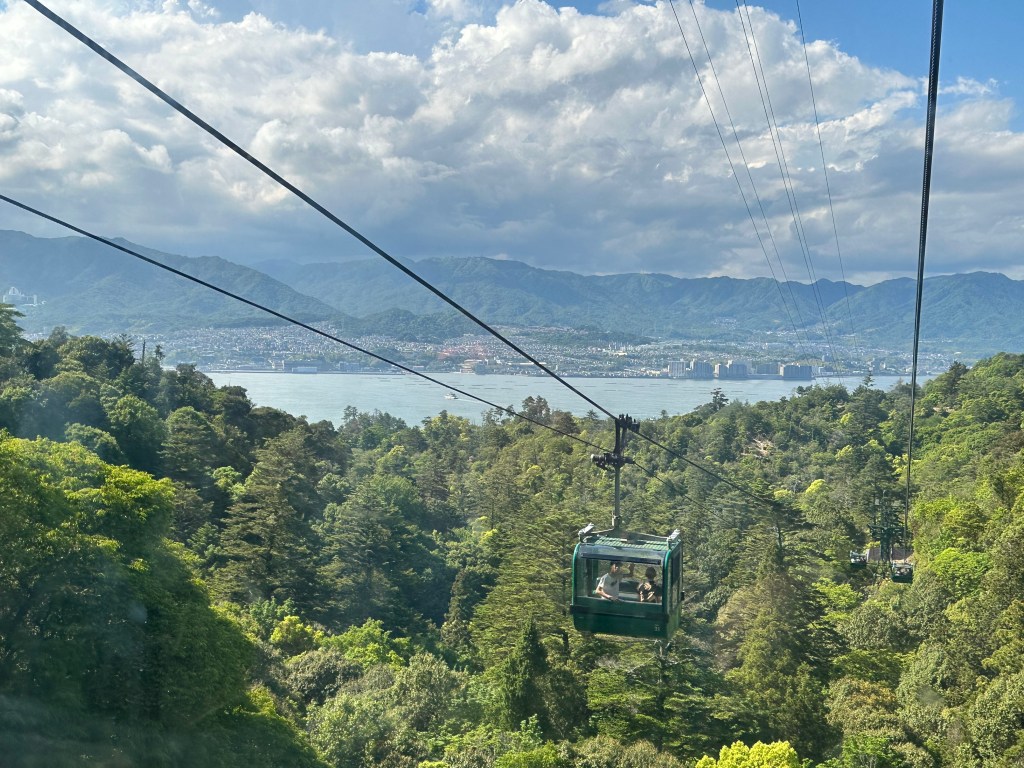
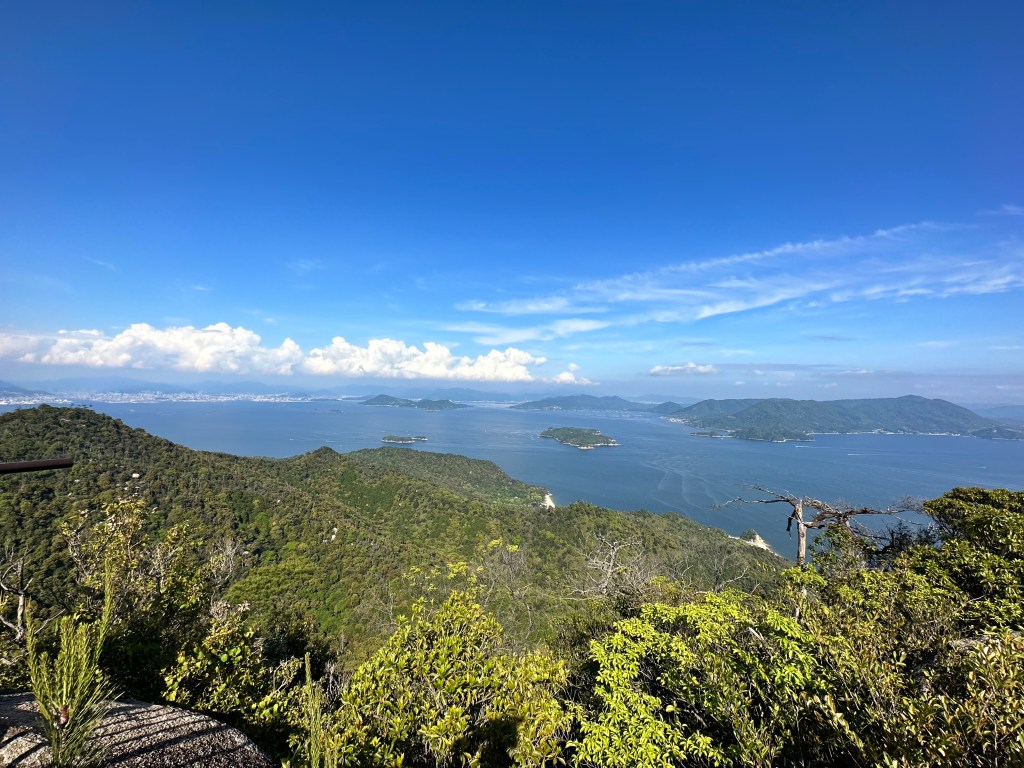
Then it was the whole journey in reverse…dum-de-dum-de-dum….. until we were back at Hiroshima station where we just had to sample the local oysters. Not bad but not great to be honest but then it’s right at the end of the season (no ‘r’ in the month) so it’s our own fault.
A three-hour journey back to our hotel in Kyoto concluded our long day. 17,231 steps today, 13.25km walked, a new record. For us, anyway.
Tomorrow it’s Osaka!
21:50 – 14th May – Kyoto
 Andrew and Brigitte’s Japanese Adventure